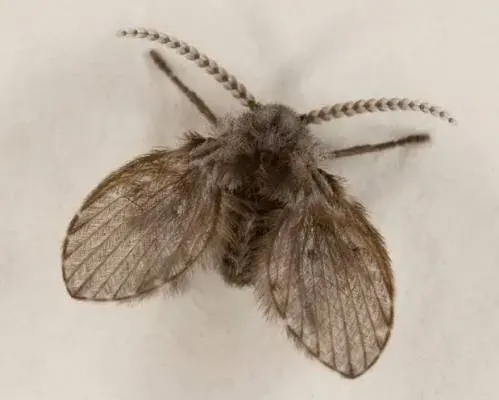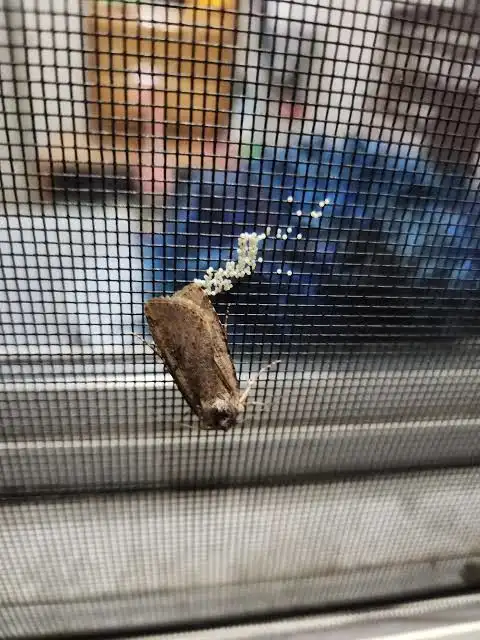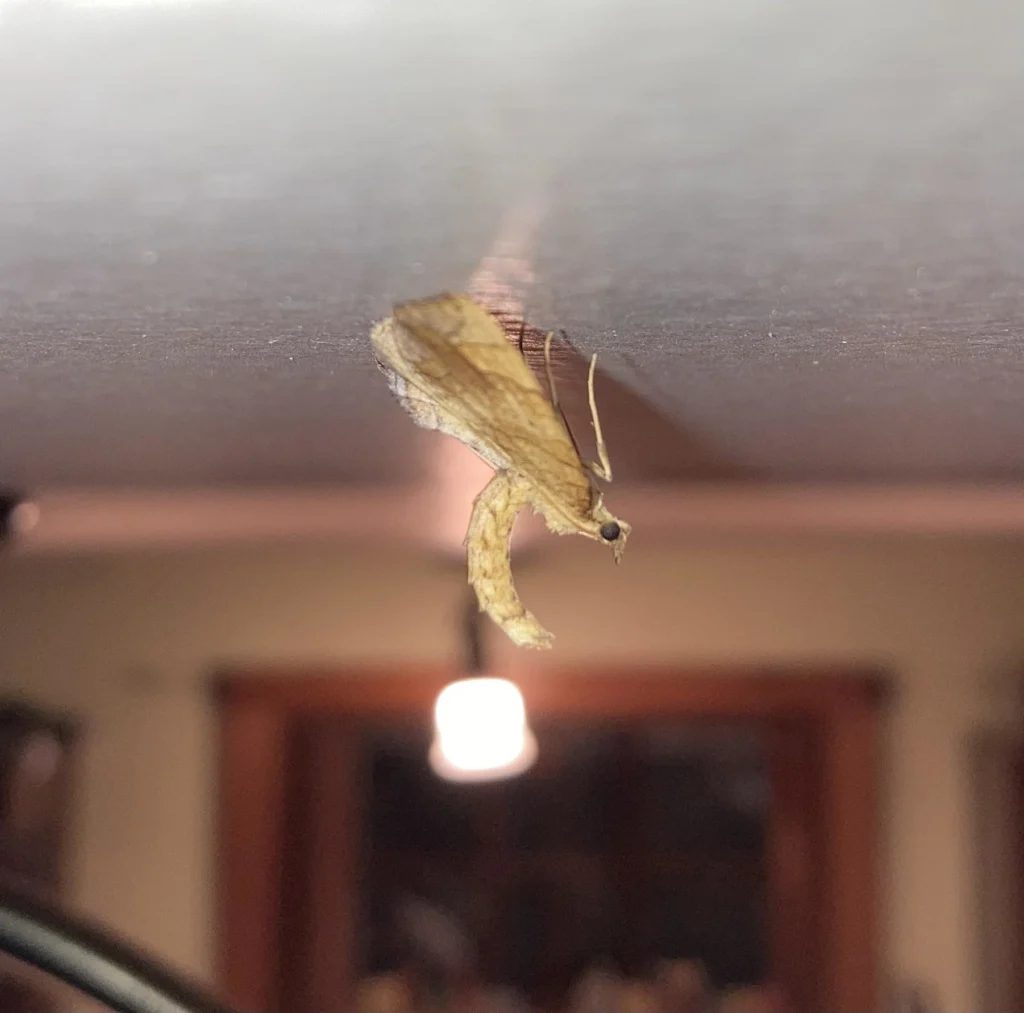
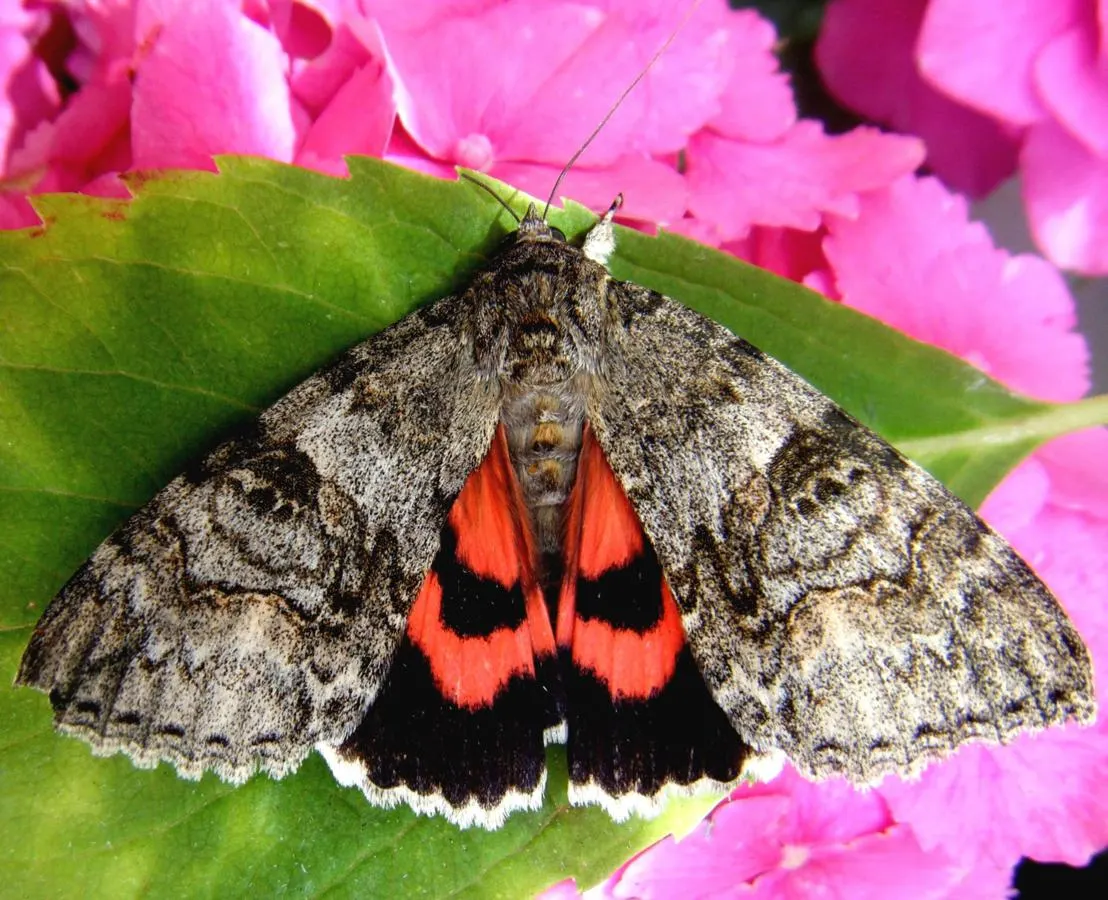
An underwing moth is a medium to large moth whose bark-colored forewings hide boldly banded hindwings. The hindwings are usually orange, red, pink or yellow crossed with black, though a few species have plain black ones. If the moth you found sat flat against a trunk or wall like a flake of bark, then flashed color as it flew, an underwing in the genus Catocala is a strong candidate.
Getting as far as “this is an underwing” is usually realistic from a decent photo. Naming the exact species often is not, and it helps to know why before you start.
What counts as an underwing moth
The true underwings belong to the genus Catocala, in the family Erebidae. Older books and some websites still list them under Noctuidae, the owlet moths, because that is where they sat before the family was reorganized. Both labels refer to the same moths.
It is a big group. Checklists put the count at roughly 100 to 110 species in North America north of Mexico and well over 200 worldwide, with the rest in Europe and Asia.
One naming trap matters for identification. “Underwing” is also the common name of several moths that are not Catocala at all, including the yellow underwings (Noctua) and the locust underwing (Euparthenos nubilis). They share the hidden-color trick but look different once you know what to check.
The features to check
No single clue settles it. Look at these together.
Size. Underwings range from about 1.5 to 3.5 inches (4 to 9 cm) across the spread wings. Many are noticeably larger than the average moth at a porch light.
Forewings. Gray, brown or tan, crossed by jagged and wavy dark lines that copy the texture of bark. The pattern is busy but low in contrast. Our guides to moth identification by wing pattern and moths with wavy wing patterns explain how to read those lines.
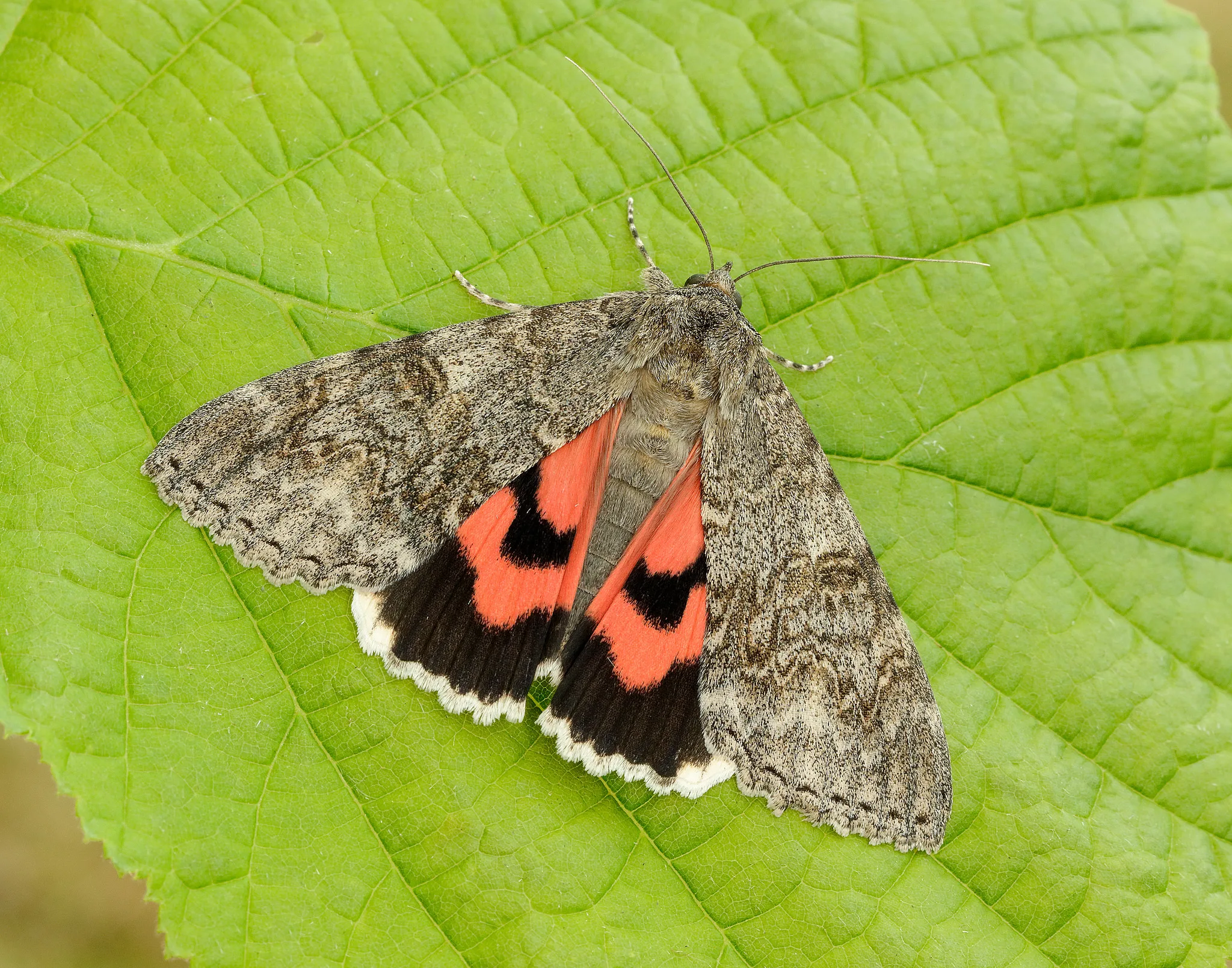
Hindwings. This is the feature the group is named for. Most species show a bright ground color with a black band across the middle and another along the outer edge. Some have all-black hindwings with a pale fringe. Color alone will not name the species, but color plus the shape and number of bands narrows things quickly.
Resting posture. At rest the forewings close over the hindwings and form a broad, flat triangle. Underwings typically sit pressed against tree trunks, and they also use walls, ledges and sheltered overhangs. Many rest head-down.
Behavior. A resting underwing often lets you get close, then bursts off in a fast, erratic flight and seems to vanish when it lands and covers its hindwings again. Adults come to lights, and they are well known for visiting sugary baits, sap and fermenting fruit after dark.
Underwing or lookalike?
Most mix-ups involve another moth that also hides a bright hindwing. The hindwing bands and the shape of the resting moth separate them.
| Moth | Family | Hindwing | What sets it apart |
|---|---|---|---|
| True underwings (Catocala) | Erebidae | Bright ground color with one to three black bands, or all black | Broad triangular outline at rest, bark-patterned forewings, usually near trees |
| Large yellow underwing (Noctua pronuba) | Noctuidae | Yellow-orange with a single black band along the outer edge and no band across the middle | Longer, narrower forewings in some shade of brown with a small dark mark near the tip; common in gardens, lawns and open ground |
| Lesser yellow underwing (Noctua comes) | Noctuidae | Like the large yellow underwing but with a dark mark in the middle of the hindwing | Smaller than the large yellow underwing |
| Locust underwing (Euparthenos nubilis) | Erebidae | Yellow-orange with four wavy black bands | More black bands than any true underwing; a North American species tied to black locust |
Where you live changes the odds. The large yellow underwing is native to Europe and Asia and was first recorded in North America in Nova Scotia in 1979. It has since spread across most of the continent, so a “yellow underwing” in a North American yard can be either this species or a native Catocala. In North America the lesser yellow underwing is known mainly from the Pacific Northwest.
If the forewings are the only thing you saw, keep the answer open. Plenty of unrelated bark-colored moths rest on trunks and walls, and smaller underwings with their hindwings covered can look much like other moths in the same family.
How to narrow it down
- Write down the place and the date. Both rule out more candidates than any wing marking.
- Photograph the moth at rest before it moves. Get the whole forewing sharp, from directly above if you can.
- Try for the hindwing without handling the moth. Wait for it to shift or lift its wings, or keep shooting as it takes off. Even a blurred frame that shows the color and the number of black bands is useful.
- Record the size. A coin or a ruler held nearby in a second photo works well.
- Note the surroundings: woodland, garden, riverside, and which trees are close by. Treat this as context only. A moth resting on a tree has not shown that its caterpillars feed on that tree.
- Compare your photos with a regional list rather than a worldwide gallery, or submit them to a community platform such as iNaturalist or BugGuide where experienced reviewers can weigh in.
If you are new to this process, our beginner’s guide on how to identify a moth walks through the general method.
Why the exact species is often out of reach
Underwing forewings look very similar from one species to the next, and the markings vary a good deal within a single species. Missouri alone has more than 60 Catocala species plus around 40 named forms and varieties, and the state’s own field guide notes that even experts can struggle to separate them.
So a photo of the closed wings usually supports “an underwing, possibly one of several species.” A clear hindwing, a location and a date may support “consistent with” a particular species. Treat anything firmer as provisional until someone familiar with your regional fauna has looked at it.
Region and season
North America. Underwings are most common in deciduous forests, along woodland edges, and anywhere their food trees grow. Adults are mainly moths of mid-summer through fall. The species studied in Missouri have one generation a year: eggs overwinter on bark, caterpillars feed on tree and shrub foliage in spring, and adults appear later in the season. Which species are possible depends heavily on your state or province, so a list for your own area is the right comparison.
Britain and Ireland. The red underwing (Catocala nupta) is the species people meet most often. It is a large gray moth with red, black-banded hindwings, on the wing mainly in August and September, and commonest in southern and eastern England. It often rests on walls and fences as well as trunks. Rarer relatives with crimson hindwings also occur, so look closely at the hindwing color and banding before settling on a name.
Elsewhere in Europe and Asia other Catocala species take over. A feature that separates two species in one country may not work in another.
Adults and caterpillars live differently. The moths drink sap and other sugary liquids. The caterpillars eat leaves, and each species keeps to particular trees or shrubs: the red underwing uses poplars and willows, for example, while the magdalen underwing (Catocala illecta) in the central United States feeds on honey locust.
If you found one on or in your house
An underwing on an outside wall or under a porch light is an outdoor moth that picked a resting spot or followed the light. Its caterpillars feed on living tree and shrub leaves, not on stored food or fabric, so a single underwing indoors does not point to a pantry or clothes moth problem. Guide it back outside with a cup and a card, or open a window after dark with the room light off.
For other big moths that turn up in the same places, see our guide to a large moth on an outside wall at night. To compare underwings with other well-known groups, try moth species with pictures, or browse the full moth identification section.
References
- Missouri Department of Conservation — Underwing Moths
- Missouri Department of Conservation — Magdalen Underwing
- BugGuide — Genus Catocala (Underwings)
- BugGuide — Euparthenos nubilis (Locust Underwing)
- Pacific Northwest Moths — Noctua pronuba
- University of Idaho Extension — Large Yellow Underwing
- Butterfly Conservation — Red Underwing
- NatureSpot — Red Underwing