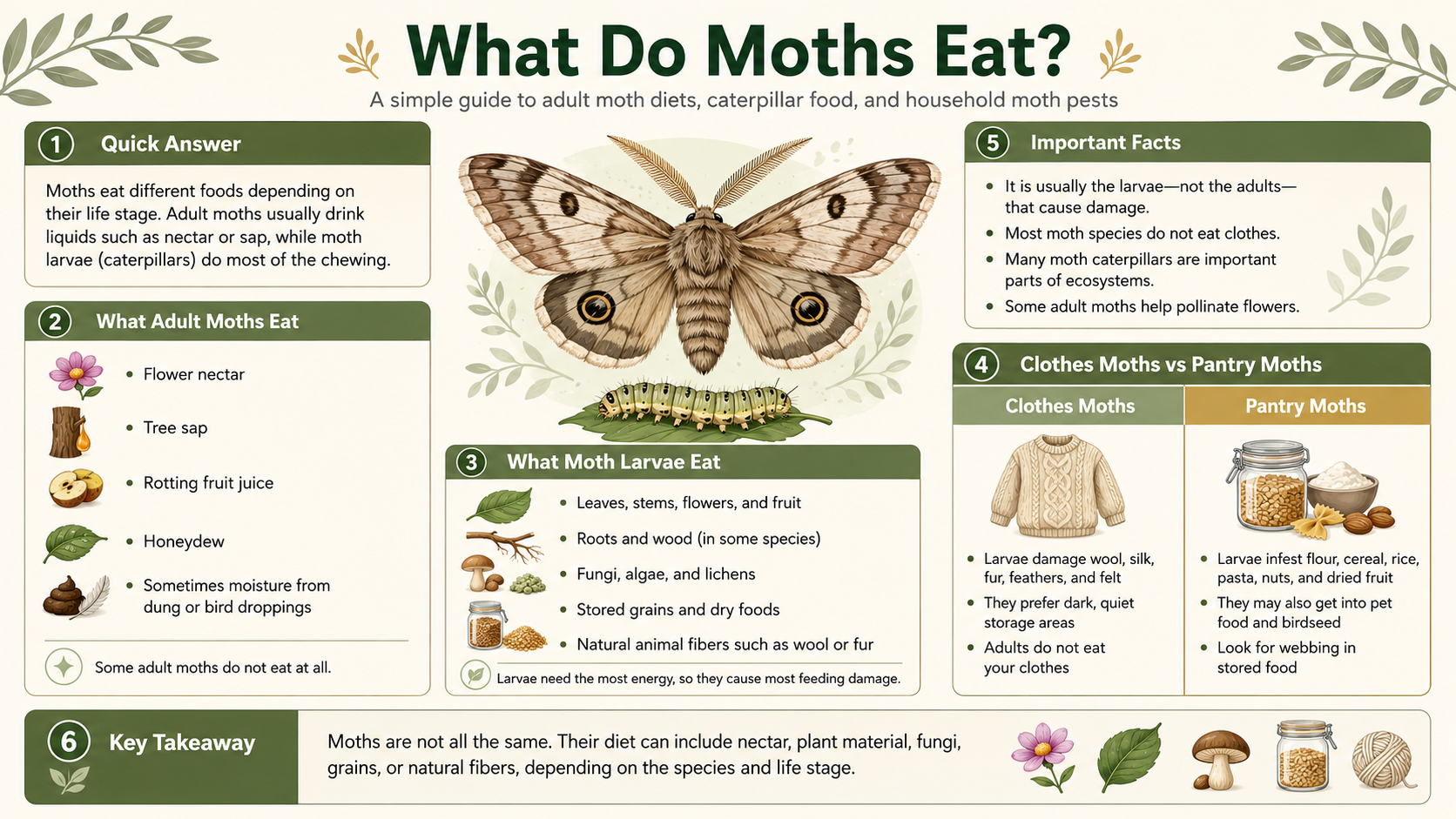
When people ask, “What do moths eat?”, the answer is usually more interesting than they expect. Many of us picture moths quietly destroying sweaters in a dark closet, but that is only one small part of the story. Most moths are not clothes-eaters at all, and even in the species that damage fabric, the adult moth is usually not the guilty one—the larvae are.
Moths have very different diets depending on their species and life stage. Adult moths may drink nectar, tree sap, or fruit juices. Caterpillars may eat leaves, roots, lichens, fungi, stored grains, animal fibers, or sometimes even other insects. Some adult moths do not eat anything at all. Butterfly Conservation notes that moth diets vary widely and depend strongly on where the moth is in its life cycle.
What Do Adult Moths Eat?
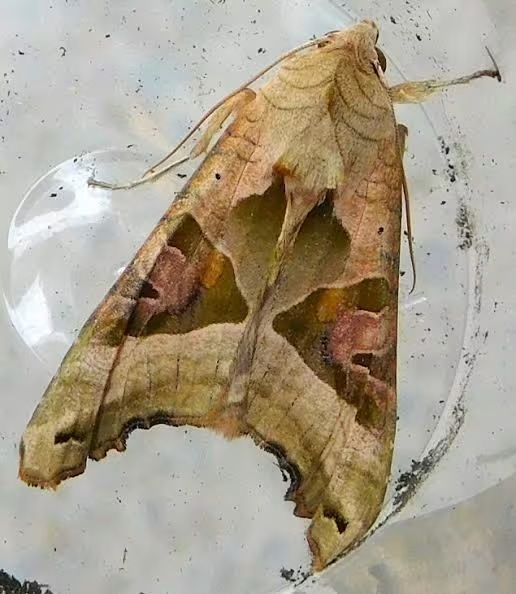
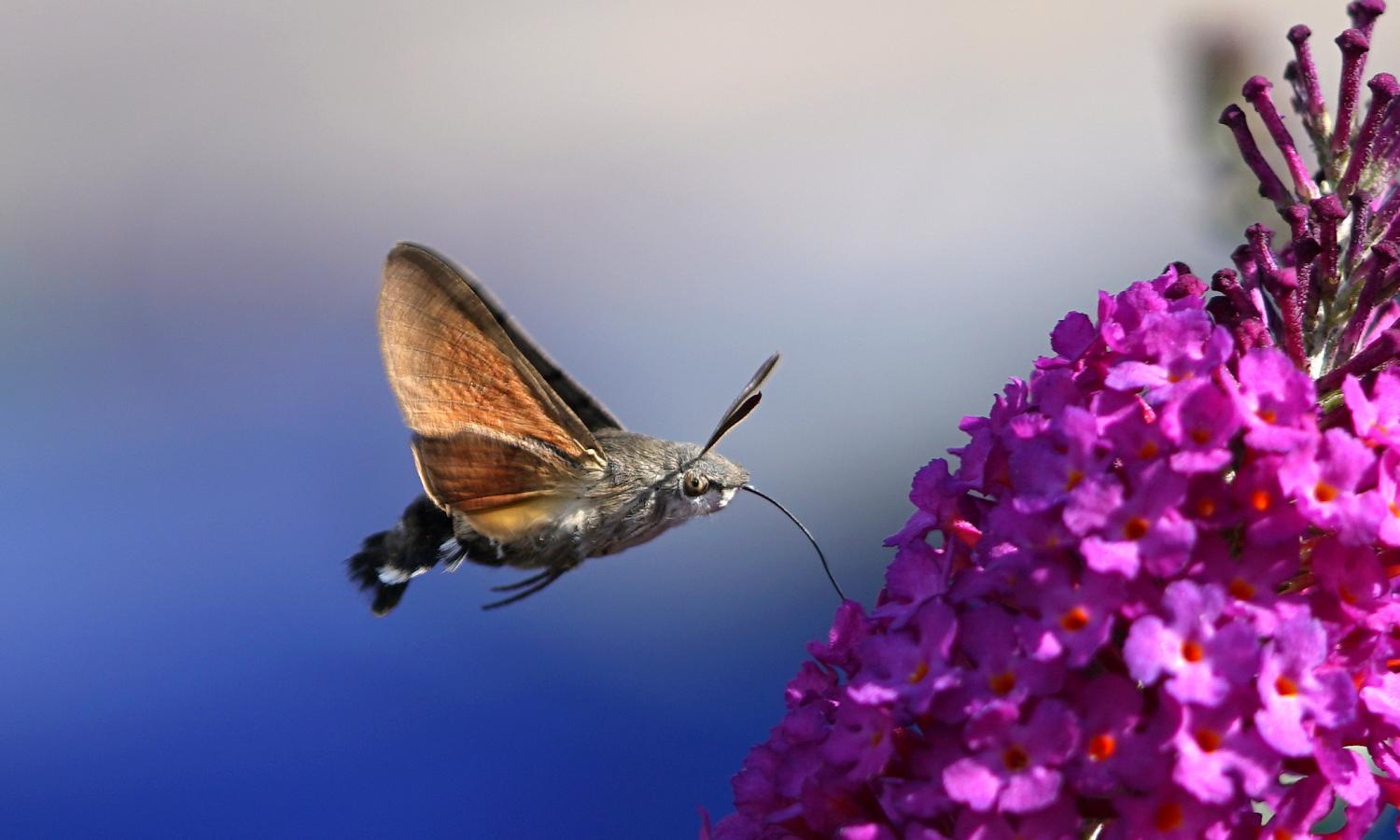
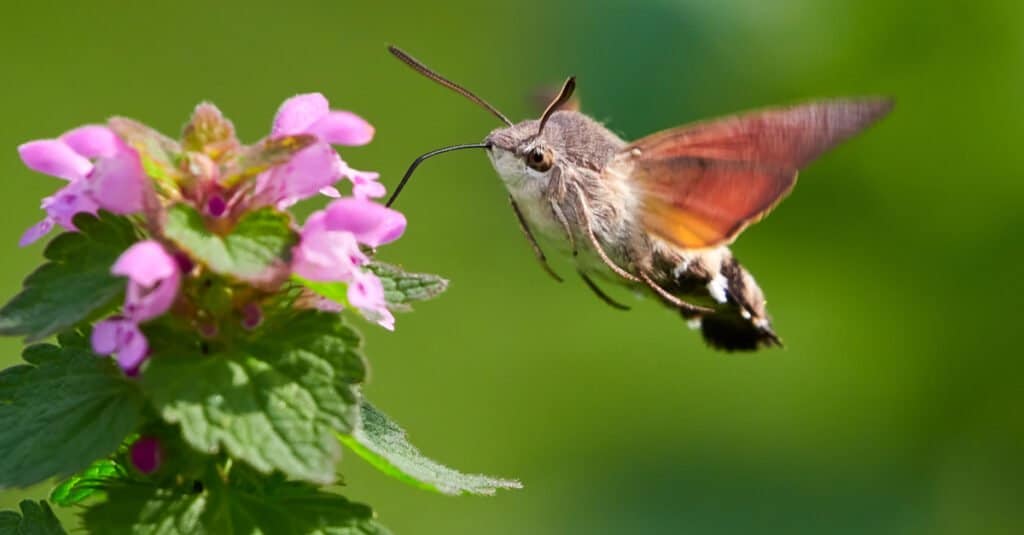
Most adult moths live on a liquid diet. Like butterflies, many adult moths use a long tube-like mouthpart called a proboscis to drink from liquid food sources. Smithsonian explains that butterflies and moths are part of Lepidoptera and are known for their scaled wings and coiled proboscis.
Common adult moth foods include:
- Flower nectar
- Tree sap
- Rotting fruit juice
- Honeydew from aphids and other insects
- Moisture from mud, dung, or bird droppings
- Sugar-rich mixtures used by moth watchers
Nectar is especially important because it gives adult moths quick energy for flying, mating, and finding places to lay eggs. Many night-flying moths visit flowers after dark, which is one reason moths can also act as pollinators.
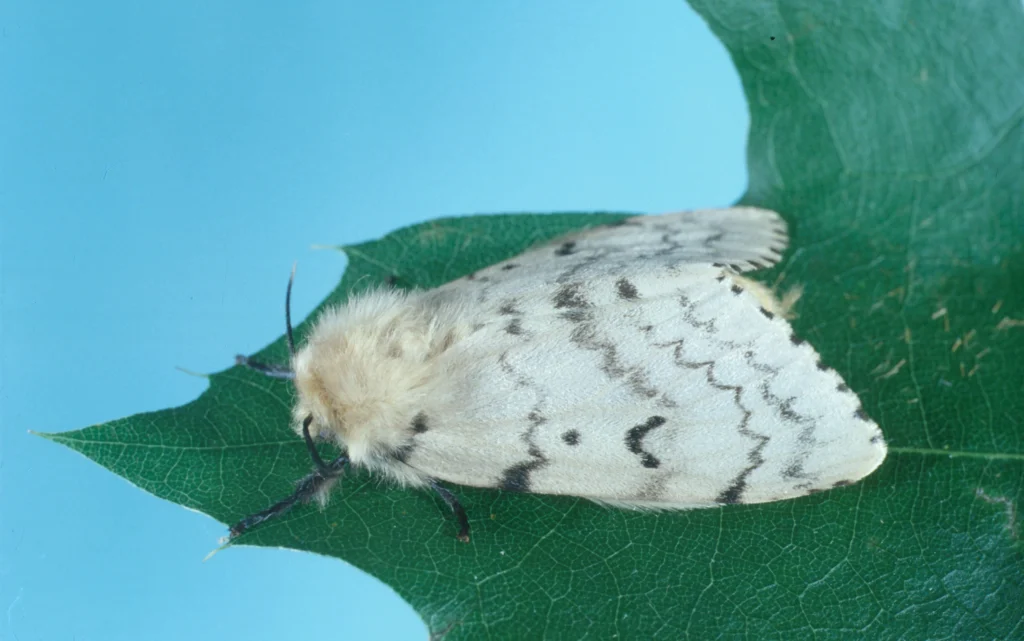
However, not all adult moths feed. Some species emerge as adults with reduced or non-functional mouthparts. Their adult stage is short, and their main purpose is reproduction. They rely on the energy they stored as caterpillars.
What Do Moth Larvae Eat?
If adult moths usually drink liquids, moth larvae are the real eaters. Larvae, also called caterpillars, need large amounts of energy and nutrients to grow, molt, and eventually transform into adult moths.
In the wild, many moth caterpillars eat plants. Their food can include:
- Leaves
- Stems
- Flowers
- Fruits
- Roots
- Wood
- Pond plants
Some species are highly specific and will only feed on certain host plants. Others are more flexible. Butterfly Conservation gives examples of moth caterpillars feeding on plant roots, willow wood, and even pondweeds, showing just how varied moth diets can be.
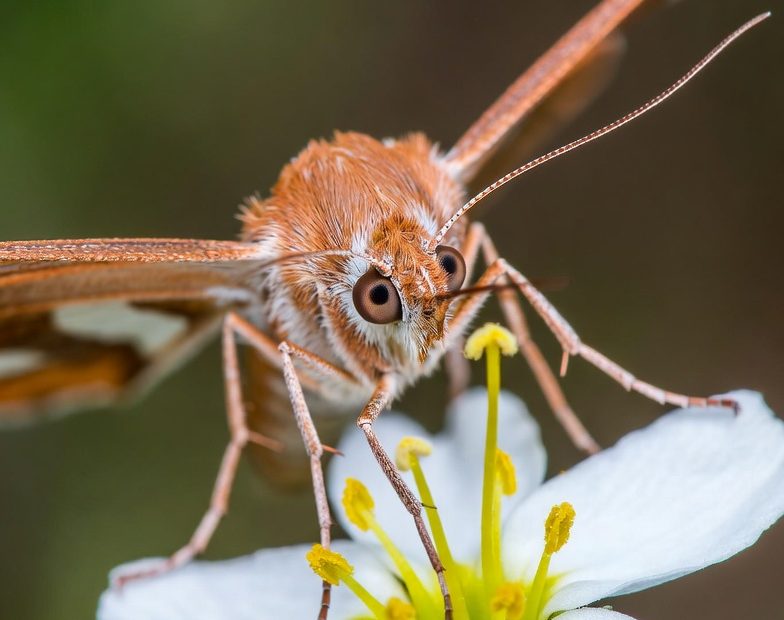
This is why moths matter in ecosystems. Their larvae feed on plants, while the adults may pollinate flowers, and both larvae and adults become food for birds, bats, spiders, frogs, and other wildlife.
Do Moths Eat Clothes?
Yes, but with an important correction: adult moths do not eat your clothes. The damage comes from the larvae of certain clothes moth species.
The Natural History Museum explains that the immature larvae—not the adult moths—cause damage to natural fibers such as wool clothing, upholstery, carpets, and furs. It also identifies two common clothes moths associated with this kind of damage: the common clothes moth, Tineola bisselliella, and the case-bearing clothes moth, Tinea pellionella.
Clothes moth larvae are attracted to materials that contain animal-based proteins, especially keratin. They may feed on:
- Wool
- Cashmere
- Silk
- Fur
- Feathers
- Felt
- Hair
- Pet fur
- Wool carpets
- Upholstery made from natural fibers
This is why a clean cotton T-shirt is usually less attractive to clothes moth larvae than a wool sweater stored in a dark closet. Stains from sweat, food, or body oils can also make fabrics more attractive to pests.
Why Do Moth Larvae Eat Fabric?
In nature, clothes moth larvae are not looking for sweaters. They evolved to feed on animal-based organic material such as feathers, fur, hair, and similar natural fibers. Your wool coat or cashmere sweater simply happens to provide a concentrated, indoor version of that food source.
Clothes moth larvae prefer quiet, dark, undisturbed places. This is why infestations often appear in:
- Closets
- Storage boxes
- Attics
- Under furniture
- Wool rugs
- Old blankets
- Forgotten winter clothing
The adult moths may be the ones you notice flying around, but the larvae are usually hidden in the material they are feeding on.
What Do Pantry Moths Eat?
Pantry moths are a different problem. Instead of wool and fur, they target stored dry foods. The best-known pantry moth is the Indianmeal moth, but other stored-product moths can also infest kitchens, cupboards, warehouses, and pet food storage areas.
The University of Minnesota Extension notes that Indianmeal moth larvae feed in stored products such as dry stored food and whole grains, and infested foods may show silk webbing on the surface. Penn State Extension also lists grains, dried fruits, nuts, cereals, and processed foods as common foods for Indian meal moth larvae.
Pantry moth larvae may feed on:
- Flour
- Cereal
- Rice
- Oatmeal
- Pasta
- Baking mixes
- Beans
- Nuts
- Dried fruit
- Spices
- Tea
- Chocolate
- Candy
- Birdseed
- Pet food
Again, the larvae cause the damage. The adult moths may be seen flying around the kitchen, but the feeding and contamination happen where the eggs hatch and the larvae develop.
Do Moths Eat Plants?
Many moth caterpillars eat plants, and this is probably the most common diet in the moth world. Depending on the species, a caterpillar may feed on leaves, roots, flowers, fruits, bark, or wood.
Some garden moth larvae are general feeders, while others depend on very specific host plants. This matters for conservation because protecting moths often means protecting the plants their caterpillars need. Butterfly Conservation’s educational material also notes that moth caterpillars depend on plants for food and that different caterpillars eat different plants or different plant parts.
For gardeners, this can be both good and bad. Some caterpillars may chew ornamental or vegetable plants, but many moths are also valuable parts of the garden ecosystem.
Do Moths Eat Fruit?
Adult moths may feed on the juices of rotting or overripe fruit. They are not usually biting into fresh fruit like a caterpillar would chew a leaf. Instead, they drink the sugary liquid that leaks from damaged or fermenting fruit.
This is one reason moth watchers sometimes use sweet mixtures to attract moths at night. Moths are drawn to sugar-rich liquids because these provide fast energy.
Do Moths Eat Fungi, Algae, or Lichens?
Some moth caterpillars have surprisingly specialized diets. A number of species feed on lichens, algae, or fungi rather than fresh green leaves. Butterfly Conservation gives examples of caterpillars associated with lichens, algae, and bracket fungi growing on trees.
This type of diet is easy to overlook because these moths are not usually the ones people notice in homes. But ecologically, they show how diverse moth feeding habits really are.
Do Moths Eat Other Insects?
Most moth caterpillars are herbivores, but not all of them. Some species may eat other caterpillars or small insects, especially when they live in confined spaces such as stems or plant tunnels.
This is not the typical moth diet, but it does happen. Butterfly Conservation describes examples of caterpillars that feed partly or mostly on other insects.
What Do House Moths Eat?
When people say “house moths,” they usually mean either clothes moths or pantry moths. These two groups behave very differently.
Clothes moth larvae eat animal-based natural fibers such as wool, fur, feathers, silk, and hair. Pantry moth larvae eat stored dry foods such as flour, cereal, rice, nuts, dried fruit, pet food, and birdseed.
A simple way to tell the difference is to look at where the problem appears:
If you find holes in wool clothing, damaged carpets, or larvae in fabric storage, think clothes moths.
If you find webbing, larvae, or moths around dry food packages, think pantry moths.
Quick Answer: What Do Moths Eat?
Moths eat different things depending on their life stage:
| Moth Stage or Type | What They Usually Eat |
|---|---|
| Adult moths | Nectar, sap, rotting fruit juice, honeydew, other liquids |
| Many moth larvae | Leaves, stems, flowers, fruits, roots, wood |
| Clothes moth larvae | Wool, silk, fur, feathers, hair, felt, other animal fibers |
| Pantry moth larvae | Flour, cereal, rice, pasta, nuts, dried fruit, pet food, birdseed |
| Some specialist larvae | Fungi, lichens, algae, pond plants |
| Some adult moths | Nothing; they rely on stored energy |
How to Prevent Moths from Eating Clothes or Food
The best prevention method depends on the type of moth.
For clothes moths:
- Clean wool and natural-fiber clothing before storage
- Store seasonal clothes in sealed containers
- Vacuum closets, rugs, and under furniture regularly
- Pay attention to pet hair, lint, and hidden dust
- Avoid leaving woolens undisturbed for long periods
For pantry moths:
- Store flour, grains, cereals, and nuts in airtight containers
- Check dry goods before storing them
- Throw away infested food
- Clean pantry shelves, cracks, and corners thoroughly
- Do not forget pet food and birdseed
For pantry pests, the University of Maryland Extension recommends discarding infested foods and cleaning shelves carefully to remove food material, eggs, or larvae hidden in cracks and corners.
Final Thoughts on What Moths Eat
So, what do moths eat? The honest answer is: far more than clothes.
Adult moths often sip nectar, sap, fruit juices, and other liquids. Many caterpillars eat plants. Some feed on fungi, lichens, algae, wood, roots, or even other insects. A small number of moth larvae damage natural fabrics, while pantry moth larvae feed on stored dry foods.
Understanding the difference between adult moths and larvae is the key. If something is being chewed, damaged, or contaminated, the hidden larvae are usually responsible—not the adult moth fluttering near the light.
FAQ
Do moths really eat clothes?
Some moth larvae eat clothes, but adult moths do not. Clothes moth larvae feed on animal-based natural fibers such as wool, silk, fur, feathers, and hair.
What do adult moths eat?
Many adult moths drink nectar, tree sap, rotting fruit juice, honeydew, or other sugary liquids. Some adult moths do not feed at all and live only long enough to reproduce.
What do moth larvae eat?
Many moth larvae eat plants, including leaves, stems, flowers, fruits, roots, and wood. Some larvae eat fungi, lichens, algae, stored foods, natural fibers, or even other insects.
Do pantry moths eat clothes?
No. Pantry moths usually infest stored dry foods such as flour, cereal, rice, pasta, nuts, dried fruit, pet food, and birdseed. Clothes moths and pantry moths are different household pests.
Do clothes moths eat cotton?
Clothes moth larvae prefer animal-based fibers such as wool, fur, silk, feathers, and hair. Pure cotton is usually less attractive, though blended or stained fabrics may still be vulnerable in some situations.
Why do moths eat wool?
Clothes moth larvae eat wool because it contains keratin, a protein found in animal-based fibers. The larvae use these nutrients to grow before becoming adult moths.
Do moths eat fruit?
Adult moths may drink juices from rotting or damaged fruit. They are usually attracted to the sugary liquid rather than eating fruit in the way a caterpillar chews leaves.
Do all moths eat as adults?
No. Some adult moths do not eat at all. They survive on energy stored during the caterpillar stage and focus on mating and laying eggs.