Introduction
Moths are far more varied than many people realize. Some are tiny and plain, resting quietly on a wall near a porch light. Others are large, patterned, furry, brightly colored, or shaped almost like leaves. A few are household pests, but most moths are harmless outdoor insects that play useful roles as pollinators, food for birds and bats, and part of healthy garden ecosystems.
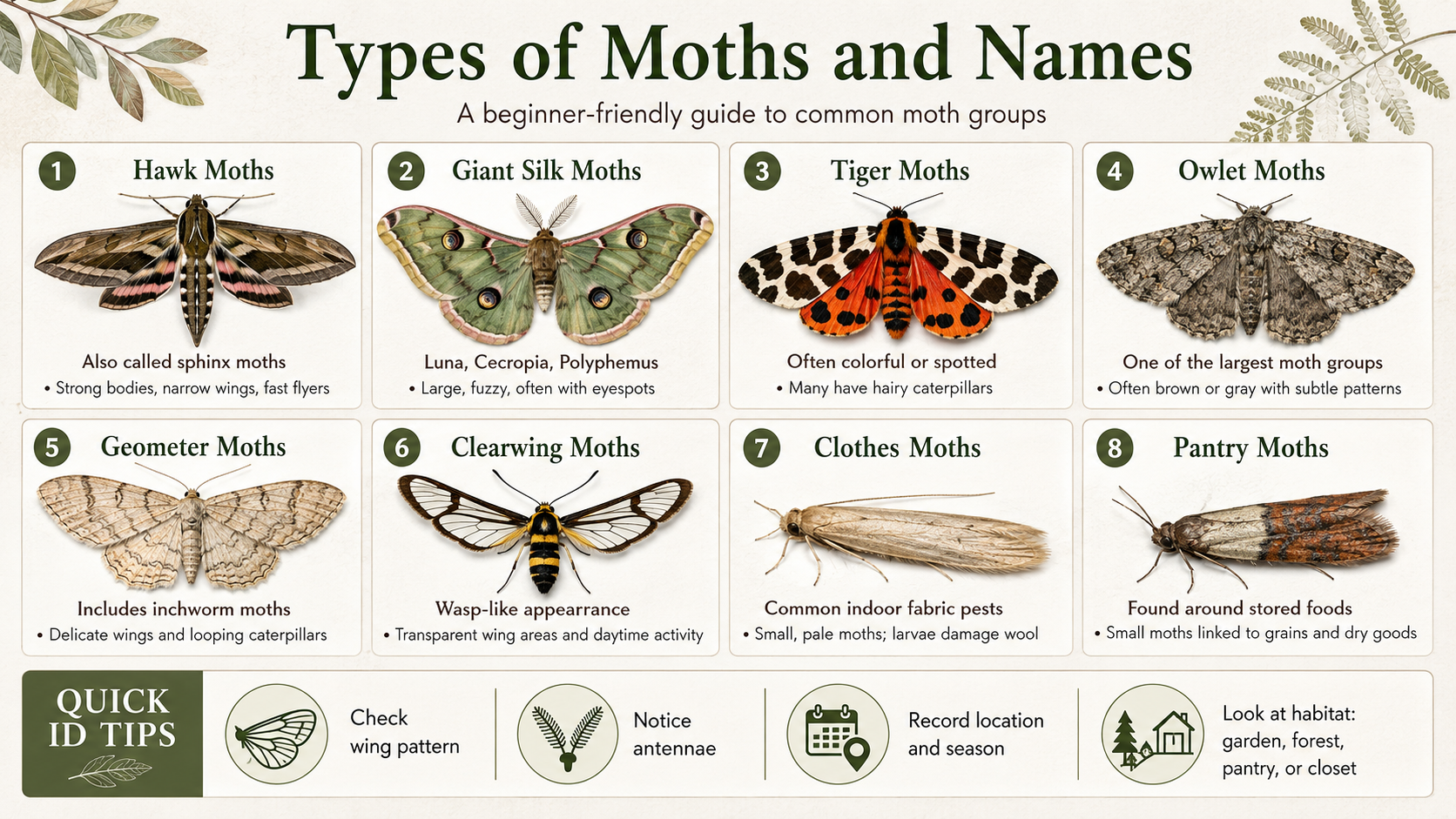
This guide to types of moths and names is written for beginners: homeowners, gardeners, students, teachers, and nature lovers who want to understand what they are seeing without getting lost in complicated scientific terminology.
Moths belong to the insect order Lepidoptera, the same group as butterflies and skippers. Lepidoptera is one of the largest insect orders, with about 180,000 described species of butterflies, moths, and skippers combined, and moths make up the great majority of that diversity.
This page will help you recognize major moth groups, understand common moth names, compare moth families, and know when identification requires more than a quick photo.
What Is a Moth?
A moth is an insect in the order Lepidoptera. The word “Lepidoptera” means “scaly wings,” and that is one of the key features of moths and butterflies. Their wings are covered with tiny overlapping scales, which create many of the colors, patterns, and textures we see.
Most adult moths have:
- Two pairs of wings
- Six legs
- Antennae
- A body divided into head, thorax, and abdomen
- Scales on the wings and body
- A coiled feeding tube called a proboscis in many species
The Smithsonian notes that moths and butterflies are distinctive among insects because of their scaled wings and, in many species, a coiled proboscis used for feeding.
Not all adult moths feed. Some large silk moths, for example, live only briefly as adults and rely on energy stored from their caterpillar stage. This is one reason moth life cycles are so interesting: the caterpillar and adult may look, behave, and feed in completely different ways.
Moths vs Butterflies: Simple Differences
Moths and butterflies are close relatives, and the line between them is not always as neat as beginner guides suggest. Still, several practical clues can help.
Antennae
Butterflies usually have club-shaped antennae with rounded tips. Moths usually have threadlike, feathery, comb-like, or tapered antennae rather than clubbed tips. The Smithsonian and BugGuide both describe antenna shape as one of the most useful beginner clues.
Resting posture
Many butterflies rest with their wings held upright over the body. Many moths rest with wings spread flat, tent-like, or wrapped around the body. This is not a perfect rule, but it is often helpful.
Time of activity
Many moths are active at night, while many butterflies fly during the day. However, some moths are day-flying, including many clearwing moths, tiger moths, burnet moths, and hummingbird moths. The Wildlife Trusts notes that moths do not only come out at night and that some species fly during warm, sunny days.
Body shape
Moths often have thicker, fuzzier bodies than butterflies. This “furry” appearance is created by scales and hairlike structures, not mammal-like hair.
Why Moth Names Can Be Confusing
When people search for types of moths and names, they may be looking for different things:
- Common names, such as “luna moth” or “tiger moth”
- Scientific names, such as Actias luna
- Moth families, such as Saturniidae or Sphingidae
- Household moth names, such as clothes moth or pantry moth
- Visual categories, such as “large green moth” or “small brown moth”
A single moth may have a common name, a scientific species name, a genus name, and a family name. For example:
- Common name: Luna moth
- Scientific name: Actias luna
- Family: Saturniidae
- Group name: Giant silk moth
Scientific names are useful because common names vary by country and region. But for beginners, common names and family-level groups are often the best starting point.
Main Types of Moths and Names
Below are the major moth groups beginners are most likely to encounter. These are not the only moth families in the world, but they are practical categories for identification and learning.
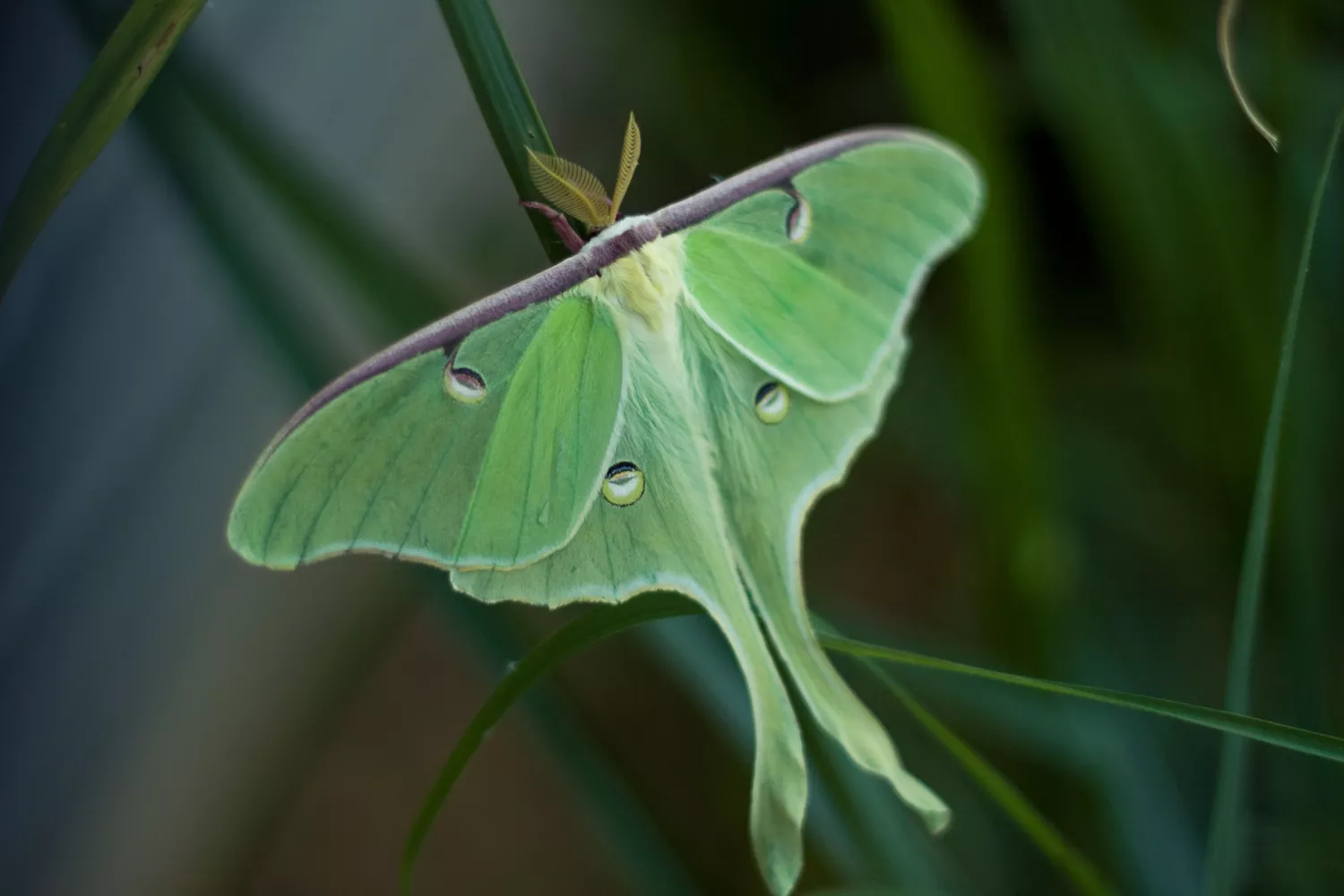
1. Hawk Moths / Sphinx Moths
Common names: hawk moths, sphinx moths, hummingbird moths
Family: Sphingidae
Typical look: strong bodies, narrow wings, fast flight
Where seen: flowers, gardens, lights, woodland edges
Beginner clue: some hover like hummingbirds while feeding
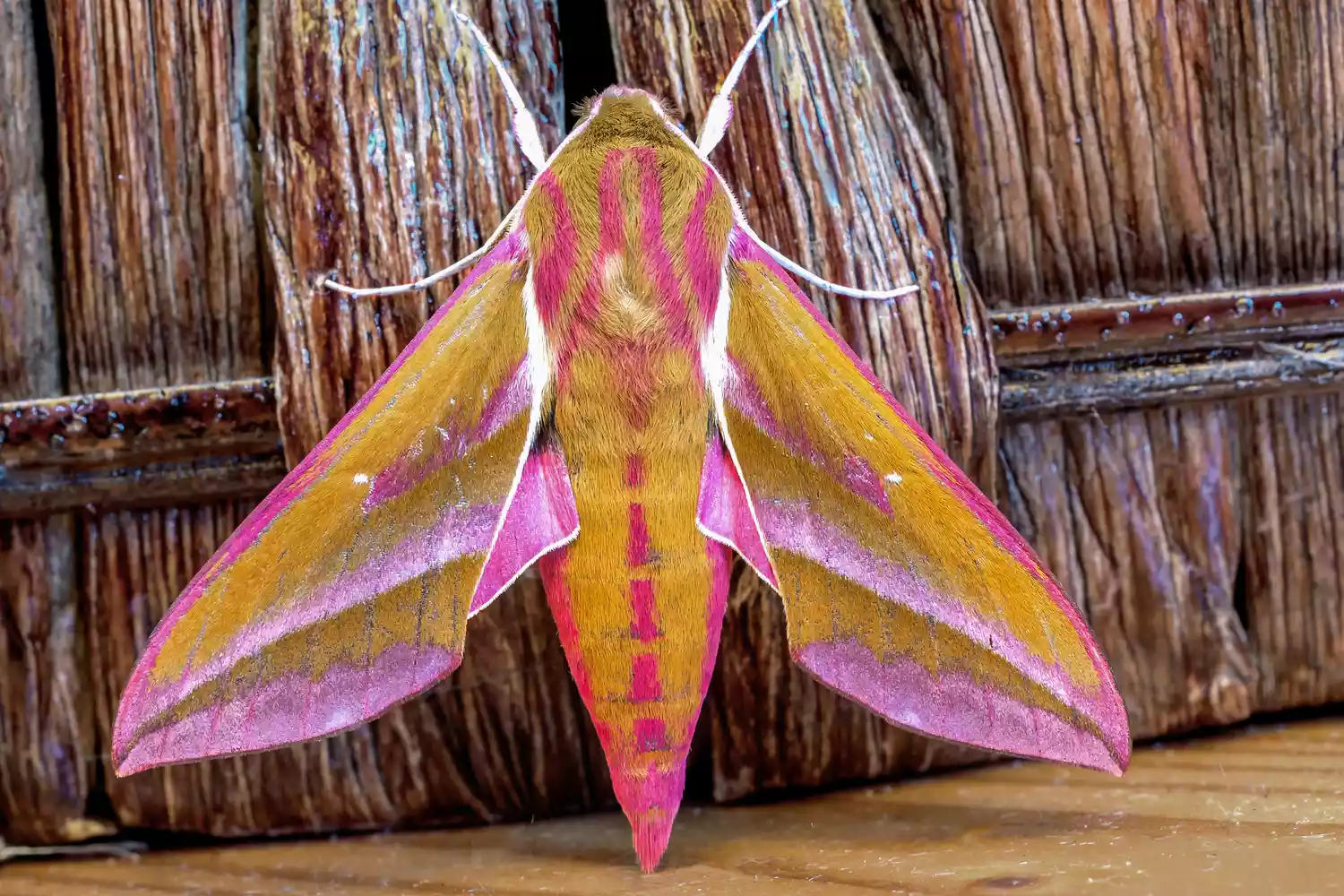
Hawk moths are among the most dramatic moths. Many have powerful, streamlined bodies and long, narrow wings. Some species feed while hovering in front of flowers, which makes them easy to mistake for hummingbirds.
Common examples include:
- Hummingbird clearwing moth
- White-lined sphinx moth
- Elephant hawk moth
- Privet hawk moth
- Death’s-head hawk moth
Hawk moth caterpillars are often called “hornworms” because many have a curved horn-like projection near the rear end. Despite the name, this “horn” is usually not dangerous.
Identification tips for hawk moths
Look for a large or medium-sized moth with a strong body, pointed wings, and rapid flight. If it is hovering at flowers, especially around dusk, it may be a hawk moth.
2. Giant Silk Moths
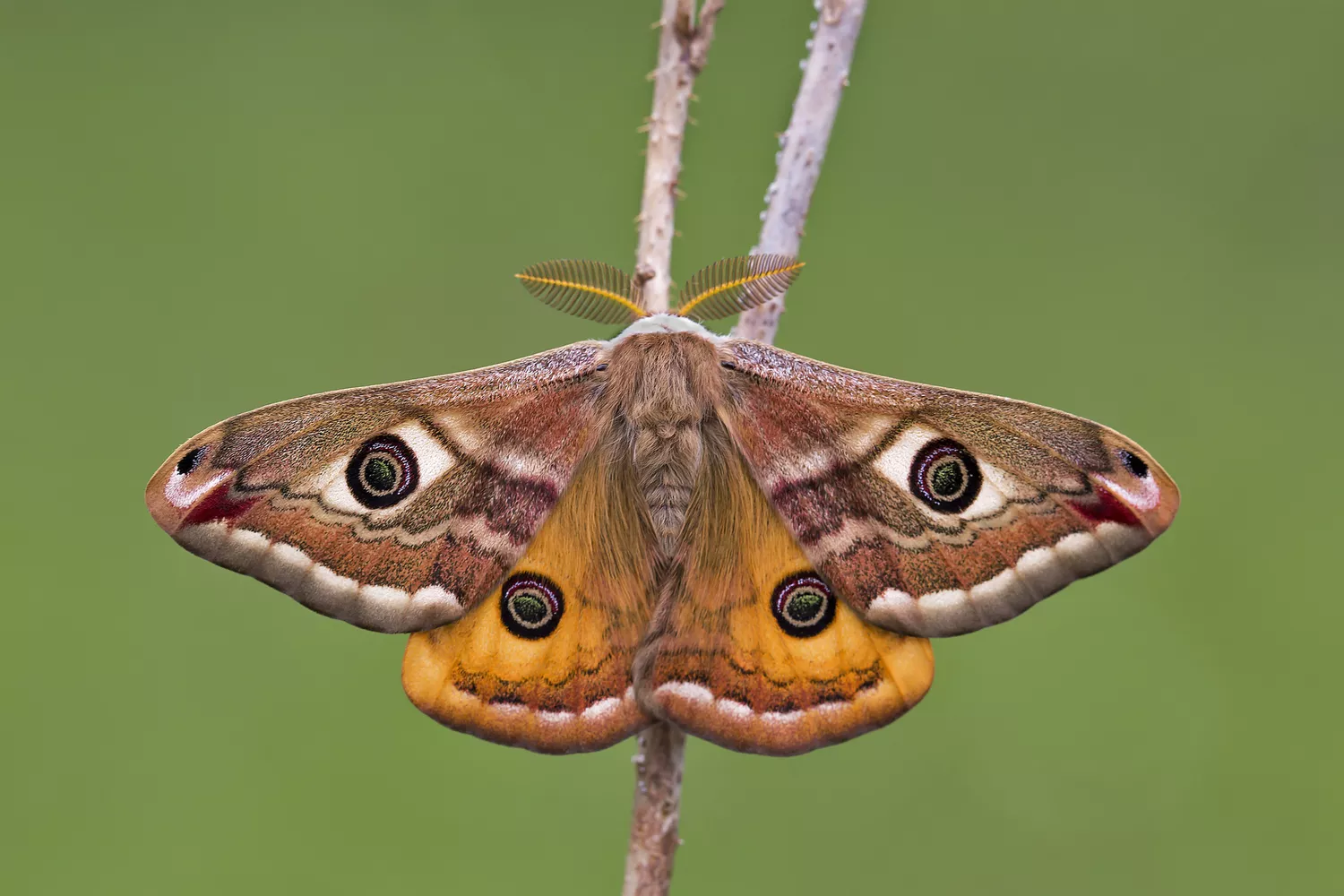
Common names: giant silk moths, royal moths, emperor moths
Family: Saturniidae
Typical look: large wings, bold eyespots, furry bodies
Where seen: forests, gardens, porch lights
Beginner clue: many adults are large, beautiful, and short-lived
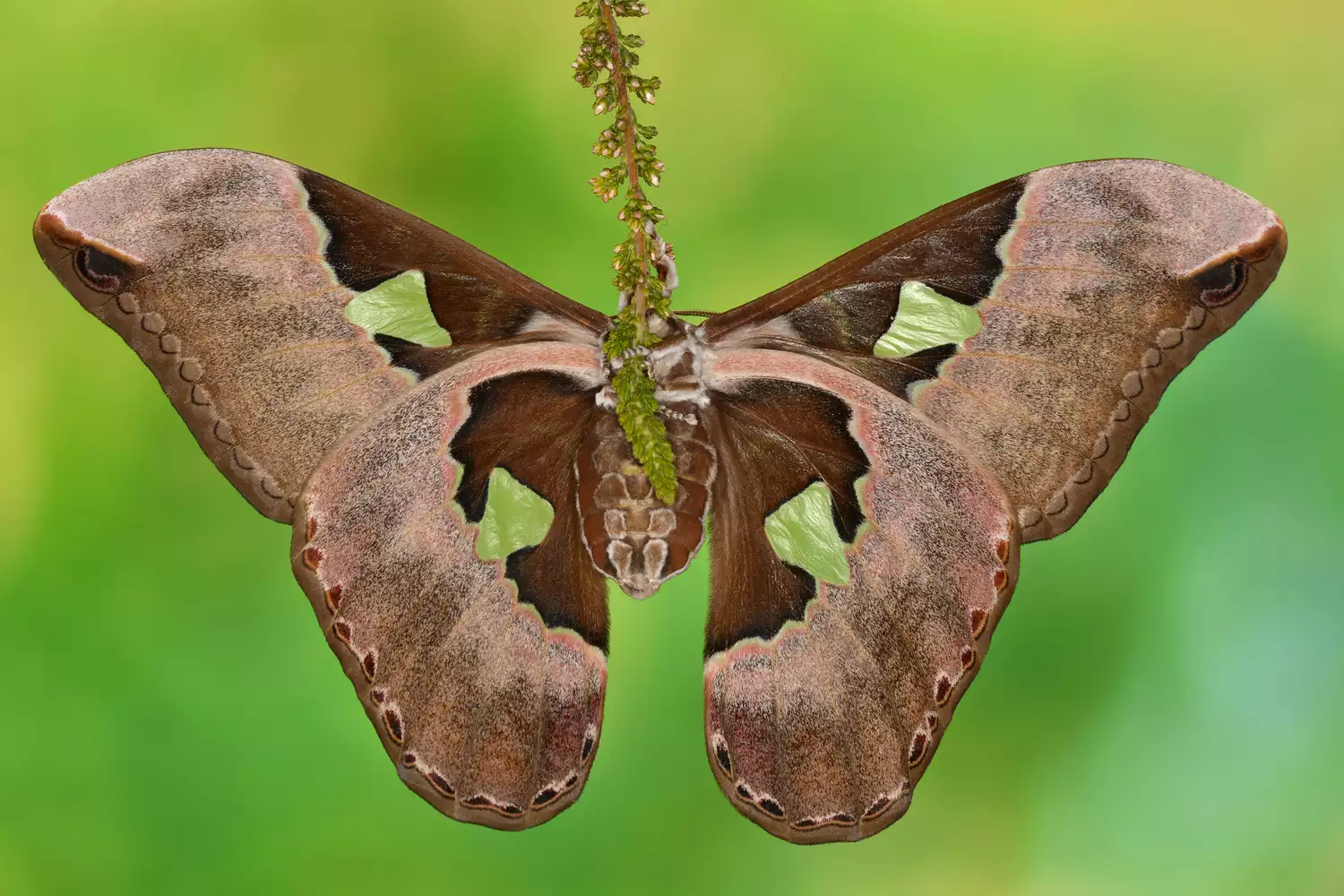
Giant silk moths include some of the most famous moth species. They are often large, soft-looking, and beautifully patterned.
Well-known names include:
- Luna moth
- Cecropia moth
- Polyphemus moth
- Atlas moth
- Io moth
- Imperial moth
- Promethea moth
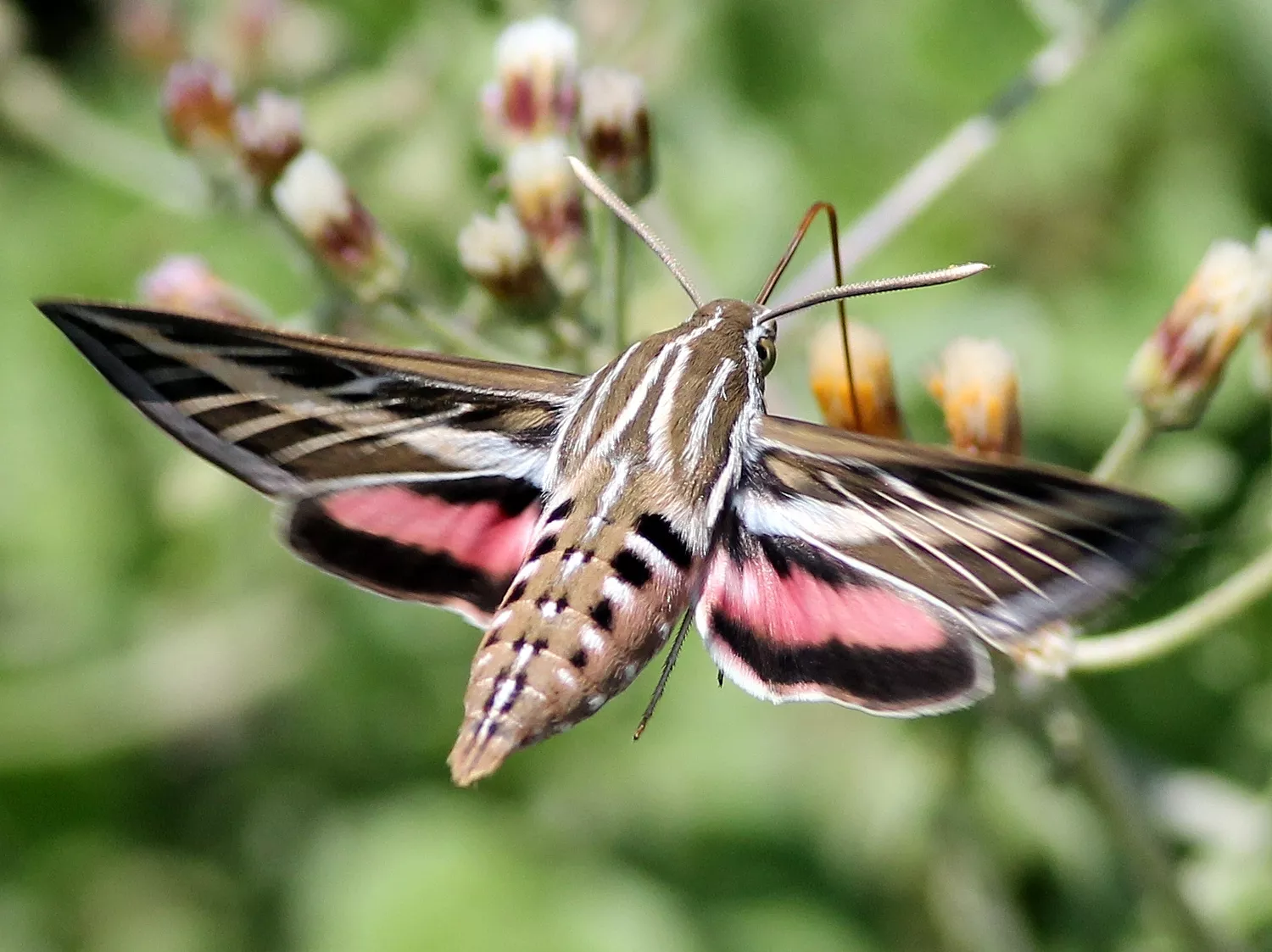
The luna moth, for example, is a pale green North American species with long tails on the hindwings. National Geographic describes its caterpillars feeding on plants such as walnut, hickory, sweet gum, and paper birch before forming a cocoon.
Identification tips for giant silk moths
Look for large size, broad wings, fuzzy bodies, and eye-like markings. Many are attracted to lights at night.
3. Tiger Moths
Common names: tiger moths, lichen moths, wasp moths
Family: Erebidae, subfamily Arctiinae
Typical look: colorful patterns, spotted wings, bright hindwings
Where seen: gardens, meadows, woodland edges
Beginner clue: many have bold warning colors
Tiger moths are often patterned with spots, stripes, or bright colors. Some species have red, orange, yellow, or black markings. The caterpillars of some tiger moths are known as “woolly bears.”
Common names include:
- Garden tiger moth
- Isabella tiger moth
- Scarlet tiger moth
- Cinnabar moth
- Virgin tiger moth
The Natural History Museum highlights the cinnabar moth and other distinctive moths as examples of colorful species that challenge the idea that moths are always dull or brown.
Identification tips for tiger moths
Look for spotted or brightly colored wings, a fuzzy body, and sometimes bold warning colors. Caterpillars may be hairy.
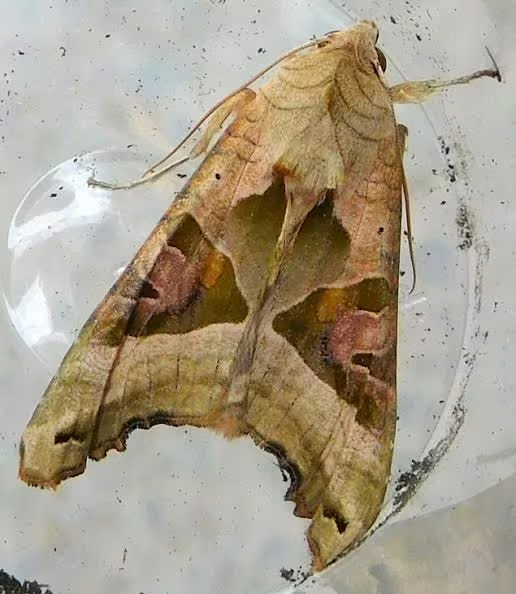
4. Owlet Moths
Common names: owlet moths, cutworm moths, armyworm moths, underwing moths
Family: Noctuidae
Typical look: often brown, gray, or patterned; many rest with wings folded roof-like
Where seen: gardens, fields, lights, crops, forests
Beginner clue: one of the largest and most common moth groups
Owlet moths are extremely diverse. Many are small to medium-sized and colored in shades of brown, tan, gray, or black. Their patterns can be subtle but beautiful when seen up close.
Common names include:
- Large yellow underwing
- Armyworm moth
- Cutworm moth
- Dagger moth
- Ear moth
- Wainscot moth
Some owlet moth larvae are important in agriculture because caterpillars feed on crops or garden plants. However, many species are simply part of normal outdoor biodiversity.
Identification tips for owlet moths
Look for a sturdy moth with muted forewings, often resting in a triangular or roof-like shape. Species-level identification may require careful photos.
5. Geometer Moths
Common names: geometer moths, inchworm moths
Family: Geometridae
Typical look: delicate bodies, broad wings, often held flat
Where seen: gardens, forests, walls, porch lights
Beginner clue: caterpillars move in a looping “inchworm” motion
Geometer moths are named from a Greek root meaning “earth measurer,” referring to the looping movement of their caterpillars. The caterpillars appear to “measure” the surface as they move.
Common names include:
- Winter moth
- Emerald moth
- Carpet moth
- Pug moth
- Wave moth
- Thorn moth
Adult geometer moths are often delicate and butterfly-like. Many rest with their wings spread flat, showing fine lines or wavy patterns.
Identification tips for geometer moths
Look for slender bodies, delicate wings, and fine cross-lines. If you find a looping caterpillar, it may belong to this family.
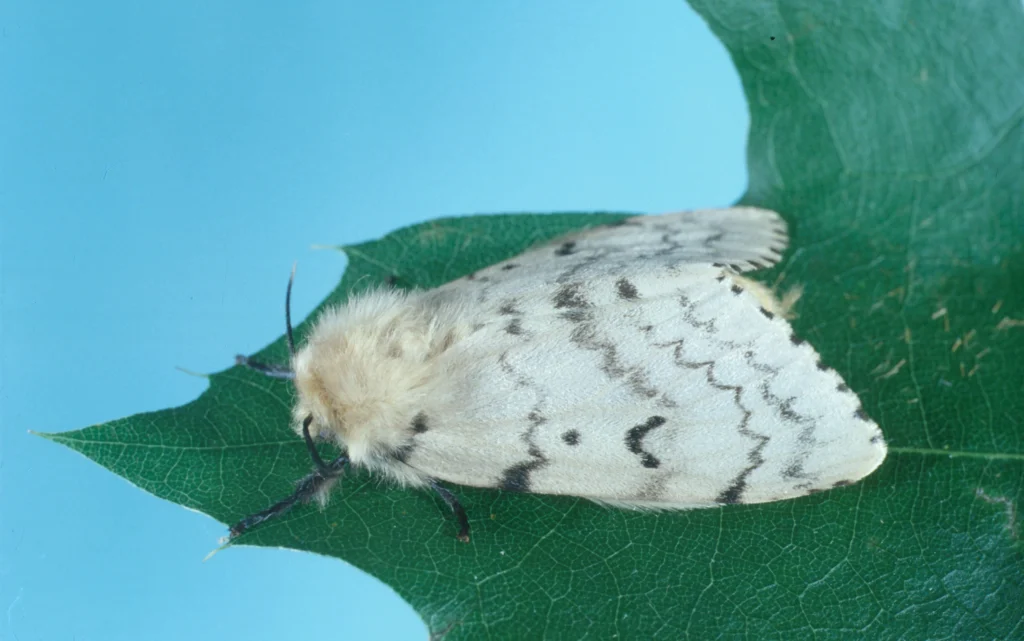
6. Tussock Moths
Common names: tussock moths
Family: Erebidae, subfamily Lymantriinae
Typical look: adults vary; caterpillars often hairy with tufts
Where seen: trees, shrubs, forests, gardens
Beginner clue: caterpillars often have brush-like hair tufts
Tussock moths are especially known for their caterpillars, which may have tufts, brushes, or pencil-like hairs. Some are visually striking, but hairy caterpillars should not be handled because some can irritate skin.
Common names include:
- White-marked tussock moth
- Vapourer moth
- Pale tussock moth
- Satin moth
Identification tips for tussock moths
Caterpillars are often easier to recognize than adults. Look for dense hair tufts, contrasting colors, and feeding on tree leaves.
7. Clearwing Moths
Common names: clearwing moths, wasp moths
Family: Sesiidae
Typical look: transparent wing areas, wasp-like body
Where seen: gardens, forests, near host plants
Beginner clue: many mimic wasps or bees
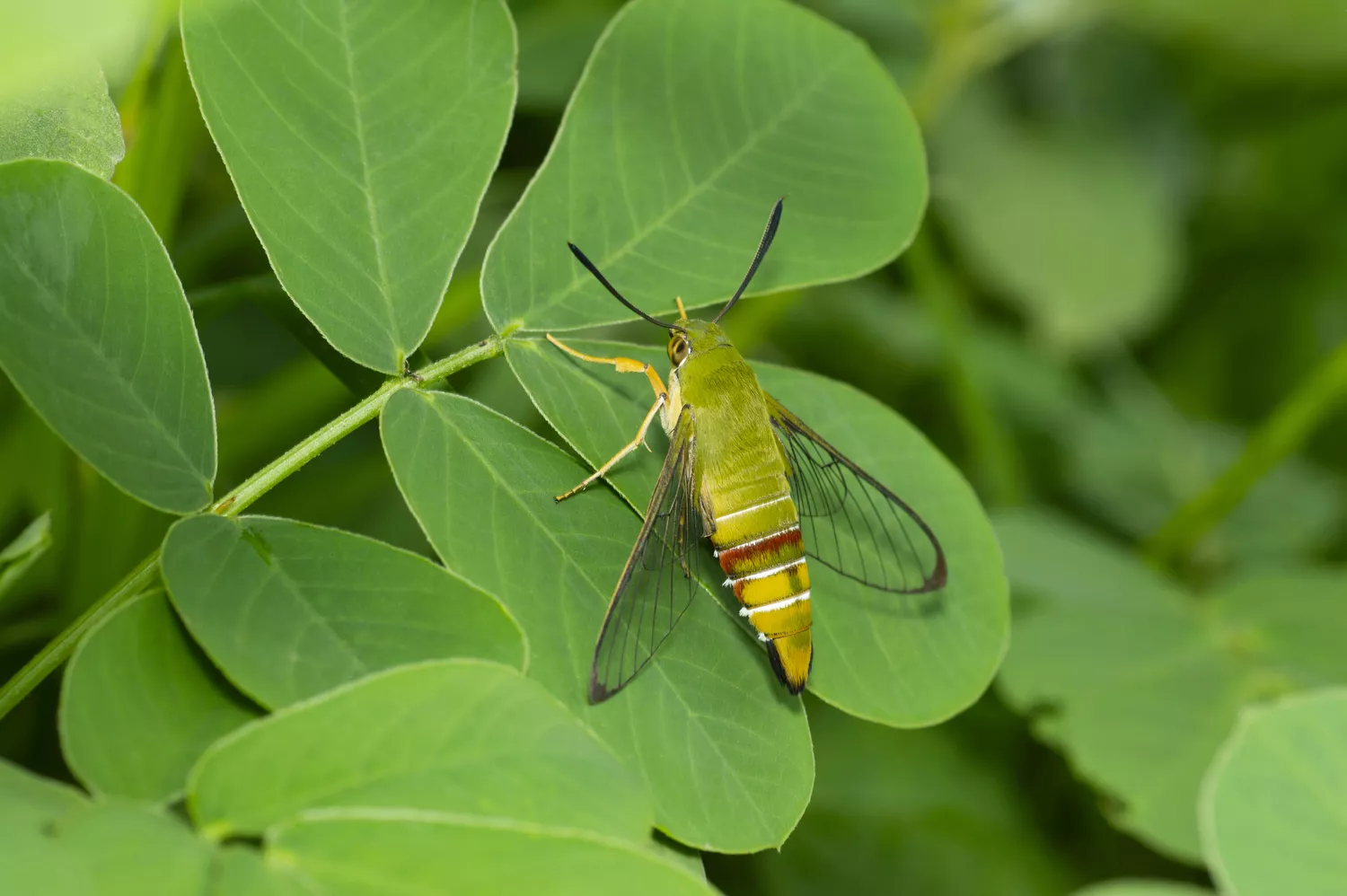
Clearwing moths are excellent mimics. Many have narrow transparent wings and yellow-black markings that make them look like wasps. This mimicry may help protect them from predators.
Common names include:
- Hummingbird clearwing moth
- Snowberry clearwing moth
- Raspberry crown borer moth
- Hornet moth
Identification tips for clearwing moths
Look for transparent wings, a wasp-like body, and daytime activity around flowers or host plants.
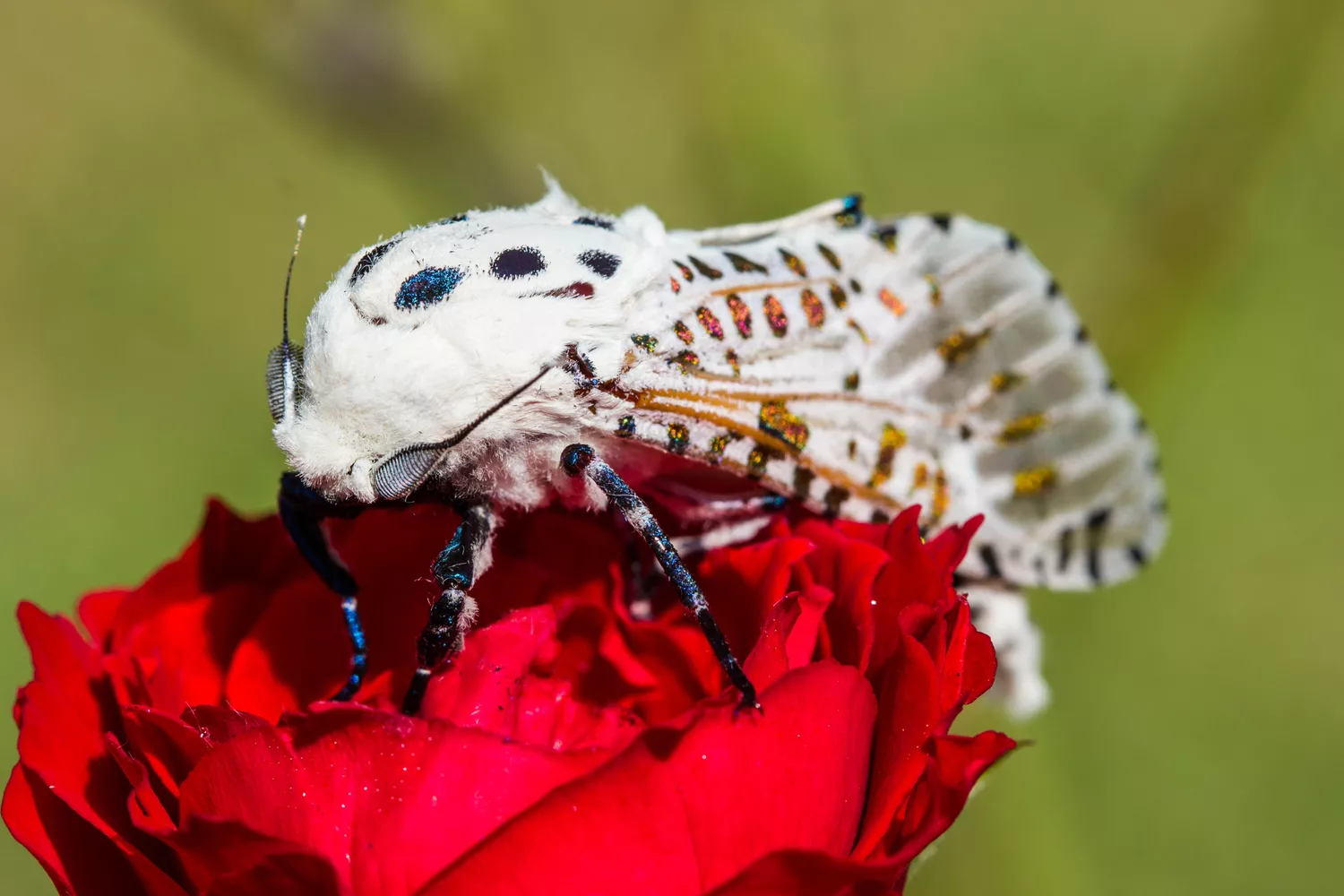
8. Tortricid Moths
Common names: leafroller moths, tortrix moths
Family: Tortricidae
Typical look: small moths with folded, bell-shaped resting posture
Where seen: gardens, orchards, forests
Beginner clue: larvae often roll or tie leaves with silk
Tortricid moths are usually small and easy to overlook. Their caterpillars often roll, fold, or tie leaves together, creating a shelter while feeding.
Common names include:
- Codling moth
- Oriental fruit moth
- Oak leafroller
- Light brown apple moth
Some species are orchard or garden pests, but many are simply small native moths living quietly among plants.
Identification tips for tortricid moths
Look for small size, angled wings, and leaf-rolling behavior in larvae.
9. Clothes Moths
Common names: webbing clothes moth, case-bearing clothes moth
Family: Tineidae
Typical look: small, pale, narrow-winged moths
Where seen: closets, stored fabrics, carpets, upholstery
Beginner clue: larvae, not adults, damage natural fibers
Clothes moths are among the few moths that regularly concern homeowners. The Natural History Museum identifies the common clothes moth, Tineola bisselliella, and the case-bearing clothes moth, Tinea pellionella, as two species commonly associated with damage to natural fibers such as wool, fur, carpets, and upholstery. It is the larvae, not the adult moths, that cause the damage.
Identification tips for clothes moths
Look for small beige or golden moths in dark, undisturbed indoor areas. Also check for larvae, silk webbing, cases, shed skins, and irregular holes in wool or other animal-based fibers.
10. Pantry Moths
Common names: Indian meal moth, flour moth, meal moth
Family: Pyralidae and related groups
Typical look: small moths associated with stored dry food
Where seen: kitchens, pantries, grain storage, pet food
Beginner clue: larvae are usually found in stored food products
Pantry moths are another household group. The Indian meal moth is one of the best-known examples. USDA notes that Indian meal moths are not known to bite or sting, but their larvae can contaminate stored food products such as grains and flour.
Identification tips for pantry moths
Look for small moths flying near cupboards, larvae or webbing in dry foods, and clumped grains or flour. Store dry foods in sealed containers and discard heavily infested products.
Common Moth Families Explained
Saturniidae: Giant Silk Moths
Large, often spectacular moths. Many adults do not feed and live only long enough to reproduce.
Sphingidae: Hawk and Sphinx Moths
Strong, fast-flying moths. Some hover at flowers like hummingbirds.
Erebidae: Tiger Moths, Tussock Moths, Underwings, and Relatives
A large family containing many colorful, hairy, or boldly patterned moths.
Noctuidae: Owlet Moths
A huge family of mostly night-flying moths. Many are brown or gray, but the group is highly diverse.
Geometridae: Geometer Moths
Delicate moths whose caterpillars are often called inchworms.
Tineidae: Clothes Moths and Relatives
Small moths, some of which feed as larvae on natural fibers or organic material.
Pyralidae / Crambidae: Snout Moths, Grass Moths, Pantry Moths, and Relatives
Often small to medium-sized moths. Some are household or agricultural species; many are harmless outdoor moths.
Popular Moth Species Names Beginners Should Know
Luna Moth
The luna moth is one of the most recognizable North American moths. It has pale green wings, long hindwing tails, and eye-like markings. It belongs to the giant silk moth family.
Atlas Moth
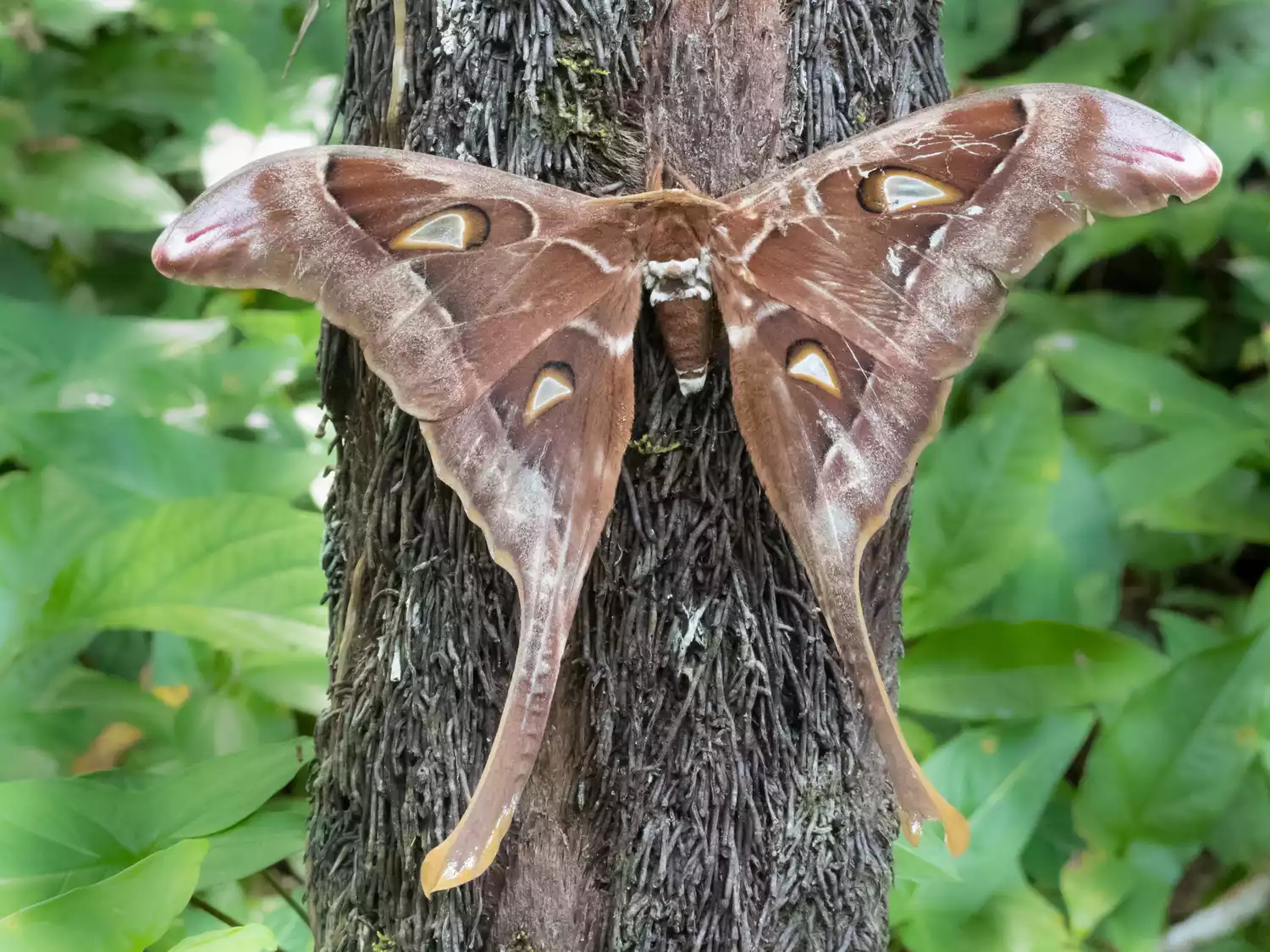
The atlas moth is famous for its enormous wingspan and richly patterned wings. It is native to parts of Asia and is often mentioned among the largest moths in the world.
Cecropia Moth
The cecropia moth is one of the largest moths in North America. It has reddish-brown wings with white, red, and tan markings.
Polyphemus Moth
Named after the one-eyed giant of Greek mythology, the polyphemus moth has large eyespots on its hindwings.
Io Moth
The io moth is another giant silk moth known for striking eyespots. Its caterpillars have stinging spines, so they should not be handled.
White-Lined Sphinx Moth
This hawk moth is widespread in North America. It has pointed wings and often visits flowers in the evening.
Hummingbird Clearwing Moth
This day-flying moth hovers at flowers and is often mistaken for a small hummingbird or bumblebee.
Garden Tiger Moth
A colorful tiger moth with bold patterns. Its caterpillar is often hairy.
Cinnabar Moth
A black-and-red day-flying moth. Its caterpillars are often yellow and black and feed on ragwort in regions where that plant occurs.
Indian Meal Moth
A common pantry moth associated with stored foods. Identification should focus on both adult moths and larvae in food packages.
Webbing Clothes Moth
A household moth whose larvae may damage wool, fur, feathers, and other animal-based fibers.
Types of Moths Around Homes
Small Brown Moths in the House
Small brown moths indoors may be pantry moths, clothes moths, or outdoor moths that wandered inside. Do not identify them by color alone. Brown is one of the most common moth colors.
Check:
- Where the moth is appearing
- Whether it is near food or clothing
- Whether larvae are present
- Whether there is webbing, frass, cases, or holes
- Whether the moths appear repeatedly or only once
Moths in the Closet
Moths in closets may be clothes moths, especially if they are small, pale, and found near wool, silk, fur, feathers, or stored natural fabrics. University of California IPM recommends prevention and control methods such as laundering, dry cleaning, proper storage, freezing, heating, trapping, and good housekeeping practices.
Moths in the Pantry
Moths flying near dry foods may be pantry moths. Look for larvae or silk webbing in flour, cereal, grains, nuts, birdseed, or pet food.
Moths at Porch Lights
Most moths at lights are outdoor species. Many are harmless and simply attracted to artificial light. If you want to observe moths, porch lights can reveal surprising local diversity.
Types of Moths in Gardens and Natural Habitats
Flower-Visiting Moths
Some moths feed on nectar and visit flowers at dusk or at night. Hawk moths are especially noticeable because of their hovering flight.
Tree and Woodland Moths
Many moths depend on trees as caterpillar host plants. Oaks, willows, birches, maples, and other native trees may support many moth species.
Grassland and Meadow Moths
Meadows can support tiger moths, grass moths, owlet moths, and many small species that rely on grasses and wildflowers.
Leaf-Mining and Leaf-Rolling Moths
Some tiny moth larvae live inside leaves or roll leaves into shelters. These signs can help identify the group even when the adult moth is not visible.
Day-Flying Moths
Not all moths are nocturnal. Some fly during the day and may visit flowers in full sunlight. This is why “active at night” should be treated as a clue, not a rule.
How to Identify a Moth Step by Step
Step 1: Note the Location
Location is one of the most important identification clues. A moth found in Japan, the United States, Britain, Australia, or India may belong to very different species even if it looks similar.
Record:
- Country
- Region or state
- City or general area
- Habitat type: garden, forest, field, pantry, closet, porch, wetland
Step 2: Record the Season
Many moth species fly only during certain months. Date and season can quickly narrow possible identifications.
Write down:
- Month
- Time of day
- Weather
- Whether the moth was active at night or day
Step 3: Estimate Size
A photo without scale can be misleading. Try to estimate wingspan or body length.
Helpful comparisons:
- Fingernail-sized
- Coin-sized
- Thumb-sized
- Palm-sized
- Larger than a hand
Step 4: Look at Wing Shape
Wing shape can help separate moth groups.
Notice whether the wings are:
- Long and narrow
- Broad and rounded
- Triangular
- Delicate and flat
- Tent-like over the body
- Tail-like on the hindwings
Step 5: Study Wing Pattern
Wing pattern is one of the most useful clues.
Look for:
- Eyespots
- Wavy lines
- Bands
- Dots
- Transparent patches
- Metallic marks
- Camouflage patterns
- Bright hindwings hidden under dull forewings
Step 6: Check the Antennae
Antennae can tell you a lot.
Common antenna types include:
- Threadlike
- Feathered
- Comb-like
- Thickened
- Tapered
Male moths in some families have especially feathery antennae for detecting female pheromones.
Step 7: Observe Resting Posture
How the moth rests matters.
It may hold wings:
- Flat against the surface
- Roof-like over the body
- Wrapped around the abdomen
- Spread wide
- Folded tightly
Step 8: Photograph Clearly
For identification, take several photos:
- Top view of the wings
- Side view of the body
- Close view of antennae
- Photo with scale
- Habitat photo
A Canadian Wildlife Federation guide notes that an overhead photo of open wings is often the most identifiable view for a butterfly or moth because it shows markings, color, and overall shape.
Moth Identification Comparison Table
| Moth Type | Common Names | Typical Size | Key Features | Common Habitat | Beginner ID Difficulty |
|---|---|---|---|---|---|
| Giant silk moths | Luna moth, cecropia moth, polyphemus moth | Medium to very large | Broad wings, eyespots, furry body | Forests, gardens, lights | Easy to moderate |
| Hawk moths | Sphinx moths, hummingbird moths | Medium to large | Strong body, narrow wings, fast flight | Flowers, gardens, wood edges | Moderate |
| Tiger moths | Garden tiger, cinnabar, woolly bear moths | Small to medium | Spots, stripes, bright colors, hairy caterpillars | Meadows, gardens, woodland edges | Moderate |
| Owlet moths | Cutworm moths, underwings, armyworm moths | Small to medium | Brown or gray patterns, sturdy body | Fields, gardens, lights | Moderate to difficult |
| Geometer moths | Inchworm moths, emeralds, pugs, carpets | Small to medium | Delicate wings, fine lines, looping caterpillars | Trees, shrubs, walls, lights | Moderate to difficult |
| Clearwing moths | Wasp moths, hummingbird clearwings | Small to medium | Transparent wings, wasp-like mimicry | Flowers, host plants | Moderate |
| Clothes moths | Webbing clothes moth, case-bearing clothes moth | Small | Pale, narrow wings; larvae damage fibers | Closets, storage, carpets | Moderate |
| Pantry moths | Indian meal moth, flour moth | Small | Found near stored dry foods | Kitchens, pantries | Easy to moderate |
Practical Identification Tips
Use Family-Level Identification First
Beginners often try to identify a moth directly to species. That is not always realistic. Start with family or group:
- Is it a giant silk moth?
- A hawk moth?
- A geometer moth?
- A tiger moth?
- A clothes moth?
- A pantry moth?
Once you know the group, species identification becomes easier.
Do Not Rely on Color Alone
Many unrelated moths are brown, gray, white, or tan. Color can fade with age, lighting, or camera settings. Pattern, shape, size, location, and season are usually more useful.
Photograph the Whole Moth
A blurry close-up of one wing may not be enough. Try to capture the full body, wing outline, antennae, and resting posture.
Consider Local Species Lists
A moth that is common in one country may not occur in another. Regional guides and local biodiversity databases are often more useful than general global lists.
Be Honest About Uncertainty
Some moths cannot be confirmed from a single photo. Worn individuals, lookalike species, and tiny micro-moths may require expert review, microscopic features, or DNA analysis.
Common Mistakes and Misconceptions
Mistake 1: Thinking All Moths Are Brown
Many moths are brown or gray, but others are green, pink, yellow, white, orange, red, metallic, transparent, or boldly patterned. The idea that moths are just dull butterflies is inaccurate.
Mistake 2: Assuming Every Indoor Moth Is a Pest
Many moths found indoors are outdoor moths that accidentally entered through windows or doors. A single moth in the house does not always mean an infestation.
Mistake 3: Blaming Adult Clothes Moths for Fabric Damage
Adult clothes moths do not chew holes in clothing. The larvae are responsible for feeding damage on natural fibers.
Mistake 4: Identifying Moths Only by Google Images
Image search can be helpful, but it often mixes species from different countries. A similar-looking moth from another continent may not be your moth.
Mistake 5: Handling Hairy Caterpillars
Some hairy or spiny caterpillars can irritate skin. It is better to photograph them without touching.
Mistake 6: Forgetting the Caterpillar Stage
Moths spend part of their lives as caterpillars. If you want to understand moths in a garden, pay attention to host plants, leaf damage, cocoons, and larvae.
When to Seek Expert Help
Seek expert identification or professional help when:
- A moth or caterpillar may be medically irritating or allergenic
- You suspect a serious pantry or clothes moth infestation
- You find repeated damage to stored food, wool, carpets, or upholstery
- You need a species-level ID for school, research, conservation, or pest management
- The moth is a protected, rare, or unusual species in your region
- The identification depends on tiny features not visible in photos
For household moth problems, avoid panic. Most issues can be approached through cleaning, inspection, storage changes, and careful identification before treatment. For severe infestations, local extension services or pest professionals may help.
Internal Linking Suggestions for TypesOfMoths.com
Use these internal links naturally throughout the article:
Category Links
- Types of Moths
Suggested anchor: “explore more types of moths” - Moth Species
Suggested anchor: “individual moth species guides” - Moth Identification
Suggested anchor: “moth identification guide” - Moth Facts
Suggested anchor: “beginner moth facts” - Moth Life Cycle
Suggested anchor: “moth life cycle explained” - Moths Around the Home
Suggested anchor: “moths found around homes”
Supporting Article Ideas
- How to Identify a Moth by Wing Pattern
- Moth vs Butterfly: Key Differences for Beginners
- What Do Moths Eat?
- Why Are Moths Attracted to Light?
- Small Brown Moths in the House: What Are They?
- Clothes Moths vs Pantry Moths
- Luna Moth Guide
- Hawk Moth Identification Guide
- Tiger Moths: Names, Colors, and Facts
- Moth Caterpillars: What Beginners Should Know
Conclusion
Learning the types of moths and names is less about memorizing every species and more about noticing patterns. Is the moth large and green with tails? It may be a giant silk moth such as a luna moth. Is it fast, strong-bodied, and hovering at flowers? It may be a hawk moth. Is it tiny and appearing near stored food or wool? It may be a pantry moth or clothes moth.
Good moth identification depends on location, season, size, wing shape, wing pattern, antennae, habitat, and clear photos. Sometimes a confident species name is possible. Other times, the most honest answer is a family, genus, or likely group.
That uncertainty is part of nature study. Moths are incredibly diverse, and even common species can surprise us when we look closely. The more carefully you observe them, the more interesting they become.
FAQ
What are the most common types of moths?
Common moth groups include hawk moths, giant silk moths, tiger moths, owlet moths, geometer moths, clearwing moths, clothes moths, pantry moths, and leafroller moths. The exact common species depend on your country, region, season, and habitat.
What are some well-known moth names?
Well-known moth names include luna moth, atlas moth, cecropia moth, polyphemus moth, io moth, white-lined sphinx moth, hummingbird clearwing moth, garden tiger moth, cinnabar moth, Indian meal moth, and webbing clothes moth.
How do I identify a moth?
Start with location, season, size, wing shape, wing pattern, antennae, resting posture, and habitat. Take clear photos from above and the side. For difficult species, begin with the moth family rather than trying to force a species-level identification.
Are moths dangerous?
Most moths are harmless to people. Some caterpillars with hairs or spines can irritate skin, and a few household moth larvae can damage stored food or natural fibers. Adult moths usually do not bite or sting.
What kind of moth is in my house?
It depends where you find it. Moths near dry foods may be pantry moths. Moths near wool, carpets, or stored natural fabrics may be clothes moths. A single moth near a window or light may simply be an outdoor moth that entered by accident.
Are clothes moths the same as pantry moths?
No. Clothes moth larvae feed on animal-based fibers such as wool, fur, feathers, and sometimes silk. Pantry moth larvae feed in stored dry foods such as grains, flour, cereal, nuts, or pet food.
Why are moths attracted to light?
Many moths are drawn to artificial lights, although the exact reasons are complex and can vary by species and situation. Porch lights, windows, and outdoor lamps often attract night-flying moths.
Are all moths active at night?
No. Many moths are nocturnal, but some fly during the day. Clearwing moths, some tiger moths, burnet moths, and hummingbird moths may be active in daylight.
What is the difference between a moth and a butterfly?
Butterflies usually have club-tipped antennae, while moths usually have threadlike, feathery, or comb-like antennae. Many moths rest with wings flat or tent-like, while many butterflies rest with wings upright. These are helpful clues, but there are exceptions.
Can I identify a moth from one photo?
Sometimes, yes. Large, distinctive moths may be easy to identify from one clear photo. Small, worn, or lookalike species may need multiple photos, location, date, size, habitat, and expert review.