Finding moths around the home is common, especially during warm seasons, rainy periods, or evenings when porch lights, open windows, and indoor lamps draw night-flying insects closer to human spaces. For many people, a moth on the wall or fluttering near a window is simply a harmless outdoor visitor that has taken a wrong turn. In other cases, moths may be a clue that dry pantry foods, stored wool, pet food, birdseed, or undisturbed natural fibers need a closer look.
The important thing is not to panic. Most moths do not bite, sting, or damage anything in the home. Many are short-lived adults that entered by accident. Some are even useful parts of the garden ecosystem, serving as pollinators and food for birds, bats, spiders, frogs, and other wildlife. Still, a few moth groups are worth learning because their larvae can feed on stored foods or animal-based fibers such as wool, fur, feathers, and felt.
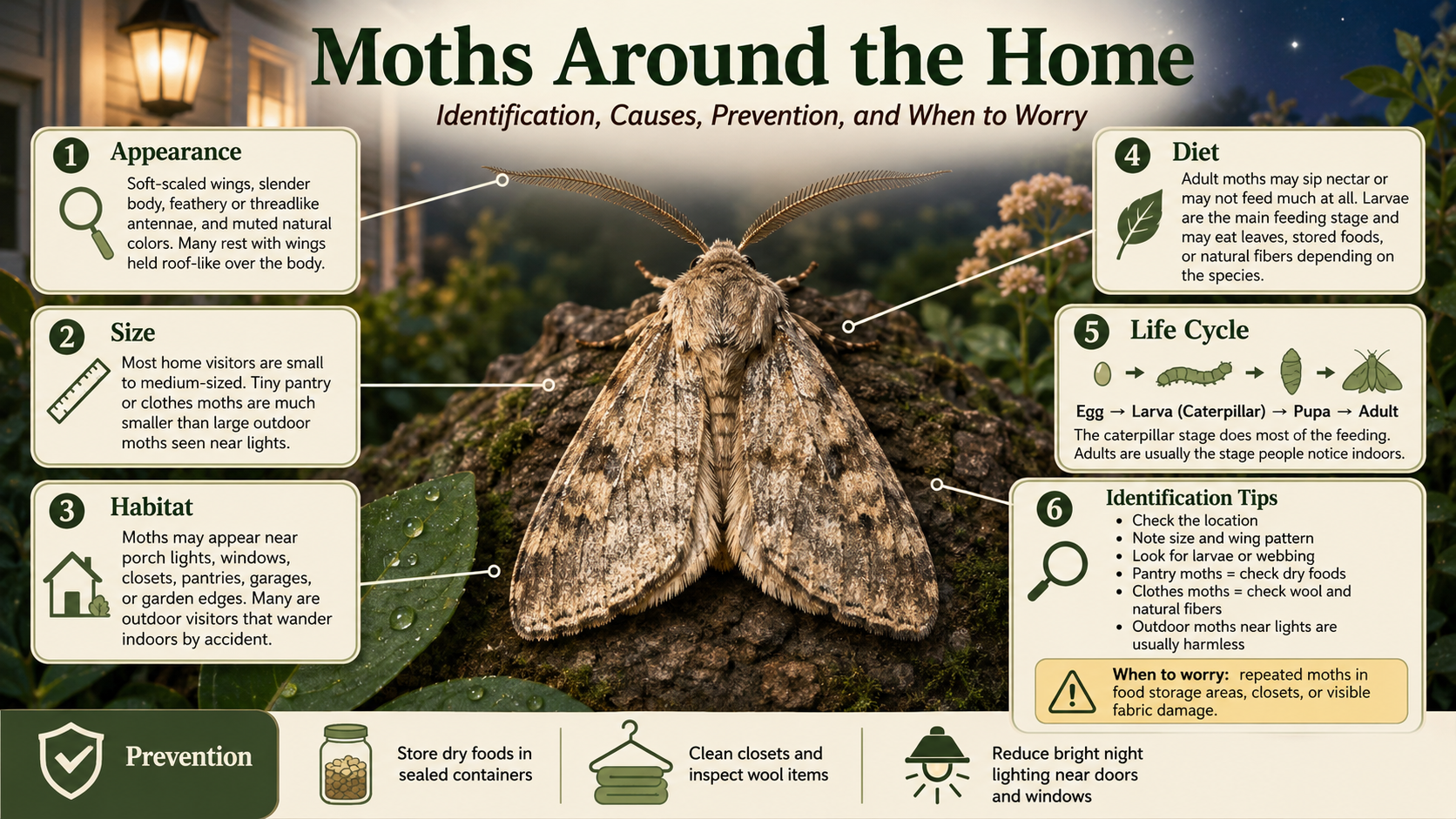
This guide explains how to identify moths around the home in a beginner-friendly way. You will learn why moths appear indoors, how to tell the difference between outdoor moths, pantry moths, clothes moths, and caterpillars, what signs matter, what details help with identification, and when it is sensible to seek expert help.
What Does It Mean When You See Moths Around the Home?
Seeing one or two moths indoors usually does not mean there is an infestation. Moths are light-bodied insects, and many species are active at dusk or night. They may enter through open doors, torn screens, gaps around windows, garage doors, attic vents, laundry brought in from outside, firewood, or potted plants. A moth resting on a wall, curtain, ceiling, lampshade, or window frame may simply be waiting for darkness or looking for a way back outside.
However, repeated sightings in the same area can be more meaningful. A moth in the kitchen may point toward stored food. A small, plain moth in a dark closet may require a check of wool clothing, rugs, stored blankets, or upholstery. A moth near a porch light may be an outdoor species attracted or disoriented by artificial light. A fuzzy caterpillar on a patio or near a doorway may be part of a garden or tree-feeding species rather than a household moth problem.
The first step is to ask: Where did you find it? Location is often more useful than color alone.
A moth in the pantry suggests one set of possibilities. A moth in a closet suggests another. A large patterned moth by the window is usually different from a tiny tan moth moving around stored food. Good identification depends on a combination of clues: size, wing shape, color, pattern, antennae, resting posture, season, location, behavior, and whether you see larvae, webbing, cases, cocoons, shed skins, or damage.
Why Moths Come Indoors
Moths may appear indoors for several reasons. Some reasons are harmless and temporary; others deserve closer inspection.
They Are Drawn Toward Artificial Light
Many moths fly at night and can end up near porch lights, window lights, garage lights, and bright indoor lamps. Modern research suggests that artificial lights can interfere with the way nocturnal insects orient themselves in flight. Rather than “wanting” to enter a home, a moth may become confused by a bright light source and then slip inside through an open door or window.
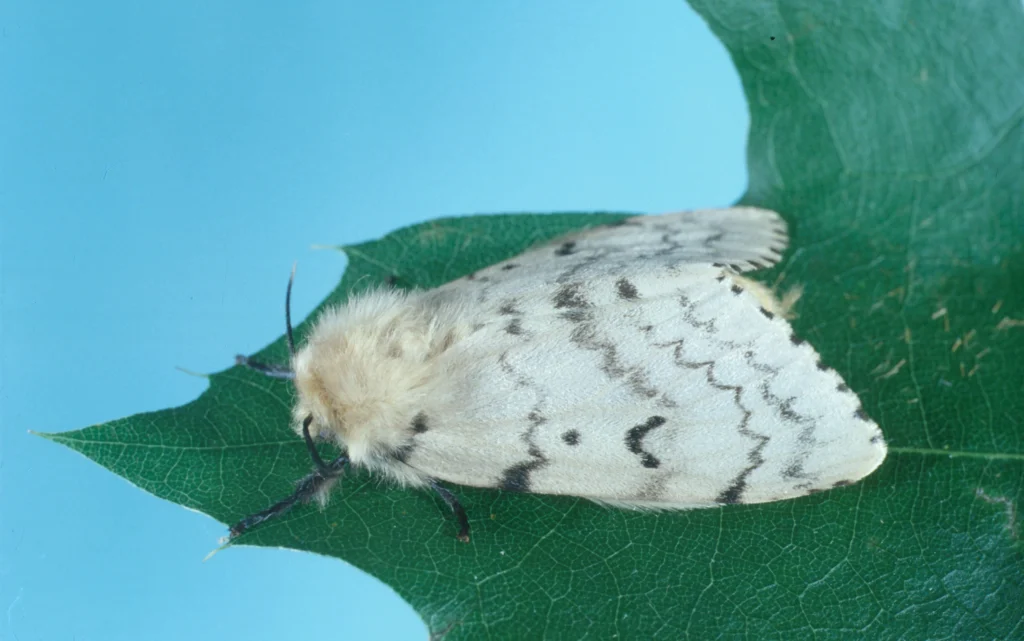
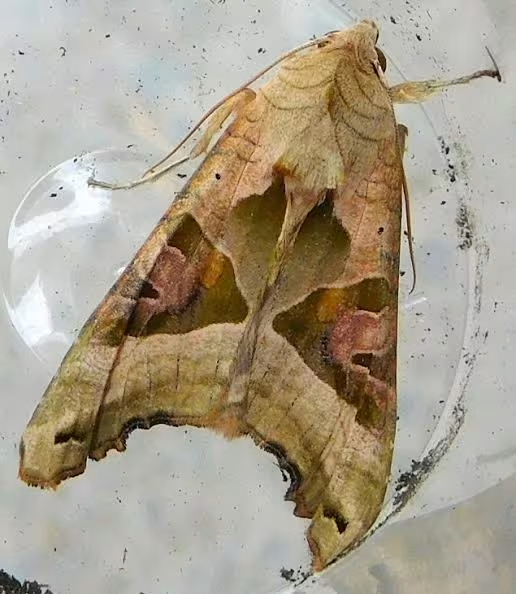
This is why moths are often seen around entryways, porch ceilings, window screens, sliding glass doors, and garage lights. If the moth is large, patterned, and seen near a light source, it is often an outdoor species rather than a pantry or fabric moth.
They Enter Through Small Openings
Moths do not need a large opening. They may come through:
- Open doors at night
- Window screens with small tears
- Gaps under doors
- Garage doors left open after dusk
- Attic vents or roof gaps
- Fireplace openings
- Laundry, plants, or outdoor items brought indoors
A single moth is often just an accidental visitor.
Their Larvae May Be Feeding on Stored Food
Some small moths are associated with dry stored foods. These are often called pantry moths, grain moths, or stored-product moths. The adults are usually noticed flying around kitchens, cupboards, pantries, garages, or food storage areas, but the feeding stage is the larva. Larvae may live inside packages of cereal, flour, grain, dry pet food, birdseed, nuts, dried fruit, spices, or similar dry foods.
Their Larvae May Be Feeding on Natural Fibers
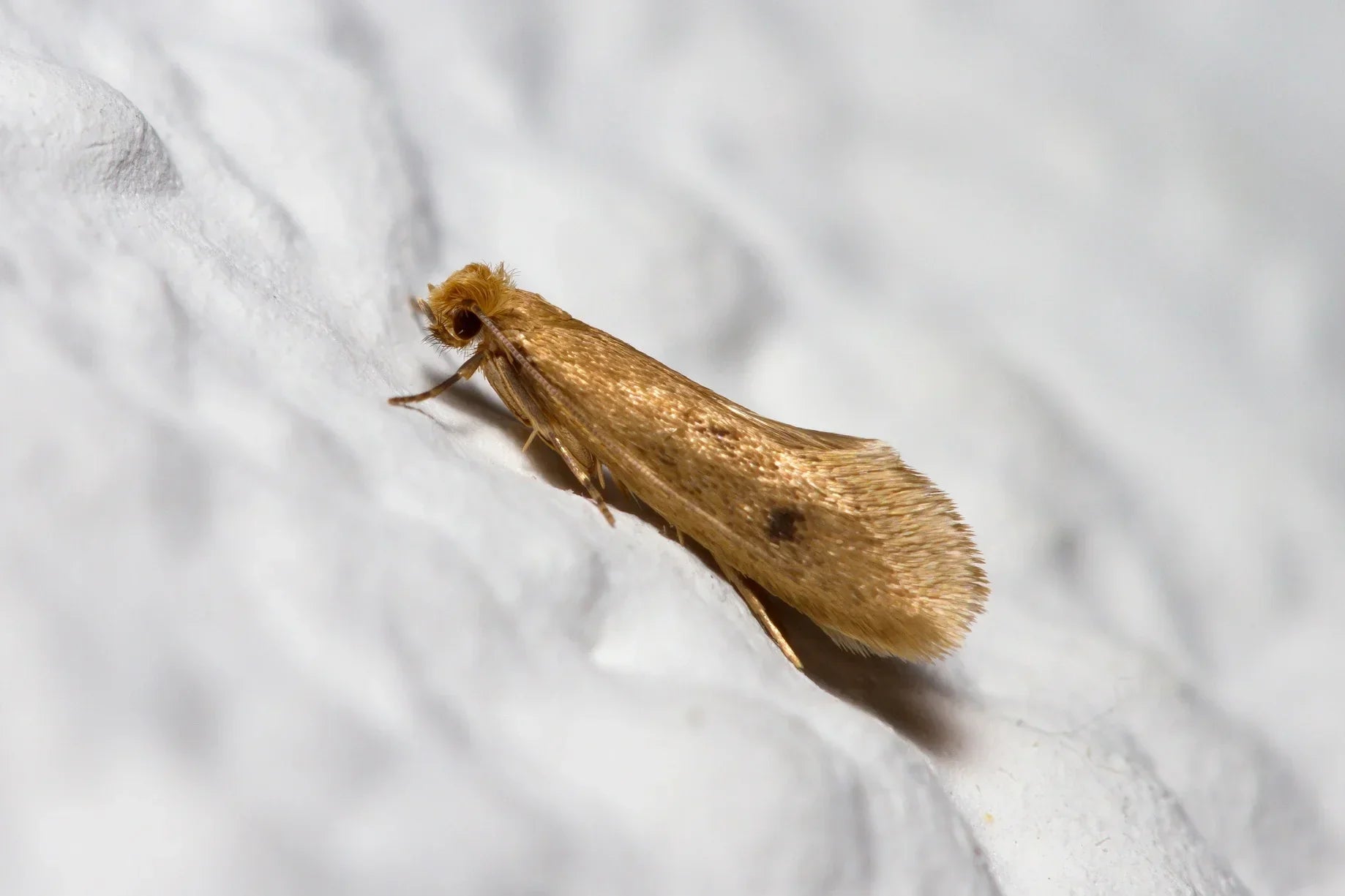
Clothes moths are not usually interested in clean cotton or synthetic clothing. Their larvae are adapted to feed on animal-based materials that contain keratin, such as wool, fur, feathers, hair, felt, taxidermy materials, and sometimes soiled fabrics. They prefer quiet, dark, undisturbed places such as closets, storage boxes, carpet edges, under furniture, and folded garments that have not been moved for a long time.
They May Be Emerging from Nearby Outdoor Habitat
Gardens, shrubs, trees, vines, grasses, compost areas, and leaf litter can all support moth life cycles. Many moth caterpillars feed on plants outdoors, pupate nearby, and later emerge as adults. If you live near a garden, wooded edge, meadow, porch planting, or balcony with lights, occasional indoor moths are expected.
Quick Comparison: Common Moths and Moth-Like Problems at Home
| What You Notice | Most Likely Situation | Where to Look | Main Concern | First Calm Step |
|---|---|---|---|---|
| Large moth near porch light or window | Outdoor moth entered by accident | Windows, doors, porch, garage | Usually harmless | Release outside or reduce nighttime light spill |
| Small moths flying in kitchen | Pantry or stored-food moth possible | Dry foods, pet food, birdseed, spices | Larvae may contaminate stored food | Inspect dry goods for webbing or larvae |
| Tiny tan moths in closet | Clothes moth possible | Wool, fur, feathers, rugs, stored fabrics | Larvae may damage natural fibers | Check dark, undisturbed fabric areas |
| Worm-like larvae in cereal or flour | Stored-food insect larvae | Pantry packages and shelves | Food contamination | Discard affected items and clean shelves |
| Fuzzy caterpillar near patio or plants | Outdoor moth caterpillar | Garden plants, trees, walls, patio | Some hairs may irritate skin | Avoid touching; identify from photo |
| Small insects near windows, not clearly moths | Could be moths, beetles, flies, or drain flies | Windows, houseplants, drains, pantry | Depends on insect | Take clear photos before acting |
How to Identify Moths Around the Home
Moth identification can be simple at the group level but difficult at the exact species level. Many moths are small, variable, and similar in appearance. Wing scales can rub off, colors can fade, and lighting can change how markings appear. For responsible identification, avoid making a species-level claim from a blurry photo or a quick glance.
Details That Help with Identification
When trying to identify a moth around the home, note:
- Location: kitchen, closet, bathroom, bedroom, garage, window, porch, attic, garden, pantry
- Season: spring, summer, autumn, winter, rainy period, warm spell
- Size: wingspan or body length, even an estimate next to a coin or ruler
- Wing shape: narrow, triangular, tent-like, flat, folded tightly, broad, long and pointed
- Wing pattern: plain, spotted, banded, mottled, coppery, pale, dark, patterned
- Antennae: threadlike, feathery, comb-like, or clubbed
- Resting posture: wings flat, roof-like, wrapped around body, spread open
- Behavior: flying near lights, crawling, hiding in dark spaces, appearing near food
- Life stage: adult moth, larva, caterpillar, pupa, cocoon, case
- Habitat nearby: pantry, wool storage, garden plants, trees, birdseed, pet food, outdoor lights
- Clear photos: top view, side view, close-up of antennae, and scale reference
Why Exact Species Identification Can Be Hard
Many household moths are small and plain, and several species share similar colors. Pantry moths may lose wing scales and look less distinctive. Clothes moth adults may be easy to overlook. Outdoor moths may vary in pattern between individuals. Caterpillars can be even harder because their appearance changes as they grow.
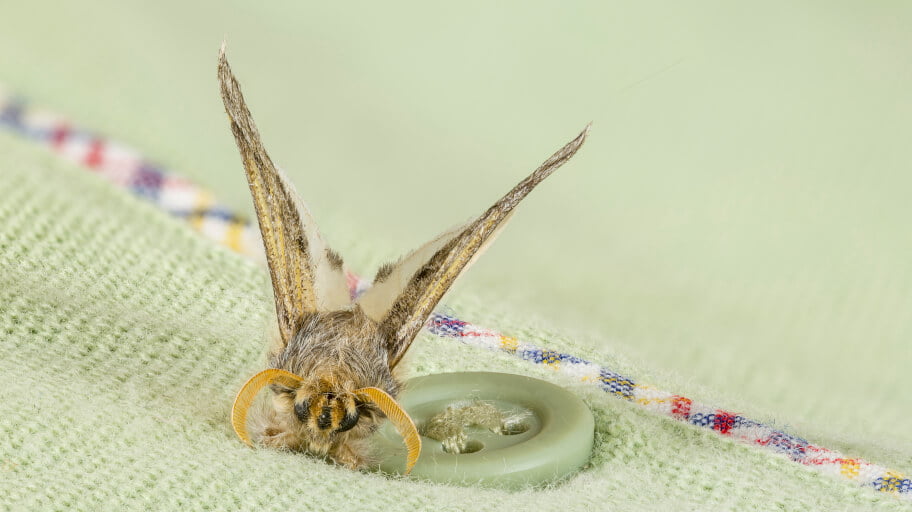
For a beginner, it is often more useful to identify the type of situation than the exact species. Ask whether the moth is associated with food, fabric, light, plants, or outdoor entry points. That practical context usually leads to better decisions.
Practical Photo Tips
For the best identification photo:
- Take the photo in natural light if possible.
- Avoid using flash directly on reflective surfaces.
- Include a ruler, coin, or fingertip nearby for scale.
- Photograph the moth from above and from the side.
- Capture the resting position of the wings.
- Do not handle caterpillars with bare hands.
- If the moth is dead, place it on plain white paper for a clearer photo.
Common Types of Moths Found Indoors
Not every indoor moth belongs to a “house moth” species. The most common home situations can be grouped into four broad categories.
1. Outdoor Moths That Wander Indoors
These moths may be large or small, plain or beautifully patterned. They enter through windows, doors, garages, or vents and are often found near light sources. Most are not interested in your clothing, food, or furniture. They may rest during the day and become active again at dusk.
Examples may include owlet moths, geometer moths, tiger moths, snout moths, plume moths, or other local species. The exact species depends heavily on your region and season.
2. Pantry Moths and Stored-Food Moths
Pantry moths are usually small and are associated with dry foods. The Indianmeal moth is one of the best-known stored-food moths in homes. Adults may fly around kitchens, cabinets, pantries, garages, or storage shelves. The larvae feed inside food packages and may leave silk webbing, clumps, frass, or crawling larvae.
3. Clothes Moths
Clothes moths are typically small, pale, and secretive. They prefer dark, quiet places and are more often noticed because of damage than because of dramatic adult activity. The larvae, not the adults, are the stage that damages natural fibers. Common signs include irregular patches, holes, silky tubes, cases, frass, or larvae hidden in folds and seams.
4. Moth Caterpillars Around Doors, Walls, and Plants
Some caterpillars wander away from plants to find a place to pupate. Others may fall from trees or crawl across walls, patios, decks, and walkways. Most are part of outdoor life cycles and do not belong indoors. A few fuzzy or spiny caterpillars can irritate skin, so it is wise to avoid direct handling.
Moths in the Kitchen or Pantry
Small moths in the kitchen often raise the most practical questions. If you see moths near cabinets, cereal boxes, flour, rice, dried fruit, spices, nuts, pet food, or birdseed, inspect stored foods carefully.
Signs of Pantry Moths
Look for:
- Small moths flying in the kitchen or pantry
- Larvae inside food packages
- Silk webbing in cereal, flour, grains, nuts, or spices
- Clumped food particles
- Tiny droppings or frass
- Larvae crawling on pantry walls or ceilings
- Cocoons in corners, shelf edges, or package folds
- Adults appearing even after one package has been discarded
Pantry moth larvae may leave the original food source when they mature, so you may find larvae or cocoons away from the package itself. Check shelf cracks, corners, ceiling edges, under shelf liners, behind labels, and around pet food or birdseed bags.
Foods to Inspect
Pantry moths and related stored-food pests may be associated with:
- Flour
- Meal
- Rice
- Pasta
- Breakfast cereal
- Oats
- Nuts
- Dried fruit
- Seeds
- Chocolate with nuts or grains
- Spices
- Dry pet food
- Birdseed
- Dried flowers
- Grain-based decorative items
Unopened packages are not always safe if insects entered before purchase or through tiny gaps in packaging. Thin cardboard and loosely sealed plastic are not the same as airtight storage.
What to Do Calmly
If you find larvae, webbing, or infested food, discard clearly affected items. Then inspect nearby packages. Clean shelves, corners, and cracks thoroughly. Vacuuming can remove food dust, larvae, and cocoons, but empty the vacuum contents promptly. Store replacement dry goods in tight containers made of glass, metal, or heavy plastic.
Avoid spraying pesticides directly into food storage areas. The most effective first step is usually finding and removing the food source.
Moths in Closets, Carpets, and Stored Fabrics
Clothes moths are different from pantry moths. They are not looking for cereal or flour. Their larvae feed on animal-based materials and prefer places that are dark, quiet, and undisturbed.
What Clothes Moth Larvae Feed On
Clothes moth larvae may feed on:
- Wool clothing
- Wool rugs
- Felt
- Fur
- Feathers
- Hair
- Taxidermy materials
- Upholstery containing animal fibers
- Stored blankets
- Natural-fiber items soiled with sweat, body oils, food, or other residues
Clean, frequently used garments are less likely to support larvae than stored, undisturbed items. A wool coat left in a dark closet for months is more at risk than a sweater worn, cleaned, and moved regularly.
Signs of Clothes Moths
Look for:
- Small pale or golden moths in closets
- Irregular holes or surface grazing on wool
- Thin areas in carpets or rugs
- Larvae in seams, folds, collars, cuffs, or hems
- Silky tubes or webbing
- Portable cases made from fibers
- Frass that may match the color of the fabric
- Damage under furniture or along carpet edges
- Activity in storage boxes or garment bags
Clothes moth adults are often less obvious than the damage. If you see repeated tiny moths in a closet or bedroom, inspect fabric items rather than focusing only on catching the flying adults.
Prevention for Fabric Moths
Practical prevention includes:
- Clean wool and natural-fiber garments before long storage.
- Store vulnerable items in sealed containers or garment bags.
- Vacuum closet floors, baseboards, carpet edges, and under furniture.
- Move stored garments periodically.
- Avoid leaving soiled woolens undisturbed for months.
- Check secondhand wool, rugs, or upholstered items before bringing them indoors.
- Use non-chemical monitoring traps where appropriate, but do not rely on traps alone.
The goal is not to be fearful of moths. The goal is to keep vulnerable materials clean, inspected, and stored in a way that larvae cannot quietly feed for a long time.
Moths Around Windows, Porch Lights, and Lamps
Moths around windows and lights are usually outdoor visitors. This is one of the most common situations for homeowners.
Why They Gather Near Lights
Many night-flying moths are affected by artificial light. Porch lights, security lights, garage lights, and bright windows can disorient insects and draw them close to buildings. Once there, moths may rest on siding, screens, window frames, ceilings, curtains, or lampshades.
How to Reduce Moth Entry Without Harming Them
You can reduce indoor moth sightings by changing the environment:
- Turn off unnecessary outdoor lights at night.
- Use motion sensors or timers.
- Close curtains or blinds after dark.
- Repair torn window screens.
- Add door sweeps where gaps are visible.
- Keep doors closed when lights are on indoors.
- Use warmer outdoor lighting when lighting is necessary.
- Choose shielded fixtures that direct light downward rather than outward or upward.
Warm, lower-intensity lighting is usually less disruptive to moths and other nocturnal insects than bright cool-white or blue-rich lighting. It also helps keep outdoor visitors from gathering around doors and windows.
Releasing a Moth Indoors
If a moth is indoors and not associated with food or fabric damage, the simplest response is to release it. Place a cup or jar gently over the moth, slide stiff paper underneath, and carry it outside. Release it in a sheltered spot away from bright light, such as near vegetation.
Avoid touching the wings. Moth wings are covered in tiny scales that can rub off as powdery dust. A little scale loss does not always kill a moth, but gentle handling gives it the best chance to fly normally.
Moth Larvae and Caterpillars Around the Home
A caterpillar near a doorway, patio, garage, or wall is usually an outdoor larva. Caterpillars may wander when searching for food, shelter, or a pupation site. Some may appear after storms, pruning, tree leaf drop, or seasonal population peaks.
Are Moth Caterpillars Dangerous?
Most moth caterpillars are not dangerous. However, some hairy or spiny caterpillars can irritate the skin. Reactions vary by species and by individual sensitivity. Symptoms may include itching, redness, swelling, burning, or rash. Eye contact or inhalation of irritating hairs is more concerning.
The safest rule is simple: do not handle fuzzy, spiny, or unfamiliar caterpillars with bare hands.
What to Do If You Find a Caterpillar Indoors
- Do not crush it with bare hands.
- Use a piece of paper, container, or gloves to move it.
- Place it outside near vegetation, if safe.
- Take a clear photo before moving it if identification is desired.
- Keep children and pets from touching unfamiliar hairy caterpillars.
- If skin irritation occurs, wash the area and seek medical advice if symptoms are severe, persistent, or involve the eyes, mouth, or breathing.
Caterpillars are often easier to identify when you know the host plant. If you find several caterpillars near an oak, willow, milkweed, tomato plant, cabbage plant, or ornamental shrub, the plant may be the best clue.
Moths in Garages, Basements, Attics, and Storage Rooms
Garages and storage spaces often combine several moth-attracting conditions: darkness, stored materials, pet food, birdseed, cardboard, seasonal decorations, old fabrics, and openings to the outdoors.
Common Garage and Storage Triggers
Check for:
- Birdseed bags
- Dry pet food
- Grass seed
- Stored grains or animal feed
- Old wool blankets
- Felt pads
- Upholstered furniture
- Boxes of clothing
- Holiday decorations made from natural materials
- Dried flowers
- Open windows or vents
- Bright lights left on overnight
A moth in the garage may be an outdoor visitor, a pantry moth from birdseed, or a clothes moth associated with stored textiles. The location alone narrows the possibilities, but you still need to inspect nearby materials.
Storage Room Prevention
Use sealed storage containers, keep dry animal feed in tight bins, vacuum corners periodically, reduce clutter where larvae can hide, and inspect stored natural fibers before long-term storage. If you store birdseed or pet food in a garage, treat it like pantry food: airtight containers are much better than open bags.
Moths Around Gardens and Houseplants
Moths are not only indoor insects. Many are part of the living landscape around a home. Adult moths may visit flowers for nectar, while caterpillars feed on specific host plants. Some caterpillars feed on garden vegetables or ornamentals, but many cause little noticeable damage and support birds and other wildlife.
Moths as Part of the Garden Ecosystem
Moths and their caterpillars are food for bats, birds, spiders, frogs, toads, lizards, small mammals, and other insects. Many adult moths also visit flowers at night. A moth-friendly garden may include native plants, flowering plants, leaf litter in some areas, reduced pesticide use, and darker nighttime conditions.
When Garden Moths Become a Practical Concern
A few caterpillars on leaves are usually normal. A practical concern begins when you see heavy defoliation, repeated damage to a valued plant, large numbers of larvae, or species known to affect specific crops. Even then, identification matters. Some caterpillars become beautiful native moths, while others may be introduced pests or common garden feeders.
Before taking action, identify the caterpillar, the host plant, and the level of damage.
Practical Prevention Without Fear-Based Pest Control
Preventing moth problems is mostly about storage, sanitation, light management, and observation. It does not require panic or aggressive chemical use.
For Accidental Outdoor Moths
- Repair screens.
- Close doors quickly at night.
- Reduce porch light intensity.
- Use warm-colored outdoor bulbs.
- Shield lights downward.
- Close curtains after dark.
- Release individual moths outdoors.
For Pantry Moths
- Inspect dry goods before storage.
- Keep grains, cereals, nuts, seeds, spices, pet food, and birdseed in airtight containers.
- Clean pantry shelves regularly.
- Remove crumbs and spilled flour or grain.
- Check older packages first.
- Discard clearly infested food.
- Clean shelf cracks and corners where larvae may pupate.
For Clothes Moths
- Clean wool and natural-fiber garments before storage.
- Store vulnerable fabrics in sealed containers.
- Vacuum carpets, rugs, baseboards, and closet floors.
- Move stored items occasionally.
- Inspect secondhand woolens, rugs, and upholstered furniture.
- Focus on dark, undisturbed areas.
For Caterpillars
- Avoid touching fuzzy or spiny caterpillars.
- Use gloves or tools if relocation is needed.
- Identify the host plant.
- Keep children and pets away from unfamiliar caterpillars.
- Seek medical advice for serious reactions.
Common Mistakes and Misconceptions
Mistake 1: Thinking Every Indoor Moth Is a Pest
Many indoor moths are simply outdoor moths that entered by accident. A single moth near a lamp or window is not the same as repeated pantry or closet activity.
Mistake 2: Blaming Adult Moths for All Damage
In pantry moths and clothes moths, the larvae are usually the feeding stage. Adults are often the visible clue, but the larvae are the stage to locate.
Mistake 3: Assuming Clothes Moths Eat All Clothing
Clothes moth larvae are mainly associated with animal-based materials such as wool, fur, feathers, hair, felt, and similar fibers. They are especially drawn to quiet, protected places and may be more successful on soiled or undisturbed items.
Mistake 4: Ignoring Birdseed and Pet Food
Many people inspect cereal and flour but forget birdseed, dry pet food, animal feed, and garage storage. These can support stored-food moths.
Mistake 5: Relying Only on Traps
Traps may help monitor adult moths, but they do not replace finding the source. If larvae are feeding inside food or fabric, the source must be located and addressed.
Mistake 6: Using Color Alone for Identification
Moth color can be misleading. Wing scales rub off, lighting changes appearance, and many species are brown, gray, tan, or cream. Shape, pattern, size, location, season, and behavior are all important.
Mistake 7: Touching Fuzzy Caterpillars
Many fuzzy caterpillars are harmless, but some can irritate skin. It is better to photograph them without handling.
When to Seek Expert Help
Most moth situations around the home can be handled with careful observation and cleaning. However, expert help may be useful in some situations.
Seek Identification Help When:
- You find repeated moths but cannot locate the source.
- You see larvae in multiple rooms.
- You are unsure whether the insect is a moth, beetle, fly, or another pest.
- You need species-level identification for school, teaching, gardening, or documentation.
- You find unusual caterpillars and need safe handling guidance.
- You are dealing with valuable wool rugs, museum items, taxidermy, heirloom textiles, or stored collections.
Good sources of help may include local extension offices, natural history groups, university entomology departments, museum identification services, moth recording groups, or responsible pest-management professionals.
Seek Medical or Veterinary Advice When:
- A child touches or mouths an unfamiliar caterpillar.
- A pet chews or eats a hairy caterpillar.
- Skin irritation becomes severe or spreads.
- Hairs contact the eyes or mouth.
- There are breathing symptoms, swelling, or signs of allergic reaction.
Most moth encounters are not medical issues, but caterpillar hairs are a sensible exception.
Conclusion
Finding moths around the home does not automatically mean something is wrong. Many moths are harmless outdoor visitors drawn near lights or carried indoors through open doors and windows. Others may signal a specific household issue, especially when small moths appear repeatedly in pantries, closets, storage rooms, or around natural-fiber items.
The best approach is calm observation. Note where the moth appears, how large it is, what its wings look like, whether larvae or webbing are present, and whether food or fabric damage can be found nearby. A moth in the kitchen points toward stored foods. A moth in a dark closet points toward natural fibers. A moth at the window may simply need to be released outside.
Moths are diverse, ecologically important insects, and most deserve curiosity rather than fear. With careful identification, better storage habits, gentle prevention, and responsible lighting choices, homeowners can reduce unwanted moth problems while still respecting the important role moths play in gardens and local ecosystems.
FAQ
Why are there moths around my home?
Moths may appear around your home because they are drawn or disoriented by lights, entering through open doors or windows, emerging from stored food, hiding in natural fibers, or coming from nearby gardens and outdoor habitats. The location where you see them is the best first clue.
Are moths in the house dangerous?
Most moths in the house are not dangerous. Adult moths generally do not bite or sting. However, some moth larvae can damage stored food or natural fibers, and some fuzzy caterpillars can irritate skin if handled.
What kind of moths are commonly found indoors?
Common indoor moth situations include outdoor moths that wander inside, pantry moths associated with dry foods, clothes moths associated with wool or other animal fibers, and occasional caterpillars that have wandered in from plants or outdoor areas.
How do I know if I have pantry moths?
Pantry moth signs include small moths flying in the kitchen, larvae in dry foods, silk webbing in packages, clumped grains or cereal, larvae crawling on pantry walls, and cocoons in corners or shelf cracks. Inspect flour, cereal, rice, pasta, nuts, dried fruit, spices, pet food, and birdseed.
How do I know if I have clothes moths?
Clothes moth signs include tiny pale moths in closets, irregular holes in wool, surface grazing on rugs, larvae in seams or folds, silky tubes, portable cases, and damage in dark, undisturbed places. The larvae cause the damage, not the adult moths.
Do moths eat clothes?
Adult moths do not usually eat clothes. In clothes moths, the larvae feed on animal-based fibers such as wool, fur, feathers, hair, felt, and related materials. They are most likely to damage items that are stored, undisturbed, or soiled.
Do moths eat food in the pantry?
Some moth larvae feed on dry stored foods. Pantry moths may develop in cereal, flour, grains, nuts, dried fruit, pasta, spices, dry pet food, or birdseed. Adult moths are often the visible sign, but the larvae are the feeding stage.
Why are moths flying near my windows?
Moths often gather near windows because indoor light shines through the glass at night. They may be outdoor moths trying to orient themselves around artificial light. Closing curtains, repairing screens, and reducing bright nighttime lighting can help.
What should I do with a moth inside the house?
If it is a single moth and there are no signs of food or fabric problems, gently catch it with a cup and paper and release it outside. If you see repeated moths in the same area, inspect nearby food, fabrics, storage boxes, or light entry points.
Should I touch a moth?
It is better not to handle moths directly. Their wings are covered with delicate scales that can rub off. Use a cup and paper if you need to move one. Avoid touching fuzzy or spiny caterpillars because some can irritate skin.
Are moths attracted to dirty clothes?
Clothes moth larvae are more likely to develop on vulnerable natural fibers that are stored in quiet places, especially if the fabric contains sweat, body oils, food residues, or other organic material. Cleaning garments before storage helps reduce risk.
Can moths live in carpets?
Clothes moth larvae can feed on wool carpets or rugs, especially in dark, undisturbed areas such as under furniture, along edges, or in corners. Regular vacuuming and moving furniture can help reveal and prevent hidden activity.
Why do I keep finding moth larvae on the ceiling?
Pantry moth larvae may leave the food source when mature and crawl to walls or ceilings to pupate. If you see larvae on ceilings near the kitchen, inspect dry foods, pet food, birdseed, and pantry shelves carefully.
Are moths good for the garden?
Many moths are important parts of garden ecosystems. Adult moths may visit flowers, and moths and caterpillars provide food for birds, bats, spiders, frogs, and other wildlife. Some caterpillars feed on garden plants, but many are harmless or only cause minor damage.
When should I call an expert about moths?
Seek expert help if moths keep appearing and you cannot find the source, larvae are found in multiple rooms, valuable textiles are involved, identification is uncertain, or a child or pet has contact with an irritating caterpillar. Local extension services, natural history groups, and qualified pest professionals can help.