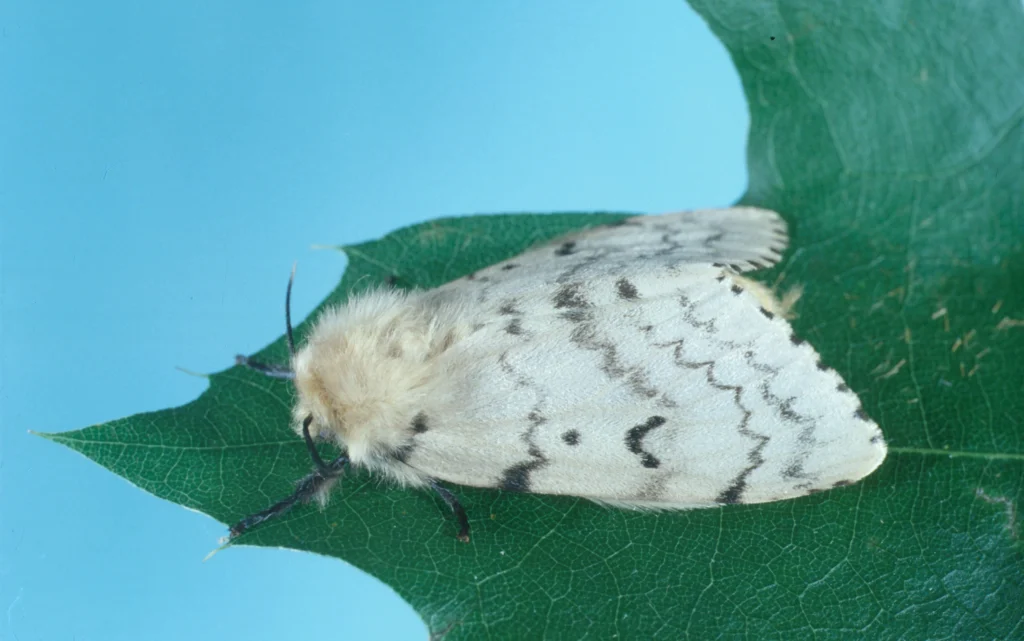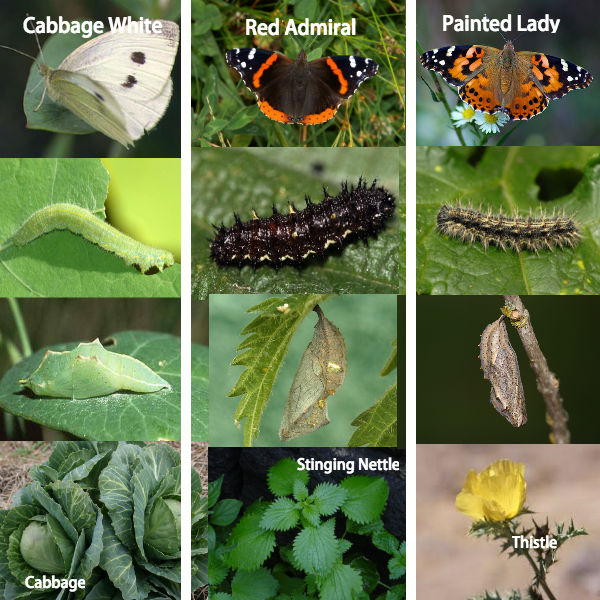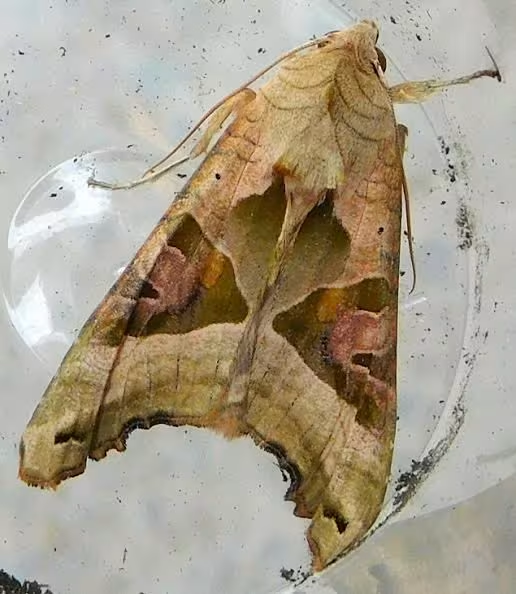
If you have ever found a pale green moth on a porch screen, a small brown moth in the pantry, or a beautifully patterned moth resting on a wall at night, you may have wondered what species it is. This guide to moth species with pictures is designed to help beginners understand what they are looking at, what details matter for identification, and why moths are much more diverse than many people realize.
Moths belong to the same insect order as butterflies, but they are often less noticed because many are active at night, camouflaged during the day, or small enough to be overlooked. Some moths are large and spectacular, with eyespots, tails, or bright colors. Others are modest brown or gray insects whose patterns only become clear in a close photo. A few species can become household pests, but most moths are harmless outdoor insects that play important roles in food webs, pollination, and natural ecosystems.
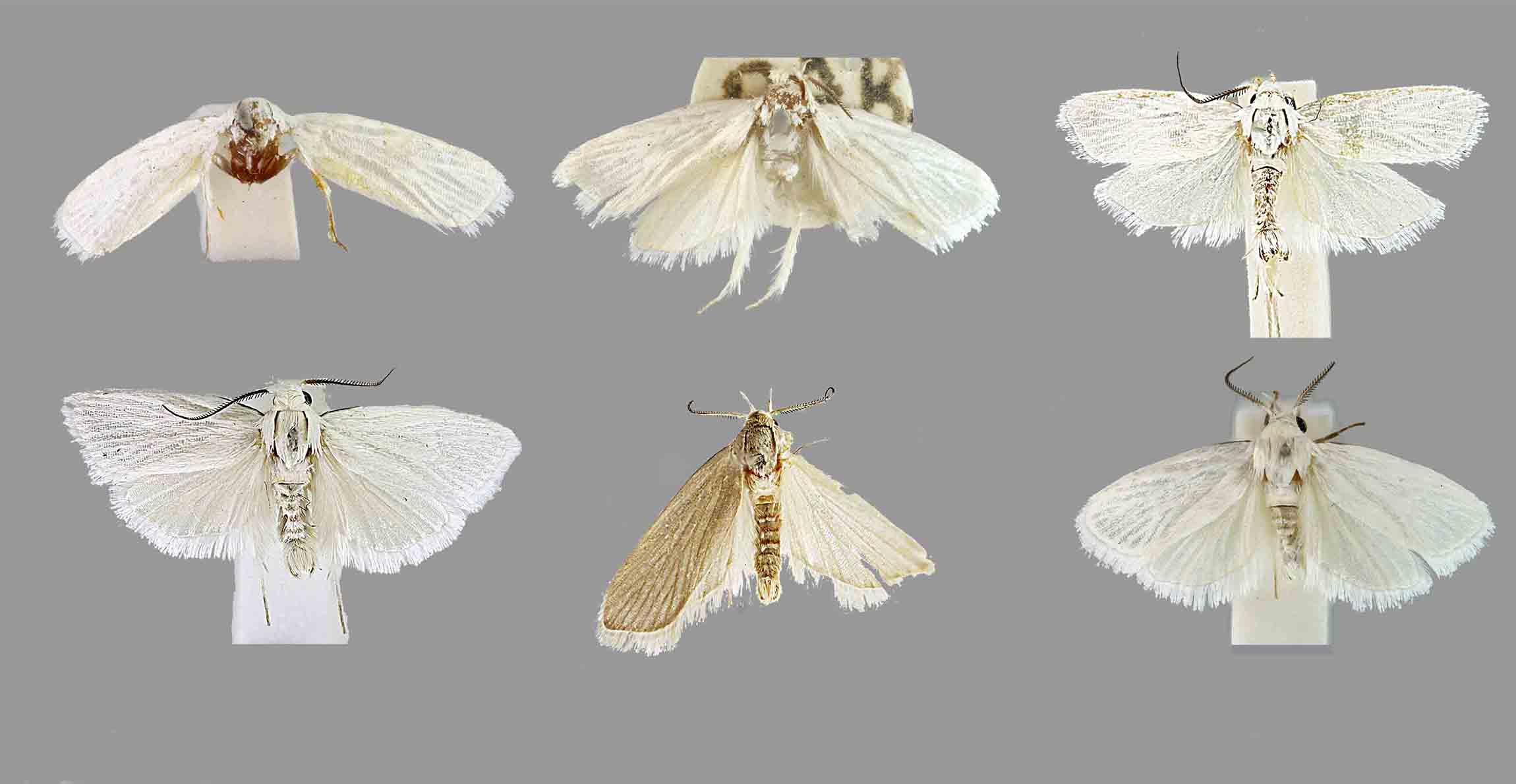
This page is not meant to replace a regional field guide or expert confirmation. Moth identification often depends on location, season, size, wing shape, antennae, resting posture, habitat, and clear photos from more than one angle. Still, a careful beginner can learn a lot by comparing pictures, observing patterns, and narrowing a moth down to a likely family or species group.
What Is a Moth?
A moth is an insect in the order Lepidoptera, the same order that includes butterflies. The word Lepidoptera comes from Greek roots meaning “scale wing,” which is a good description: moth and butterfly wings are covered in tiny overlapping scales. These scales help create the colors, patterns, and textures we see in photos.
Most moths have four wings, six legs, antennae, and a body divided into head, thorax, and abdomen. Many adult moths have a coiled feeding tube called a proboscis, which can be used to drink nectar or other liquids. Some adult moths, especially certain large silk moths, do not feed as adults at all. Their adult stage is mostly about finding a mate and reproducing.
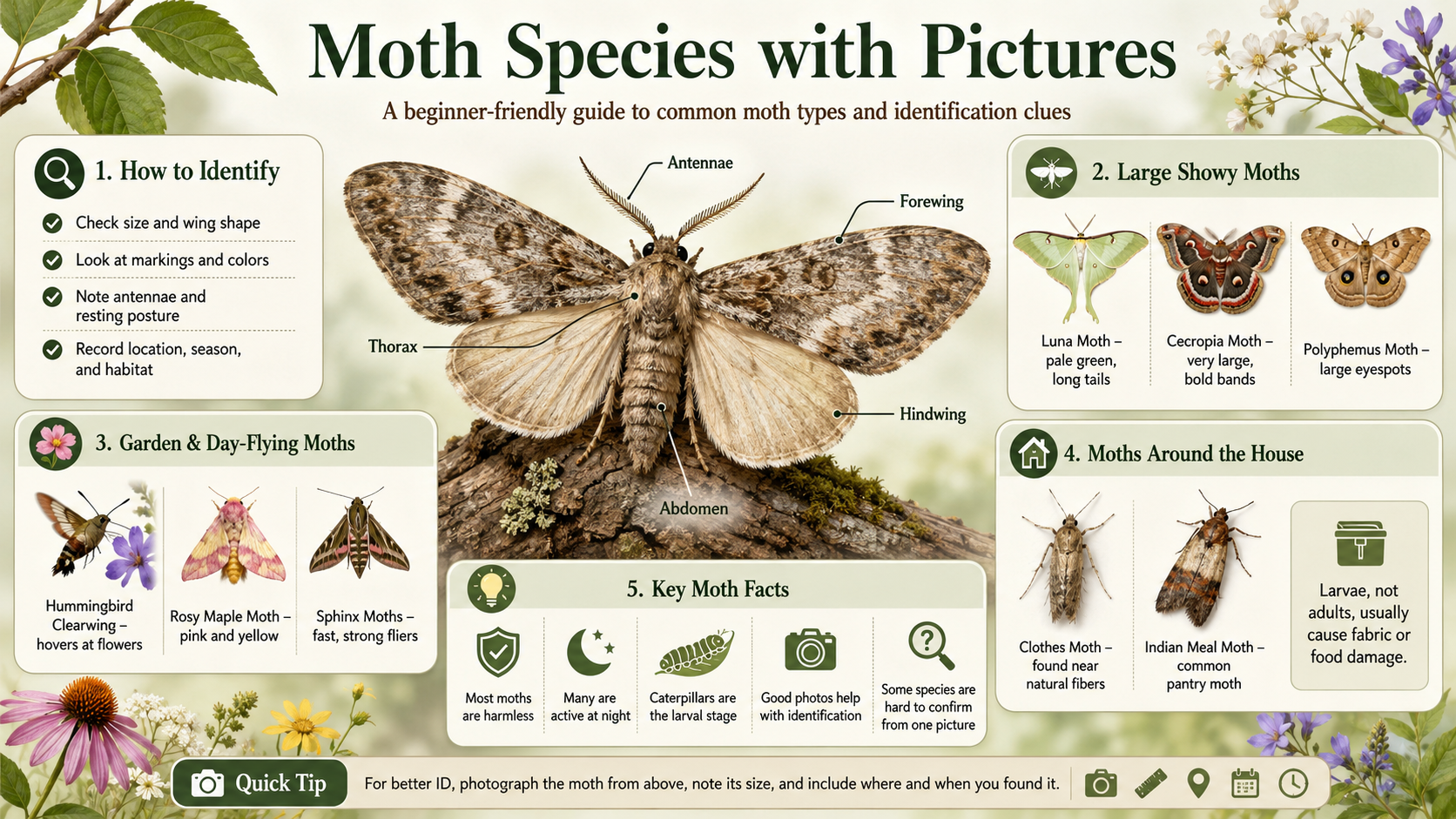
Moths are extremely diverse. Some are tiny and narrow-winged. Others are large enough to cover a person’s palm. Some are plain, while others look like leaves, bark, bird droppings, wasps, flowers, or even broken twigs. This variety is what makes a visual guide to moth species so useful.
How to Use Moth Species with Pictures for Identification
A picture can be very helpful, but one photo is not always enough to identify a moth to species level. Many moths look similar, especially small brown moths, underwing moths, geometer moths, and noctuid moths. For accurate identification, try to collect several clues.
Important Details to Record
When you photograph or observe a moth, write down:
- Location: country, state, region, or nearest city
- Date and season
- Approximate size or wingspan
- Habitat: porch, pantry, closet, garden, woodland, meadow, wetland, or crop area
- Wing position at rest
- Main colors and markings
- Antenna shape
- Whether it was active during the day or night
- Any nearby plants or food sources
- Whether you found an adult moth, caterpillar, cocoon, eggs, or damage
For WordPress image galleries, include this information in the caption whenever possible. A caption like “large green moth on porch light in Georgia, June” is much more useful than simply “green moth.”
Photos That Help Most
For a moth identification page, the best picture set includes:
- A top-view photo showing the full wing pattern
- A side-view photo showing body shape and resting posture
- A close-up of antennae if possible
- A size reference, such as the moth near a ruler or known object
- A habitat photo showing where it was found
Good pictures do not have to be professional. A clear phone photo taken in natural light can often show enough detail for a likely identification.
Moth Species with Pictures: Common Examples to Know
Below are common or widely recognized moths that are useful for beginners. Some are found mainly in North America, while others may occur in different regions. Always compare with local records before confirming a species.
Luna Moth
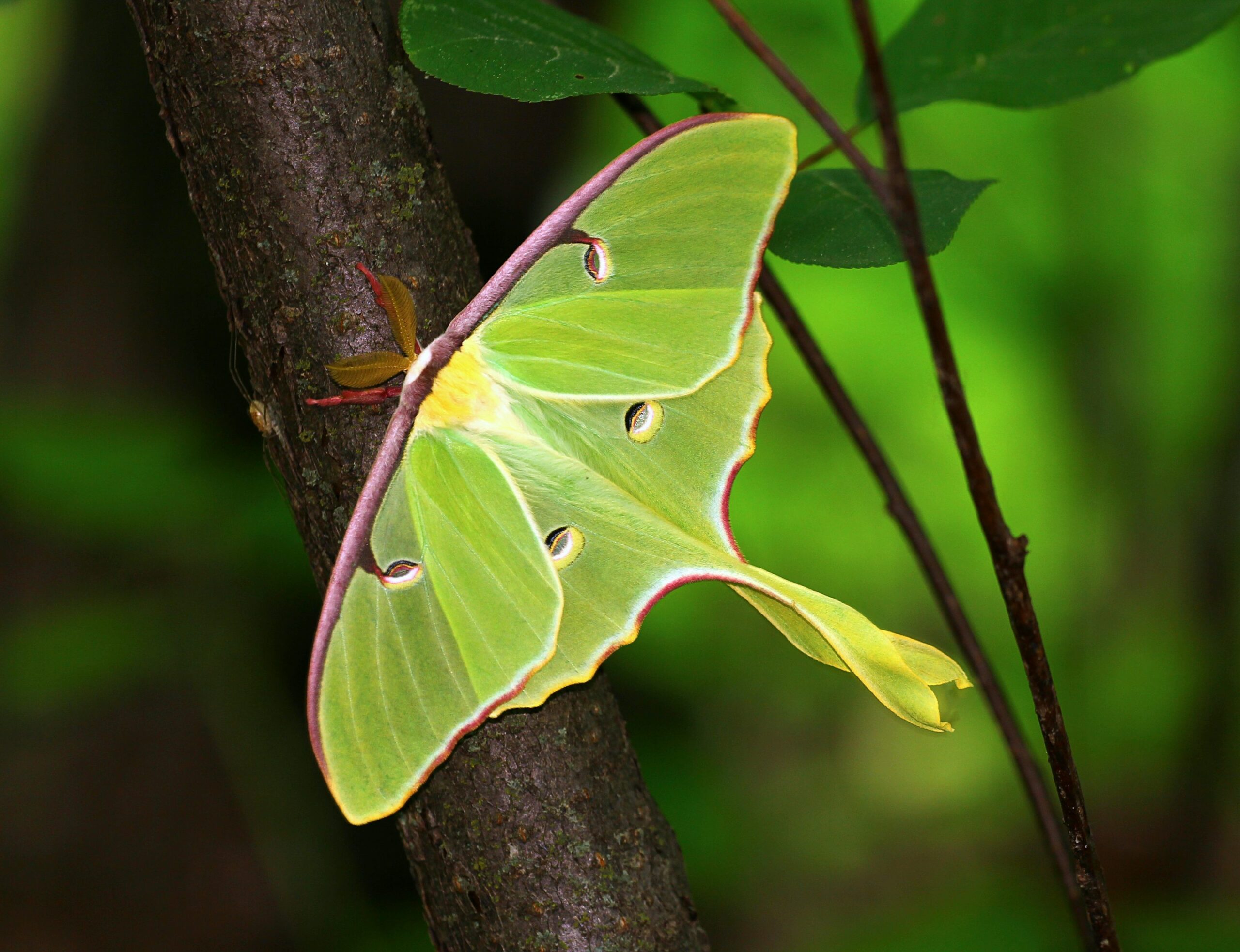
The luna moth is one of the most recognizable large moths in North America. Adults are pale green, with long tapering tails on the hindwings and eyespots on all four wings. Their delicate color and shape make them a favorite among nature photographers.
Look for:
- Pale green wings
- Long tails on the hindwings
- Eyespots on the wings
- Feathery antennae, especially in males
- Large, graceful body shape
Luna moths are often attracted to lights at night. If you find one, avoid handling it unless necessary. Large moths can lose wing scales or become stressed if handled roughly.
Cecropia Moth
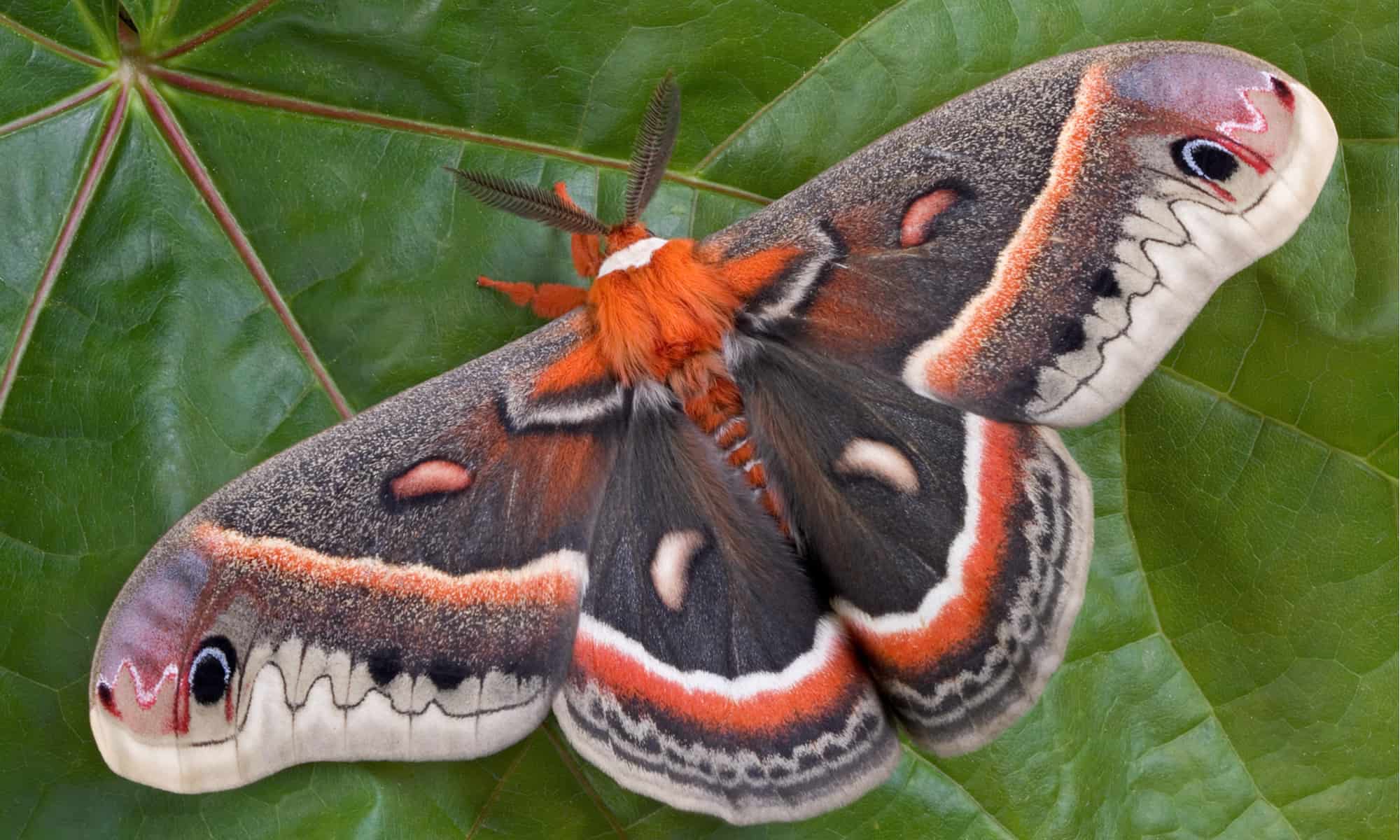
The cecropia moth is a giant silk moth and one of the largest native moths in North America. It has a stout, fuzzy body and richly patterned wings with reddish, brown, white, and tan markings.
Look for:
- Very large size
- Reddish body
- Wide wings with bold bands
- Crescent-shaped markings
- Thick, furry appearance
Because of its size, beginners may mistake it for a butterfly. However, the fuzzy body and feathery antennae are classic moth clues.
Polyphemus Moth
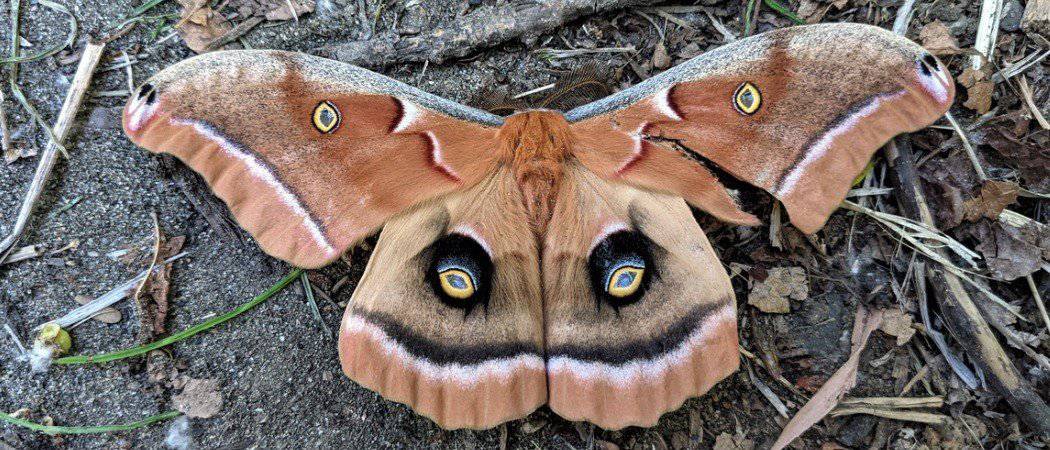
The polyphemus moth is another large silk moth. It is usually tan, brown, or reddish brown, with dramatic eyespots on the hindwings. These eyespots may help startle predators.
Look for:
- Large brown or tan wings
- Small eyespots on the forewings
- Large round eyespots on the hindwings
- Feathery antennae in males
- Broad, butterfly-like resting posture
A good photo showing the hindwings is especially useful because the eyespots are a key feature.
Io Moth
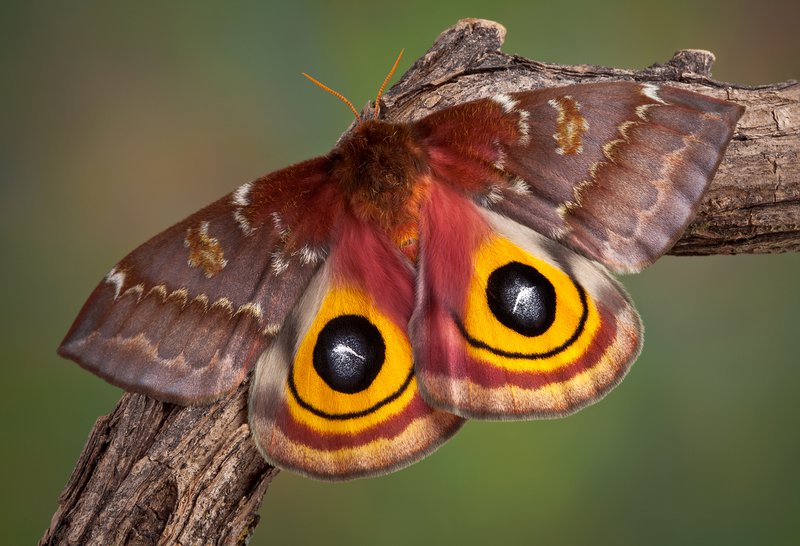
The io moth is a colorful silk moth whose hidden hindwings show bold eyespots. When disturbed, it may flash these markings as a defensive display.
Look for:
- Medium to large size
- Yellow, brown, or reddish tones depending on sex
- Large eyespots on hindwings
- Rounded wing shape
The caterpillar of the io moth has spines that can irritate skin. Do not handle unfamiliar spiny caterpillars with bare hands.
Imperial Moth
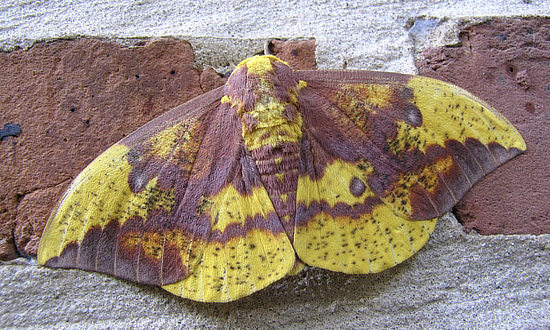
The imperial moth is a large, striking moth with yellow wings marked by purplish or brown patches. Pattern intensity can vary, which sometimes makes identification tricky.
Look for:
- Yellow background color
- Purple-brown spots or patches
- Large size
- Heavy body
- Often found near lights in summer
Because individual imperial moths can vary, use location and wing pattern together rather than relying on color alone.
Hummingbird Clearwing Moth
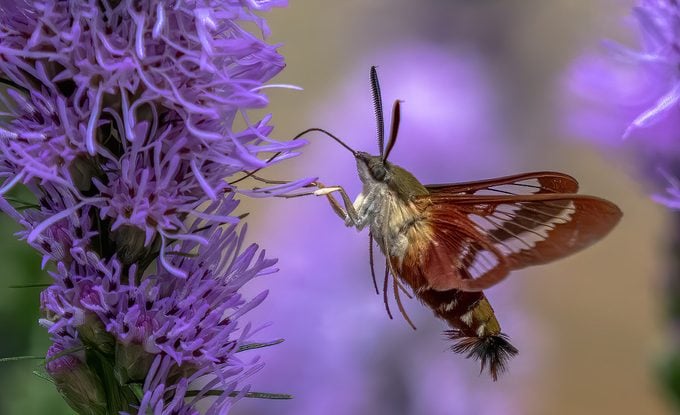
Hummingbird clearwing moths are day-flying moths that hover at flowers and can look surprisingly like tiny hummingbirds. Their wings have clear areas, and their bodies are often fuzzy and banded.
Look for:
- Daytime activity
- Hovering behavior
- Transparent or partly transparent wings
- Fuzzy body
- Feeding at flowers
These moths are a good reminder that not all moths are nocturnal.
Rosy Maple Moth
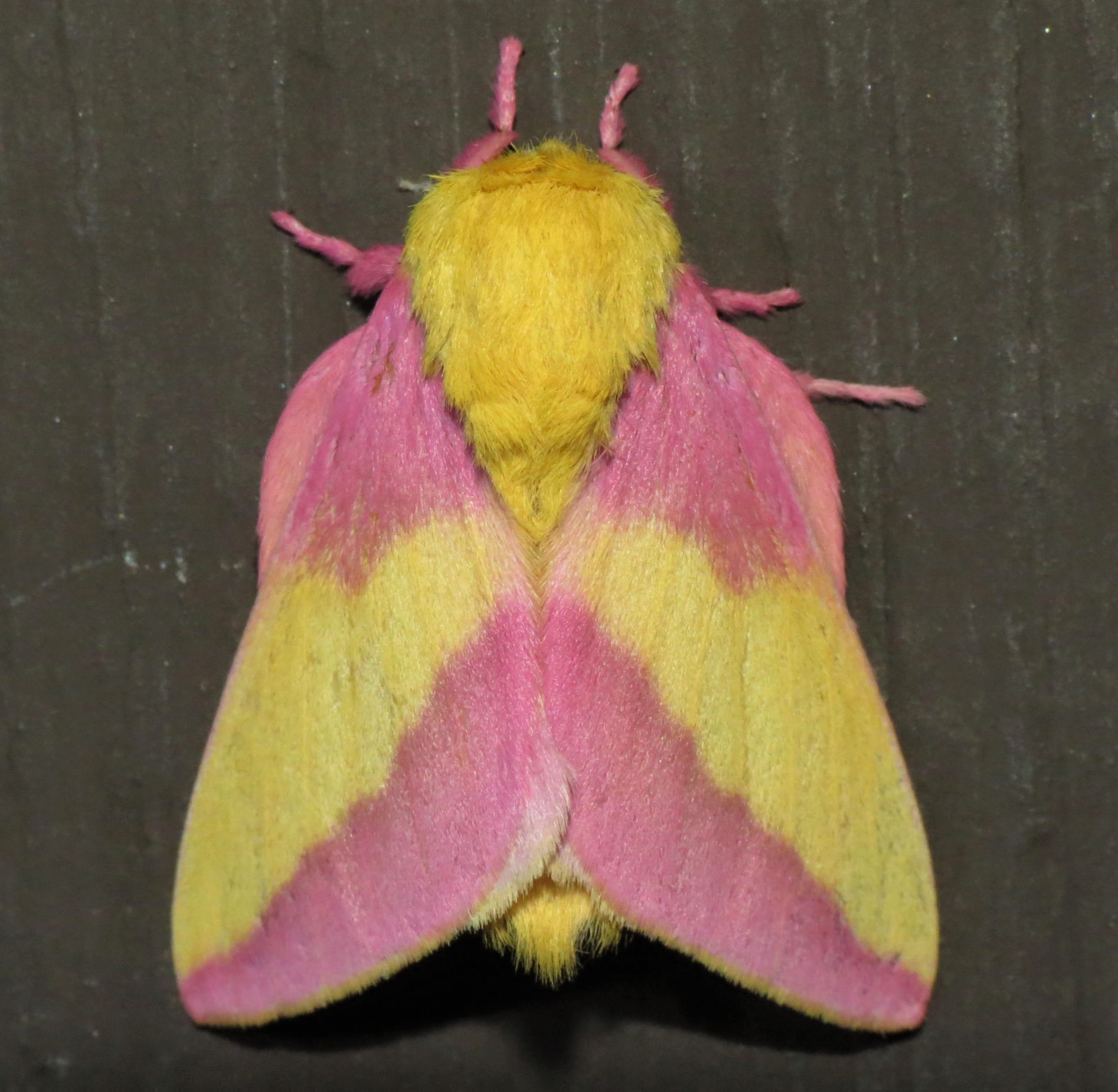
The rosy maple moth is small to medium-sized and famous for its soft pink and yellow colors. It is often found near maple trees and may come to lights.
Look for:
- Pink and yellow wings
- Fuzzy yellow body
- Small, rounded appearance
- Association with maple trees
Its bright colors make it easier to recognize than many plain brown moths.
Tiger Moths
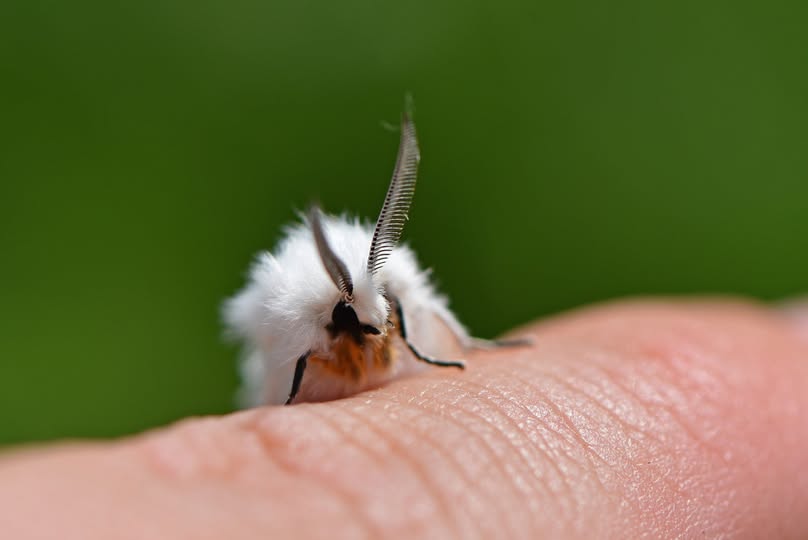
Tiger moths include many species, some white, some spotted, and some brightly colored. Their caterpillars are often known as woolly bears or hairy caterpillars.
Look for:
- Fuzzy body
- Bold spots, stripes, or contrasting markings
- Sometimes bright warning colors
- Hairy caterpillars
Do not assume every hairy caterpillar is safe to touch. Some caterpillars can irritate skin.
Underwing Moths
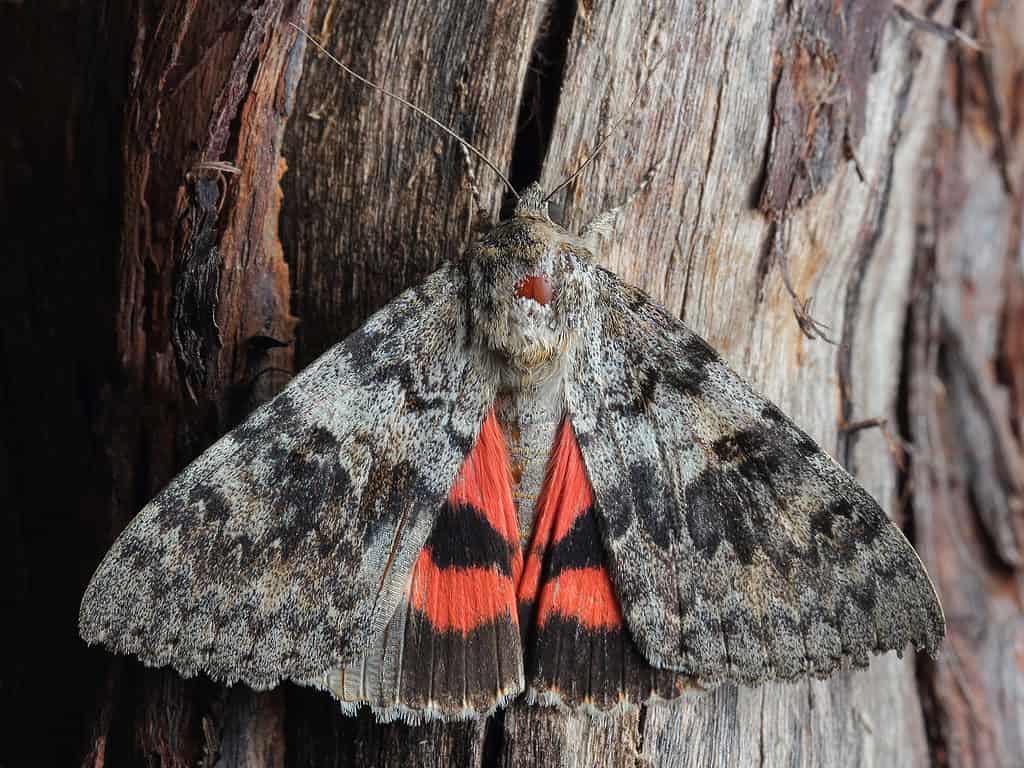
Underwing moths often rest with bark-like forewings that hide brighter hindwings beneath. When they fly, the sudden flash of color may startle predators.
Look for:
- Gray or brown bark-like forewings
- Bright orange, red, yellow, or black hindwings
- Strong camouflage when resting
- Medium to large size
For identification, a photo showing both the resting forewings and the hidden hindwings is very helpful.
Geometer Moths
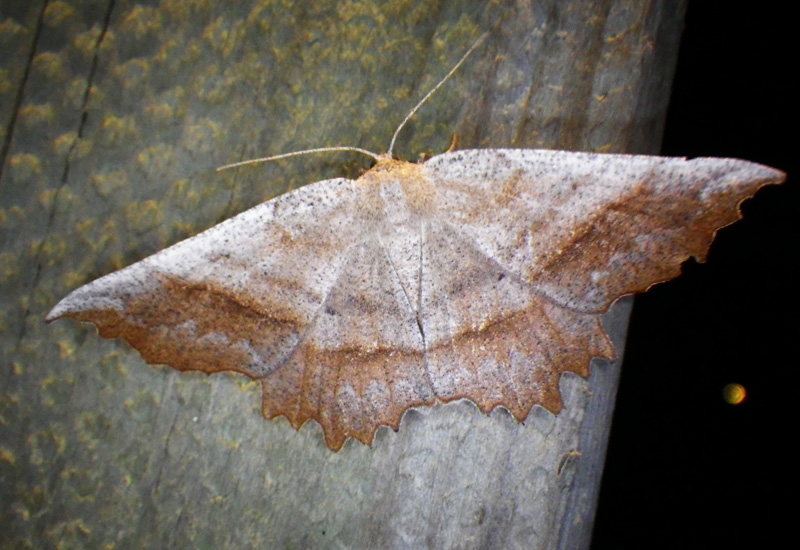
Geometer moths are a large group that includes many delicate, flat-resting moths. Their caterpillars are often called inchworms because of the way they move.
Look for:
- Slender body
- Broad wings often held flat
- Fine lines or wave patterns
- Inchworm-like caterpillars
Many geometer moths are difficult to identify to species without a regional guide.
Sphinx or Hawk Moths
Sphinx moths, also called hawk moths, are strong fliers. Some feed while hovering at flowers, and some caterpillars are known as hornworms.
Look for:
- Long, narrow forewings
- Streamlined body
- Fast flight
- Hovering at flowers in some species
- Caterpillars with a horn-like tail in many species
Tomato hornworms and tobacco hornworms are caterpillars of sphinx moths. In gardens, these larvae can feed heavily on tomato and related plants.
Large and Colorful Moths
Large moths are often easier for beginners because their shapes and markings are more visible. Giant silk moths, sphinx moths, and some tiger moths are among the most photographed moths.
Why Large Moths Come to Porch Lights
Many moths are attracted to artificial lights at night. Porch lights, windows, streetlights, and security lights may bring moths close to homes. This does not automatically mean there is an infestation. A single large moth on a wall or window is usually just an outdoor moth that has been drawn to light.
How to Photograph Large Moths
Use soft light, avoid flash if it causes glare, and photograph the moth from above. If the moth is on glass, try to take one photo from each side. Do not spray, swat, or move it unless it is in danger.
Small Brown and Gray Moths
Small brown moths are among the hardest to identify. Many species have subtle lines, dots, bands, or scale textures that are difficult to see without a close photo.
Why “Small Brown Moth” Is Not Enough
A search for “small brown moth” can return many unrelated species. To narrow the identification, add details such as:
- “small brown moth in pantry”
- “small brown moth in closet”
- “small brown moth on bathroom wall”
- “tiny brown moth with copper wing tips”
- “brown moth with wavy lines on wings”
- “brown moth attracted to porch light”
These long-tail details help separate household pests from harmless outdoor moths.
Moths Around Homes
Finding a moth indoors does not always mean there is a problem. Many moths enter accidentally through open doors, windows, vents, or gaps around screens. However, repeated sightings in the same area may be worth investigating.
Clothes Moths
Clothes moths are small, plain moths associated with natural fibers such as wool, fur, feathers, and silk. The adults are not the stage that damages clothing. The larvae are the stage that feed on suitable materials.
Look for:
- Small pale or buff-colored moths
- Activity in dark, undisturbed closets or storage areas
- Irregular holes in wool or natural-fiber items
- Silken tubes, webbing, or larval cases
- Damage on stored garments, rugs, or upholstery
Responsible guidance: If you suspect clothes moths, inspect stored textiles, clean affected items according to fabric care instructions, vacuum storage areas, and store vulnerable garments in sealed containers. Avoid using strong chemical products without reading labels carefully, especially around children, pets, or sensitive individuals.
Pantry Moths
Pantry moths are usually associated with stored dry foods. The Indian meal moth is a common pantry pest in many regions. The adult moth may be seen flying in kitchens, but the larvae are the stage that feed inside food products.
Look for:
- Small moths flying in kitchens or cupboards
- Two-toned wings on adult Indian meal moths
- Webbing in flour, cereal, grains, nuts, dried fruit, pet food, or birdseed
- Small pale larvae in stored food
- Clumped or spoiled dry goods
Responsible guidance: If you find larvae or webbing in food, discard infested items, clean shelves thoroughly, and store dry foods in tightly sealed containers. Do not use insecticides directly on food storage surfaces unless the product is specifically labeled for that use.
Moths in Bathrooms, Bedrooms, and Garages
A moth in a bathroom may simply be attracted to light or humidity. A moth in a bedroom may have flown in from outdoors. A moth in a garage may be sheltering near stored items or lights. The key is repetition. One moth is usually not a major concern. Many moths appearing repeatedly in a pantry or closet deserves closer inspection.
Garden and Outdoor Moths
Most moths found outdoors are part of the local ecosystem. Their caterpillars feed on plants, and adults may serve as pollinators or prey for birds, bats, spiders, and other animals.
Moth Caterpillars in the Garden
Caterpillars are the larval stage of moths and butterflies. Some feed on leaves without causing serious harm. Others, such as hornworms, can remove a noticeable amount of foliage from tomato plants and related crops.
Before removing caterpillars, try to identify them. Some become beautiful native moths, while others may be invasive or damaging in certain regions.
Host Plants Matter
Many caterpillars depend on specific host plants. If you know the plant where a caterpillar was found, identification becomes easier. For example, a large green caterpillar on tomato is more likely to be a hornworm than a random forest moth caterpillar.
Moth Life Cycle
Moths go through complete metamorphosis. This means they have four main life stages:
- Egg
- Larva, or caterpillar
- Pupa, often inside a cocoon or protected case
- Adult moth
The caterpillar stage is usually the main feeding stage. This is why household moth damage is usually caused by larvae, not adults. The adult stage is mainly associated with dispersal, mating, and egg-laying.
Why Life Cycle Matters for Identification
Sometimes the adult moth and caterpillar look completely unrelated. A large green caterpillar may become a brown sphinx moth. A hairy caterpillar may become a tiger moth. A small pantry larva may become a small flying moth weeks later.
If you are trying to solve a household moth issue, identifying the life stage matters. Removing only adult moths may not solve the problem if eggs or larvae remain in stored food or textiles.
Moth vs Butterfly: Simple Differences
Moths and butterflies are closely related, and there are exceptions to almost every simple rule. Still, beginners can use a few clues.
Antennae
Butterflies usually have slender antennae with clubbed tips. Moths often have threadlike, comb-like, or feathery antennae without clubbed tips. Male moths in some groups have especially feathery antennae used to detect female pheromones.
Activity Time
Many moths are active at night, while many butterflies are active during the day. But this is not absolute. Some moths fly during the day, including clearwing moths and many colorful species.
Resting Posture
Butterflies often rest with wings held upright or partly open. Moths may rest flat, roof-like, wrapped around the body, or in many other postures. Resting posture can be a useful identification clue.
Body Shape
Moths often have thicker, hairier bodies than butterflies, but this also varies by group.
Practical Identification Tips
Start with Size
Size is one of the fastest ways to narrow your search. A moth with a five-inch wingspan belongs to a very different group than a tiny moth in a pantry.
Use simple categories:
- Tiny: under 1 cm
- Small: 1–2 cm
- Medium: 2–5 cm
- Large: 5–10 cm
- Very large: over 10 cm
If you can safely place a ruler near the moth without touching it, take a photo.
Look at Wing Shape
Wing shape can separate major groups.
- Long narrow wings may suggest sphinx or hawk moths
- Broad rounded wings may suggest silk moths
- Flat triangular shapes may suggest some geometer or noctuid moths
- Narrow folded wings may suggest many small household or grass moths
Study the Pattern
Look for:
- Eyespots
- Wavy lines
- Bands
- Dots
- Metallic patches
- Transparent wing areas
- Bark-like camouflage
- Bright hidden hindwings
Patterns can vary within a species, so do not rely on a single mark unless it is very distinctive.
Check Antennae
Feathery antennae often indicate a male moth in certain groups. Threadlike antennae are also common. Antennae can help distinguish moths from butterflies and sometimes help separate male and female moths.
Consider Habitat
Where you found the moth matters.
- Pantry: consider Indian meal moth or other stored-product moths
- Closet: consider clothes moths, especially with natural-fiber damage
- Porch light: many outdoor moths
- Garden: look at nearby host plants
- Tree trunk: camouflage moths, underwings, geometer moths
- Flowers during daytime: clearwing moths or day-flying moths
Use Location and Season
A moth species common in Florida may not occur in Oregon. A moth flying in July may not be the same as a similar moth flying in October. Always combine appearance with local range and seasonal timing.
10. Comparison Table: Common Moth Groups
| Moth Group | Common Appearance | Where You May Find Them | Identification Clues | Beginner Difficulty |
|---|---|---|---|---|
| Giant silk moths | Large, colorful, often with eyespots | Porch lights, forests, gardens | Large size, fuzzy body, feathery antennae | Easy to moderate |
| Sphinx / hawk moths | Streamlined body, narrow wings | Flowers, gardens, lights | Fast flight, hovering, hornworm caterpillars | Moderate |
| Geometer moths | Delicate wings, often flat resting | Walls, vegetation, lights | Fine lines, slender body, inchworm larvae | Moderate to hard |
| Tiger moths | Fuzzy, spotted, striped, or colorful | Meadows, gardens, lights | Hairy caterpillars, bold patterns | Moderate |
| Underwing moths | Bark-like forewings, bright hindwings | Tree trunks, lights | Hidden colorful hindwings | Moderate |
| Clothes moths | Tiny, pale, narrow-winged | Closets, stored textiles | Fabric damage, larvae, webbing or cases | Moderate |
| Pantry moths | Small, often two-toned wings | Kitchens, cupboards | Larvae and webbing in dry food | Moderate |
| Small brown moths | Plain brown, gray, or tan | Many habitats | Requires close photo and location | Hard |
11. Common Mistakes and Misconceptions
Mistake 1: Thinking Every Indoor Moth Is a Clothes Moth
Many moths enter homes accidentally. A large moth near a window or porch light is usually not a clothes moth. Clothes moths are small and are usually associated with dark, undisturbed textile storage.
Mistake 2: Assuming Adult Moths Cause Fabric or Food Damage
In many household moth problems, the larvae cause the damage. Adult moths are often the visible sign, but larvae are usually the stage feeding on fabric or stored food.
Mistake 3: Identifying from Color Alone
Color can change with lighting, age, wear, and individual variation. A faded moth may look very different from a fresh one. Use color together with wing pattern, shape, size, location, and season.
Mistake 4: Calling Every Large Moth a Luna Moth
Luna moths are pale green with long tails. Many other large moths may be brown, yellow, red, gray, or patterned. If the moth does not have the distinctive green color and hindwing tails, it is probably another species.
Mistake 5: Touching Hairy or Spiny Caterpillars
Many caterpillars are harmless, but some can irritate skin. Avoid handling unfamiliar hairy or spiny caterpillars with bare hands, especially children. Photograph them instead.
Mistake 6: Expecting One Photo to Confirm Every Species
Some moths require expert review, magnification, or even microscopic examination for reliable species-level identification. It is acceptable to identify a moth as “likely,” “possibly,” or “a member of this family” when evidence is limited.
12. When to Seek Expert Help
Expert help may be useful when:
- You find repeated moth activity in a pantry or closet
- You see fabric damage, larvae, webbing, or food contamination
- A caterpillar causes a rash, eye irritation, or breathing symptoms
- You need species-level identification for school, research, or reporting
- You find a moth that may be rare, invasive, or regionally important
- Your photos are unclear but the situation matters
For identification help, consider local extension services, natural history museums, moth recording groups, iNaturalist, BugGuide for North American observations, or regional field guides. When asking for help, include clear photos, location, date, size, and habitat.
For health concerns after contact with a caterpillar, seek medical advice, especially if symptoms are severe, involve the eyes or breathing, or occur in a child or sensitive person.
For serious household infestations, a licensed pest professional may be appropriate. Choose someone who explains the species, source, life stage, and non-chemical prevention steps rather than relying only on spraying.
Conclusion
Learning to identify moths begins with careful observation. A good guide to moth species with pictures should do more than show attractive images. It should teach you what to notice: size, shape, wing pattern, antennae, season, location, habitat, and behavior.
Some moths, like luna moths and cecropia moths, are large and memorable. Others, like geometer moths, underwing moths, pantry moths, and clothes moths, require closer attention. Many small moths cannot be confirmed from a single picture, and that uncertainty is part of honest nature identification.
The next time you find a moth on a porch light, garden flower, tree trunk, pantry wall, or closet shelf, take a clear photo before jumping to conclusions. With patience and the right clues, even a plain brown moth can become a doorway into the hidden diversity of nighttime nature.
FAQ
What is the easiest way to identify a moth from a picture?
Start with location, size, wing shape, color pattern, and the date you found it. A clear top-view photo is usually the most helpful. If possible, add a side view, antenna close-up, and a size reference.
What are the most common moth species found around homes?
Common indoor moth concerns include pantry moths, such as Indian meal moths, and clothes moths. However, many outdoor moths also enter homes accidentally through open doors, windows, or near lights.
Are moths harmful?
Most moths are harmless to people. Some moth larvae can damage stored food, wool, silk, fur, feathers, or other natural materials. Some caterpillars can irritate skin, so avoid handling unfamiliar hairy or spiny caterpillars.
Why are moths attracted to lights?
Many night-flying moths are drawn to artificial lights, although the exact behavior can vary by species and situation. Finding moths at porch lights is common and does not automatically mean there is an infestation.
How can I tell a moth from a butterfly?
Antennae are one of the best beginner clues. Butterflies usually have clubbed antenna tips, while moths often have threadlike, comb-like, or feathery antennae. Many moths also have thicker, hairier bodies, but there are exceptions.
What does a clothes moth look like?
A clothes moth is usually small, narrow-winged, and pale buff or tan. The larvae, not the adult moths, cause damage by feeding on suitable natural fibers or materials containing animal-based proteins.
What does a pantry moth look like?
The Indian meal moth often has two-toned wings, with a lighter inner section and a coppery or reddish-brown outer section. Pantry moth larvae may be found in grains, cereals, nuts, dried fruit, pet food, or birdseed.
Can one photo identify every moth species?
No. Some moths are very similar and require multiple photos, location, season, size, and sometimes expert examination. It is better to say “likely” or “possibly” than to force a species name without enough evidence.
What should I do if I find a large moth outside?
Leave it alone if it is safe. You can photograph it without touching it. Many large moths rest during the day and fly at night. If it is in danger, gently encourage it onto a leaf or piece of paper and move it to a sheltered spot.
What should I do if I find moth larvae in food?
Discard infested food, inspect nearby dry goods, clean shelves thoroughly, and store remaining food in sealed containers. Avoid applying insecticides directly around food unless the product is specifically labeled for that use.
Are moth caterpillars safe to touch?
Many are harmless, but some hairy or spiny caterpillars can cause itching, burning, swelling, or allergic reactions. It is safest to photograph unfamiliar caterpillars rather than handle them.
Why do moth pictures look different from one guide to another?
Moths can vary by sex, age, region, lighting, wing wear, and posture. A fresh adult may look brighter than an older moth with worn scales. This is why several clues are better than color alone.
Do all moths fly at night?
No. Many moths are nocturnal, but some fly during the day. Hummingbird clearwing moths and some tiger moths are examples of moths that may be active in daylight.
What information should I include when asking someone to identify a moth?
Include clear photos, location, date, approximate size, habitat, behavior, and where it was found. If it was indoors, mention whether it was in a pantry, closet, bedroom, bathroom, garage, or near a light.
Is a moth in my house always a pest?
No. A single moth indoors is often an accidental visitor. Repeated sightings in a pantry, closet, or storage area may indicate a source that should be inspected.