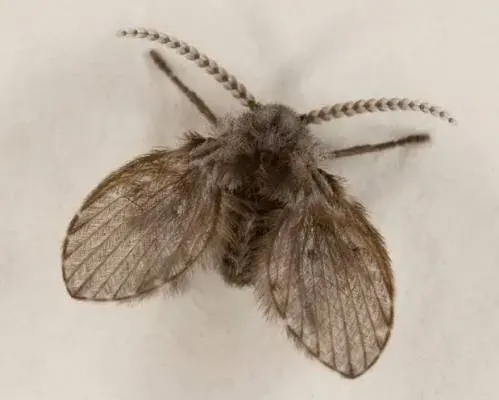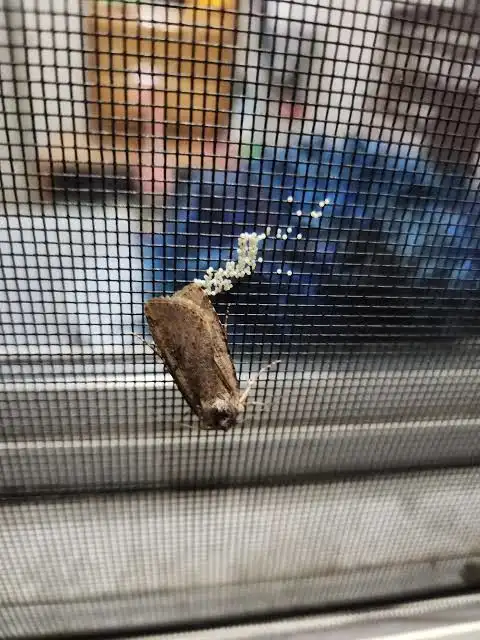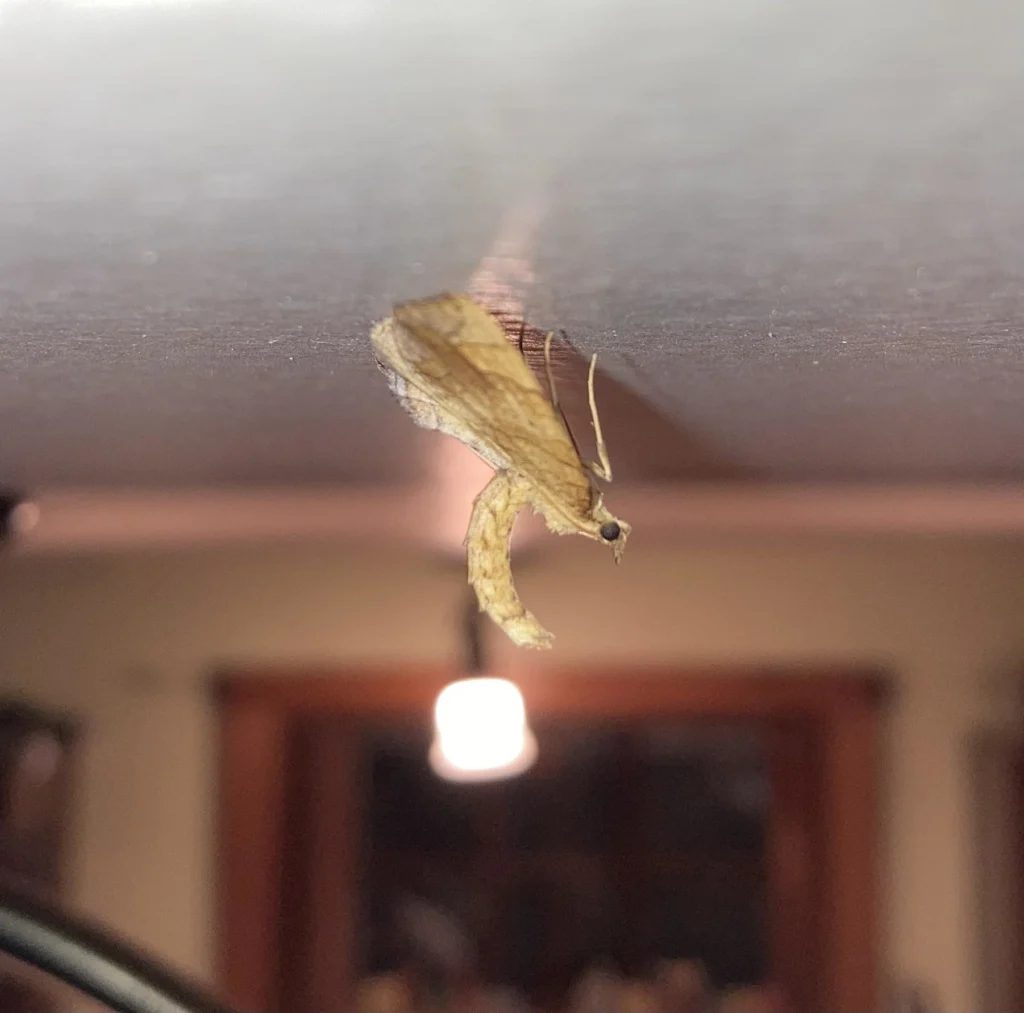
Moths on the outside of a window or screen at night are almost always outdoor moths. Light from the room, or from a porch light nearby, pulls them in close, and the glass, screen, or frame is the nearest place to land. They are not looking for a way to your food or clothes, and a crowded screen is not a sign of an indoor infestation. What matters is which side of the glass the moth is on, how big it is, and whether the same kind keeps turning up inside one room.
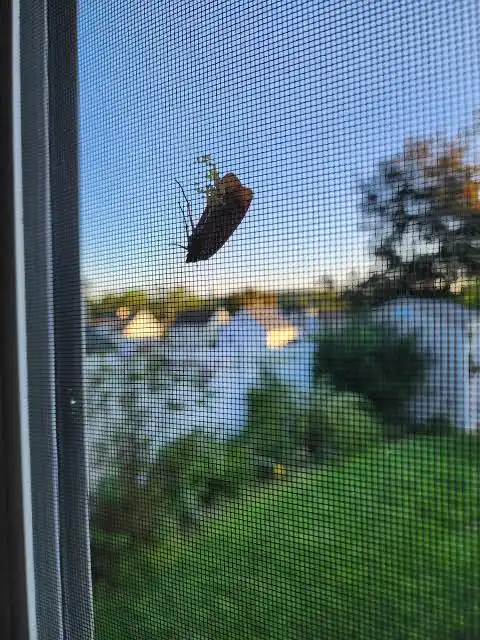
Why moths gather at windows and screens
A 2024 study in Nature Communications gave the clearest answer yet to why night-flying insects end up at lights. Flying insects keep their backs turned toward the brightest part of their surroundings, which under an open sky keeps them level. A lamp at close range turns that habit against them. The insect keeps tilting its back toward the bulb, so it circles the light, steers erratically, and sometimes flips upside down and drops. The researchers describe this as insects being trapped near the light rather than drawn to it from far away. They only studied insects within a few meters of a light, so how far the pull reaches is still unknown.
A lit window works the same way. Once a moth falls out of that confused flight, the screen or glass beside the light is the obvious place to stop. Most night-flying moths then sit still through the day, so a moth still on the screen at breakfast time is usually resting, not stuck or sick.
Some places get a seasonal rush. In parts of the western United States, the miller moth, the adult of the army cutworm (Euxoa auxiliaris), migrates in late spring, and big flights can swamp homes and buildings. Colorado State University says most nuisance flights last two to three weeks, with a smaller flight in some autumns. Miller moths don’t feed or lay eggs indoors, and they generally die within a few days.
Outside the screen or inside the house?
Where the moth sits tells you more than what it looks like.
| Where you see it | What it usually means | What to do |
|---|---|---|
| On the outside of the glass or screen at night | Outdoor moths pulled in by light | Nothing, unless the numbers bother you; reduce the light |
| Still on the screen the next morning | A moth resting through the day | Leave it; it usually moves on after dark |
| Between the screen and the glass | An outdoor moth that got in through a gap, a tear, or an open window | Let it out and check the screen and frame |
| One medium or large moth inside, at the window | Came in through an open door or window | Let it out |
| Small moths inside, again and again, near kitchen lights or windows | Possibly a stored-food moth such as the Indianmeal moth | Check dry foods for larvae and webbing |
| Small, plain buff moths in closets, rarely near light | Possibly clothes moths | Check wool and other animal-fiber items |
| Crowds for a few weeks in late spring (western U.S.) | Miller moth migration | Seal gaps and cut back lighting until it passes |
The indoor cases deserve a closer look. The Indianmeal moth is small, about 1/4 inch long with a wingspan of 1/2 to 5/8 inch. It rests with its wings folded over its body, and each forewing is pale gray or tan near the base and reddish brown with a coppery sheen on the outer two-thirds. Adults are attracted to lights and can fly into rooms where nothing is infested, so one moth at a window proves very little. Repeated sightings plus larvae or silk webbing in cereal, flour, nuts, dried fruit, pet food, or birdseed point to a real source.
Clothes moths behave differently. They avoid light and are seldom seen, keeping to closets, basements, and other dark, undisturbed places. A small plain moth fluttering at a bright kitchen window is more likely a stored-food moth than a clothes moth. In both cases the adult moths do no damage; the larvae do, and the larvae are what you need to look for. Our guide to checking for pantry and clothes moths walks through where to look.
What kinds of moths come to windows?
That depends on where you live and the time of year, so a list of species would not get you far. Most window visitors fall into a few shapes that are easy to learn:
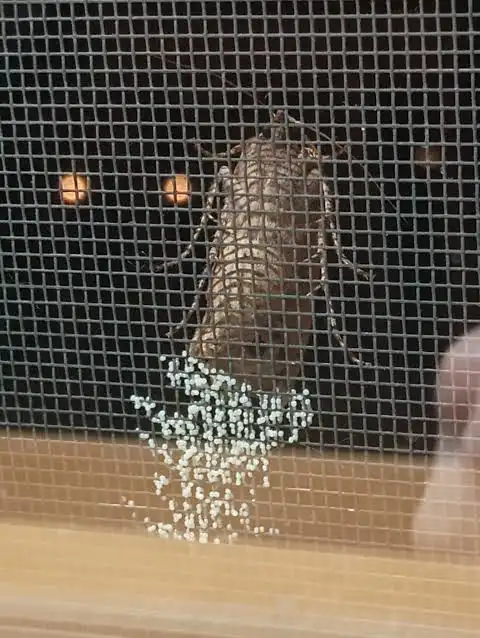
- Owlet moths (family Noctuidae). Heavy-bodied for their size, with the wings held like a tent over the back. Most are gray or tan with lines and spots. It is a huge family, with more than 2,500 species in North America north of Mexico, and many of them come to lights. The miller moth is one.
- Geometrid moths. Slim bodies and broad wings held flat out to the sides, often with lines that run on from the forewing onto the hindwing. Wingspans run from about 1/2 to 2 1/2 inches, and many have a fluttering flight. Their caterpillars are the inchworms.
- Grass moths. Small, drab moths with the wings rolled around the body like a short twig, and mouthparts that stick forward like a snout. They often rest on buildings near lights that were on all evening.
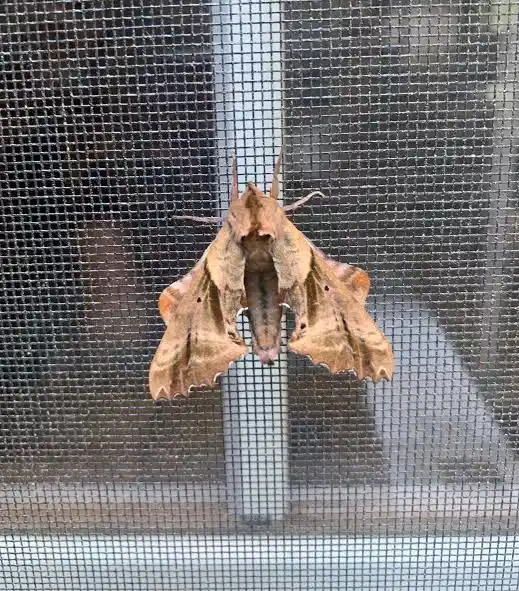
- Large visitors. Sphinx moths and giant silk moths turn up less often but are hard to miss. If you have one of these, see what to do about a large moth on an outside wall at night.
For anything that doesn’t fit, our moth identification guides go through the features one at a time.
How to identify a moth through the glass
A moth on the outside of a window shows its underside to you inside the room. Most identification photos show moths from above, and the underside can look quite different, so trying to match a moth from indoors often leads nowhere. A few habits help:
- Go outside for the top view. Take a flashlight and photograph the moth from the outside, from above and from the side.
- Cut the reflections. If you have to shoot through glass, switch off the room light behind you and hold the phone close to the window.
- Show the size. Hold a coin or ruler near the moth, without touching it.
- Note how the wings sit. Tent-shaped, flat, or rolled around the body already narrows it to the groups above.
- Write down the place and date. Your region and the season rule out many lookalikes.
Don’t rub the moth or pick it up for a better look. Its pattern is made of tiny scales, and once they rub off the markings can be hard to read. For the full method, see our step-by-step guide to identifying a moth.
How to get fewer moths at your windows
You can’t stop moths flying at night, but you can give them less reason to end up on your house.
- Close curtains or blinds after dark in rooms that face the yard. Light from house windows has barely been studied for its effect on moths, and a UK citizen-science project, Moth Project UK, has been testing whether drawn curtains make a difference. Even so, less light reaching the glass gives moths less to gather around.
- Turn off outdoor lights you don’t need, and put the rest on a timer or motion sensor.
- Point fixtures down and shield them, and use no more brightness than the job needs. These are among the outdoor lighting principles published by DarkSky International, which also recommends warmer-colored light.
- Don’t rely on bulb color alone. In a UK experiment with household bulbs, LEDs drew fewer insects than old filament and compact fluorescent bulbs, but warm-white and cool-white LEDs did about the same. Colorado State University does note that yellow lights don’t attract miller moths. Switching lights off, timing them, and shielding them matter at least as much as the bulb you choose.
- Repair torn screens and seal gaps around window frames and doors. The University of Kentucky notes that cracks of 1/16 inch or less are enough to let insects in.
- Skip the spray. Insecticide doesn’t change what brings moths to the window, which is the light. Colorado State University says insecticides are not effective even against miller moth swarms.
Getting a moth off the screen or out of the house
A moth on the outside of a screen needs nothing from you; it will usually leave after dark. For one inside the room, or caught between the screen and the glass, move it gently:
- If it is between the screen and the glass, lift or slide out the screen if your window allows it.
- Place a cup or jar over the moth.
- Slide a stiff card underneath to close it in.
- Carry it outside and let it go in shrubs or long grass, away from porch lights, so it doesn’t head straight back.
Avoid holding it by the wings. During a heavy miller moth flight, Colorado State University and Utah State University both suggest simply vacuuming up the moths indoors.
Are moths at windows harmful?
No. Adult moths on windows and screens don’t bite or sting, and they don’t eat screens or fabric. Miller moths don’t damage anything indoors. When moths do cause trouble in a home, it is the larvae of stored-food and clothes moths, and that shows up as evidence in food or fabric, not as moths on a window. If small moths keep appearing indoors, start with our overview of moths around the home.
The one thing to be careful with at windows is caterpillars. Some hairy or spiny caterpillars can irritate skin, so if one is crawling on a sill or frame, move it with a card or container rather than your hands.
FAQ
Why do moths stay on my window screen all day?
Most night-flying moths rest through the day wherever they settled before dawn. A moth that hasn’t moved since morning is usually just waiting for evening.
Does a moth between my window and screen mean I have an infestation?
No. It is almost always an outdoor moth that got in through a gap, a tear, or while the window was open. Check the screen and frame for openings.
Will turning off the lights get rid of moths at my windows?
It usually means fewer moths on the nights the lights stay off. Moths already resting on the screen may stay until the next evening.