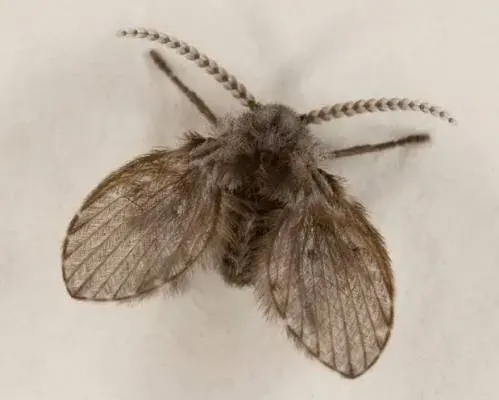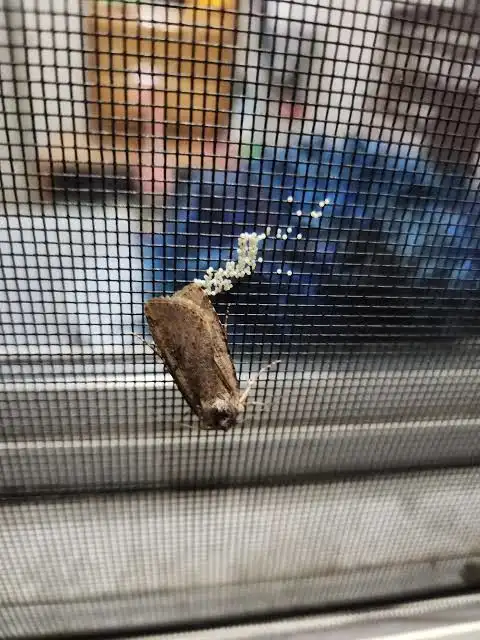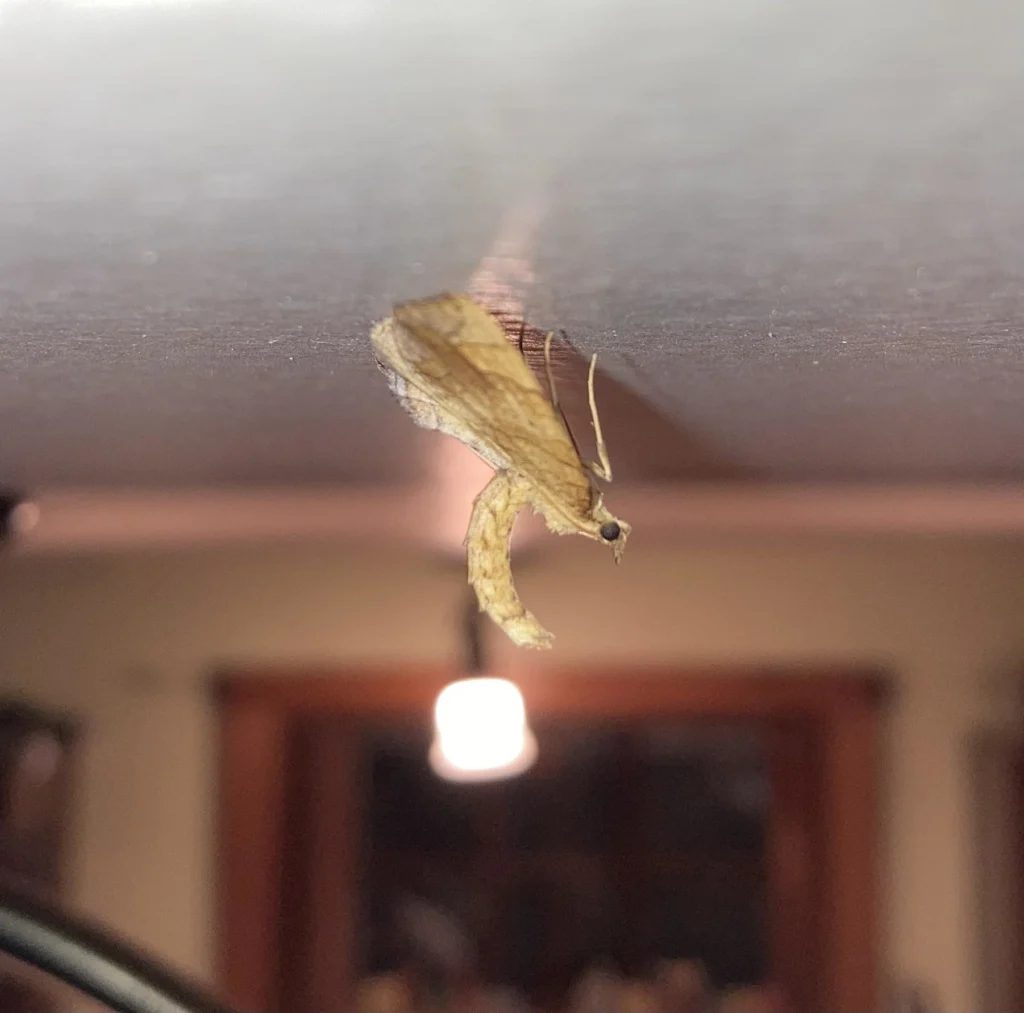
A moth’s resting posture is one of the quickest clues to its family. Wings spread flat usually point to a geometrid moth. A tent or roof over the body suggests an owlet moth or a small tortrix. A narrow rolled shape points to a grass moth or a footman, and a T shape almost always means a plume moth. Posture narrows the group, but it rarely names the species on its own.
It is worth checking the outline before you study colour or markings. The same pattern can look very different depending on which wings are showing, and a quick, slightly blurred photo usually still shows the shape. Use posture as your first sort, then move on to the finer clues covered in our other moth identification guides.
What resting posture can and cannot tell you
Posture is a family-level clue. It can tell you that a slim moth pressed flat against a wall is probably a geometrid, or that a narrow moth clinging to a grass stem is probably a grass moth. It can also rule groups out, which is often just as useful.
It cannot tell you the species. Every common posture is shared by hundreds of moths, and most families have exceptions. Most geometrids rest flat, for example, but a few hold their wings up over the back like a butterfly.
Posture is also not fixed. A moth that has just landed, been disturbed, or is sitting at a lit window may not yet be in its normal resting position. Treat the shape as one clue and confirm it with size, body build, pattern, place and date.
Common moth resting postures at a glance
| Resting posture | What it looks like | Groups it often points to |
|---|---|---|
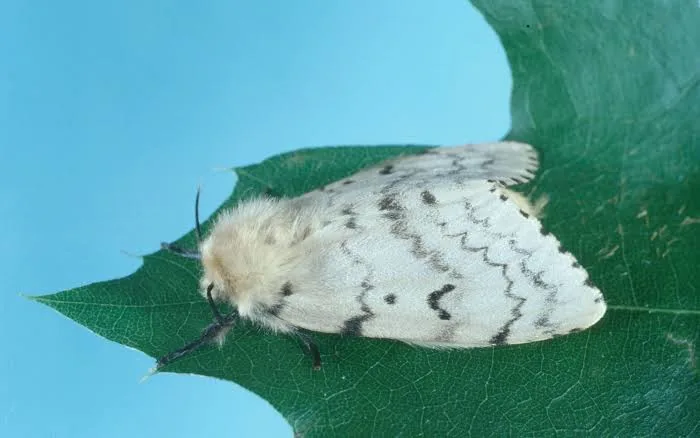
| Wings spread flat | All four wings open and pressed against the surface, often butterfly-shaped from above | Most geometrid moths (Geometridae) |
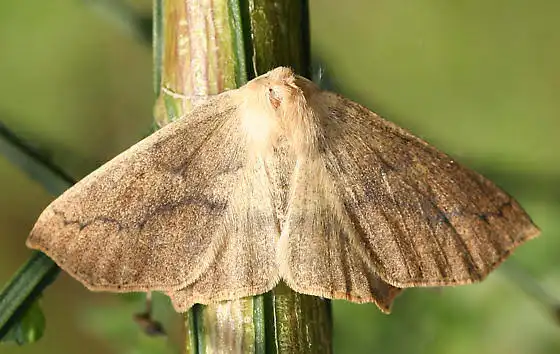
| Wings held up over the back | Wings raised together like a resting butterfly | A few geometrids, such as the early thorn |
| Tent or roof | Forewings folded over the body, a narrow triangle or letter A from above, hindwings hidden | Many owlet moths (Noctuidae) |
| Low bell or arrowhead | Small moth with a shallow roof and squared-off or flared wing tips | Tortrix moths (Tortricidae) |
| Swept-back triangle | Long, pointed forewings folded back over the much smaller hindwings, heavy body | Hawk moths, also called sphinx moths (Sphingidae) |
| Hindwings showing ahead of the forewings | The hindwings poke forward or up beyond the front edge of the forewings | Some hawk moths (Smerinthinae), the lappet moth |
| Wings rolled along the body | A slim, stick-like moth, often on grass, with mouthparts projecting like a snout | Grass moths (Crambidae, Crambinae) |
| Narrow wings held close | Wings lined up neatly with the body, a long seed-like outline | Footman moths |
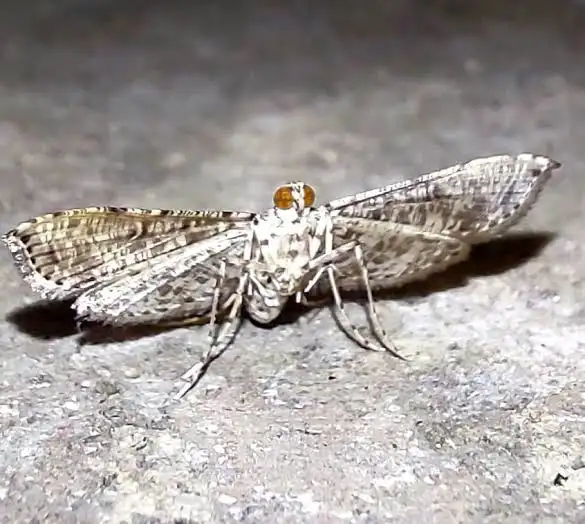
| T shape | Narrow rolled wings held out sideways, very long legs | Plume moths (Pterophoridae) |
| Front of the body raised high | A tiny moth propped up steeply on its front legs | Caloptilia micro moths |
Wings spread flat
A moth resting with all four wings open and flat is most often a geometrid. This is a very large family, and most of its members sit this way, giving a broad, butterfly-like outline against a wall, fence or tree trunk. Adults tend to have thin bodies compared with the size of their wings.
Geometrid caterpillars are the inchworms or loopers. That link between adult and larva is useful background, but it does not help when you only have the adult in front of you.
Wings held up like a butterfly
A few geometrids rest with their wings raised over the body in a V, much like a butterfly. In Britain, the early thorn (Selenia dentaria) is a well-known example. It holds its wings back and close together in a butterfly-like way, which also sets it apart from other British thorns. It has a wingspan of about 28 to 40 mm and usually flies from mid-February to May and again from July to September, with a single brood in the north.
If a winged insect rests with its wings up, check the antennae and body before calling it a butterfly. Our guide to moth vs butterfly differences covers the clues that settle it.
Tent or roof over the body
Many owlet moths in the family Noctuidae fold their wings over the back like a tent. From above, the moth forms a narrow triangle or a letter A. These moths usually have a heavy body for their size.
The tent posture hides the hindwings. Some owlet moths have bright yellow or orange hindwings that you only see when the moth moves, so a dull moth at rest may look very different in flight.
Tortrix moths (Tortricidae) also fold their wings like a roof, but the roof is low and shallow. They are small, with a wingspan of about ½ to 1¼ inches (roughly 13 to 32 mm). At rest they look like a little bell or arrowhead, and the forewing tips are often squared off or flared outward. Some tortrix caterpillars are leaf rollers that tie leaves with silk to make a shelter.
Swept-back triangle: hawk moths
Hawk moths, also called sphinx moths, fold their long forewings back over their much smaller hindwings, which gives them a triangular, swept-back outline. They are usually large, heavy-bodied moths with a long, pointed abdomen and long, pointed forewings. Wingspans range from about 1¼ to 4¾ inches (32 to 120 mm) or more, depending on the species.
Hindwings pushed forward
Some hawk moths in the subfamily Smerinthinae sit in an odd way, with the hindwings raised or pushed forward so they show above or ahead of the forewings. The poplar hawk-moth (Laothoe populi), found across Europe and into Asia, holds its hindwings forward of the forewings and curves the tip of its abdomen upward. In North America, the same subfamily includes moths such as the twin-spotted sphinx (Smerinthus jamaicensis).
The lappet moth (Gastropacha quercifolia) shows a similar trick but belongs to a different family, the Lasiocampidae. Its hindwings protrude in front of the forewings at rest. It is a large moth, with a wingspan of about 56 to 84 mm, and in Britain it is found mainly in southern England.
Narrow, rolled or wrapped wings
Grass moths, such as the sod webworm moths, rest with their wings rolled up along the body, so they look like a short twig or a bit of dry grass. Sometimes they tilt the abdomen and rolled wings up at an angle. Look at the head as well. Their mouthparts, called palps, project forward like a snout, which is a strong clue for this group.
Footman moths are also long and narrow at rest. They hold their narrow wings lined up with the body, which gives them a neat, stiff look sometimes compared to a pumpkin seed. Their caterpillars feed on lichen.
T-shaped: plume moths
A small, pale or brown moth shaped like a letter T is very likely a plume moth. Plume moths hold their narrow wings tightly rolled and out to the sides, and they stand on extremely long, fragile legs. If one spreads its wings, you will see they are split into feathery plumes with deep notches.
The T shape is one of the few postures that points so firmly to one family, which makes plume moths among the easiest moths to sort at a glance.
Body raised on the front legs
Some very small moths do the opposite of the grass moths. Caloptilia species rest with the front of the body raised high on their forelegs, so the whole moth slopes steeply down to the tail. These are small micro moths, so a close-up photo is usually needed to see the posture clearly.
How to use posture in an identification
- Photograph the moth before you disturb it, ideally once from above and once from the side.
- Name the outline in plain words: flat, wings up, tent, bell, swept-back triangle, rolled, T shape or raised.
- Note the size and body build. A heavy body with a swept-back triangle suggests a hawk moth, while a slim body with flat wings suggests a geometrid.
- Check which wings are visible. If the hindwings are hidden, the pattern you see belongs to the forewings only.
- Read the wing markings next. Our guide to moth identification by wing pattern explains what to look for.
- Add the place and date, then compare with a regional field guide or recording scheme. If the general method is new to you, start with how to identify a moth.
Common mistakes with resting posture
Treating one posture as a species. A moth in a tent shape could belong to hundreds of species. The posture narrows the search, then the markings, size and range do the rest.
Reading a disturbed moth. A moth that has just flown in or been nudged may sit with its wings half open. Wait a minute and check again if you can.
Assuming wings up means butterfly. Some moths rest with their wings raised. Check the antennae and body shape before deciding.
Forgetting the hidden hindwings. Tent-shaped and triangle-shaped moths hide their hindwings, so a moth that looks plain at rest may show bright colour when it flies.
Judging a moth at a light. Moths around porch lights often sit on surfaces they would not normally choose. If a big one has turned up on a lit wall, our guide to a large moth on an outside wall at night covers the usual candidates.
Frequently asked questions
What does it mean when a moth rests with its wings flat?
A moth with all four wings spread flat is most often a geometrid, the family whose caterpillars are inchworms. Other moths can rest this way too, so check the body build and wing pattern before settling on a group.
What moth rests in a T shape?
A moth shaped like a letter T is almost always a plume moth. Look for narrow rolled wings held out sideways and very long legs.
Can a moth rest with its wings closed like a butterfly?
Yes. A few geometrid moths hold their wings up over the back. The early thorn is a familiar example in Britain. The antennae and body usually show it is a moth.
Which moths hold their wings like a tent?
Many owlet moths fold their wings into a tent over the body. Tortrix moths use a lower, bell-shaped roof, and hawk moths fold their wings back into a sharper triangle.
Is resting posture enough to identify a moth?
No. Posture usually narrows a moth to a family or a smaller group. Size, markings, location and date are needed to get closer to a species, and some moths need expert examination.
References
- Moth families, Butterfly Conservation
- Geometrid Moths, Missouri Department of Conservation
- Early Thorn, Butterfly Conservation
- Noctuid Moths, Missouri Department of Conservation
- Tortricid Moths, Missouri Department of Conservation
- Sphinx Moths (Hawk Moths), Missouri Department of Conservation
- Rustic Sphinx, Manduca rustica, University of Florida IFAS Extension
- Twin-spotted Sphinx, Smerinthus jamaicensis, Sphingidae of the United States of America
- Poplar Hawk-moth, Laothoe populi, UKMoths
- Lappet, Butterfly Conservation
- Sod Webworm, Missouri Department of Conservation
- Footman moth, Encyclopaedia Britannica
- Plume Moths, Missouri Department of Conservation
- Caloptilia elongella, UKMoths