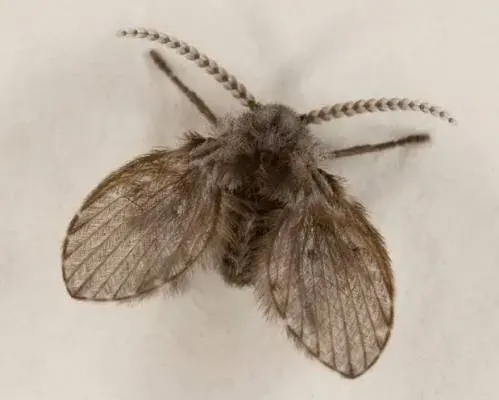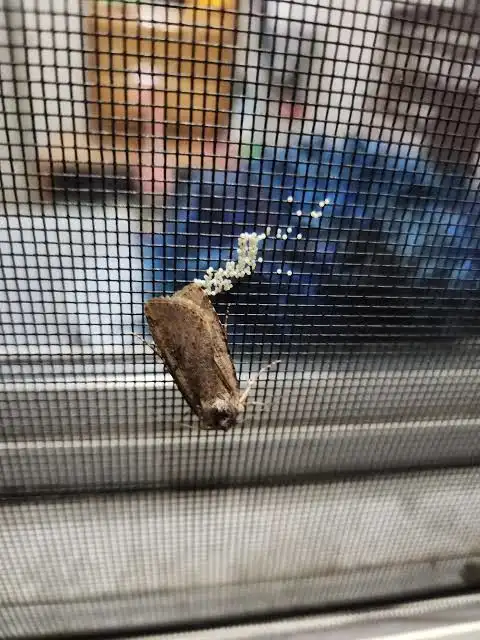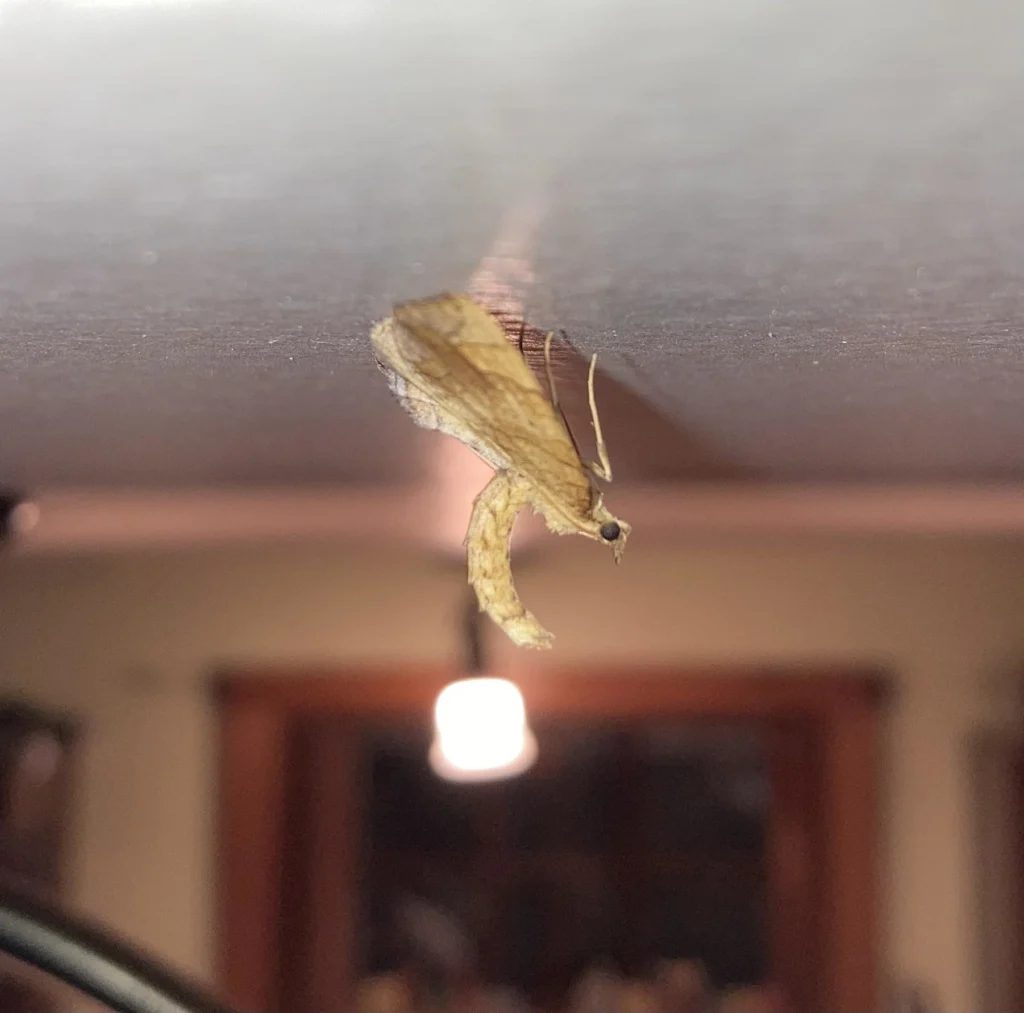
A fuzzy moth is not one species. Dense, hair-like scales on the body show up in several unrelated moth families, so “fuzzy” narrows your moth to a handful of groups rather than naming it. The fuzzy moths people meet most often are giant silk moths, tiger moths, tussock moths, tent caterpillar and lappet moths, flannel moths, and sphinx moths. To tell them apart, combine the fuzz with size, body shape, antennae, resting posture, color, and where and when you saw the moth.
Why some moths look fuzzy
What looks like fur is mostly scales. Moths and butterflies are covered in tiny flattened hairs, or scales, on both the body and the wings. On some moths the body scales are long and dense enough to look like fur or flannel.
That coat has real uses. Body hairs and scales help larger insects hold on to the heat their flight muscles produce, and a resting moth can warm itself by shivering those muscles before it takes off. The fuzz may also help against bats: a 2020 study found that the thorax scales of moths without ears absorbed about two-thirds of the ultrasound aimed at them, while butterfly scales made little difference to the echo.
What fuzz can and cannot tell you
Fuzz on its own tells you very little. Many unrelated moths are hairy, and the same moth can look fluffier or thinner depending on how fresh it is and how the light falls in a photo. Fuzz becomes useful when you note where it is and what comes with it:
- fuzz on the thorax and abdomen only, or on the legs as well
- a short, heavy body or a long body that tapers to a point
- feathery antennae or thin ones
- how the wings sit when the moth is resting
Even with every clue, some fuzzy moths stay unnamed. The so-called Venezuelan poodle moth, photographed in 2009 by zoologist Arthur Anker in Canaima National Park, still has no confirmed identity, because no specimen has been collected for study. A single photo of a fluffy moth may get you to a family and no further. Our moth identification guides cover the other features worth checking.
Common groups of fuzzy moths
Giant silk moths
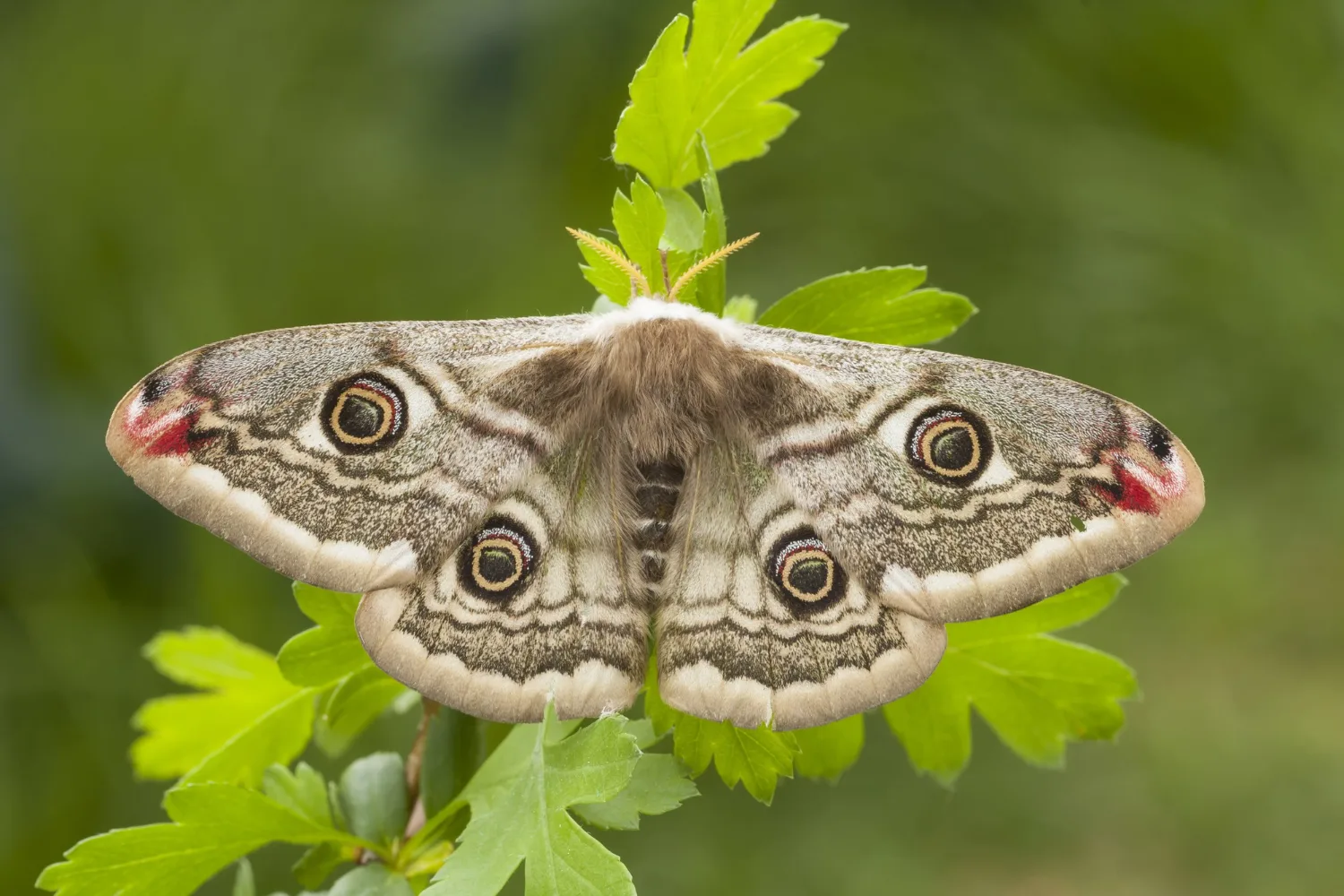
Giant silk moths (family Saturniidae) have stout, hairy bodies and wingspans from about 1¼ to 10 inches. Males have feathery antennae; females have thin or feathery ones, depending on the species. Adults have tiny or non-working mouthparts, do not feed, and usually live two weeks or less.
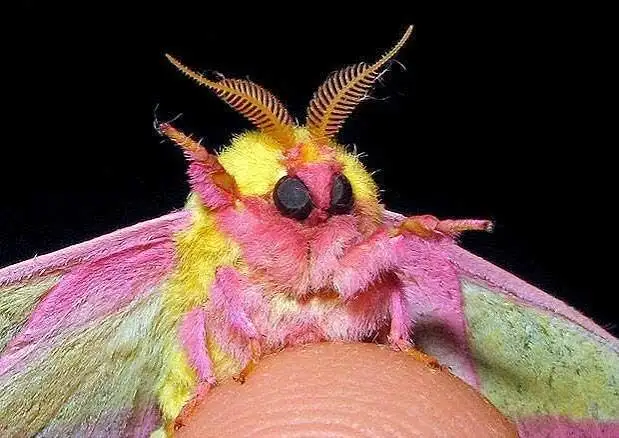
The rosy maple moth is the one most often called fuzzy. It is thick-bodied and fluffy, usually pink and yellow but sometimes cream, white, or purple, and only about 2 inches across, the smallest of the silk moths. It is native to eastern North America, and its caterpillars feed mainly on maples. Polyphemus, cecropia, and luna moths are much larger relatives with hairy bodies. Polyphemus and io moths slide their forewings apart when disturbed to show large eyespots on the hindwings.
Tiger moths
Tiger moths (subfamily Arctiinae) usually rest with their wings held like a roof over the body. Many are white, yellow, orange, red, or black, in bold spots, bands, or stripes, and wingspans run from about ½ to 3 inches. In this group the pattern and posture are more useful than the fuzz.
The giant leopard moth is white with black spot patterns, and the Virginian tiger moth is nearly pure white with a few black spots. The Isabella tiger moth, the adult of the woolly bear caterpillar, has yellowish or tan forewings with faint lines and small dark spots. The bright colors of many tiger moths warn birds that they taste bad, since their caterpillars often feed on toxic plants.
Tussock moths
Adult tussock moths (subfamily Lymantriinae) are usually quite hairy and quietly colored in browns, grays, and whites. They have comb-like antennae and wingspans of about ½ to 2¾ inches. In many species the females cannot fly, and their wings are reduced or missing. Adults do not feed. The hair tufts at the tip of a female’s abdomen can irritate skin.
The browntail moth belongs here. Its adults have brown hair at the tip of the abdomen, and Maine lists it as an invasive forest threat. The Maine Forest Service says the hairs on adult browntail moths are not toxic; the rash-causing hairs come from the caterpillars, their cocoons, and their shed skins.
Tent caterpillar and lappet moths
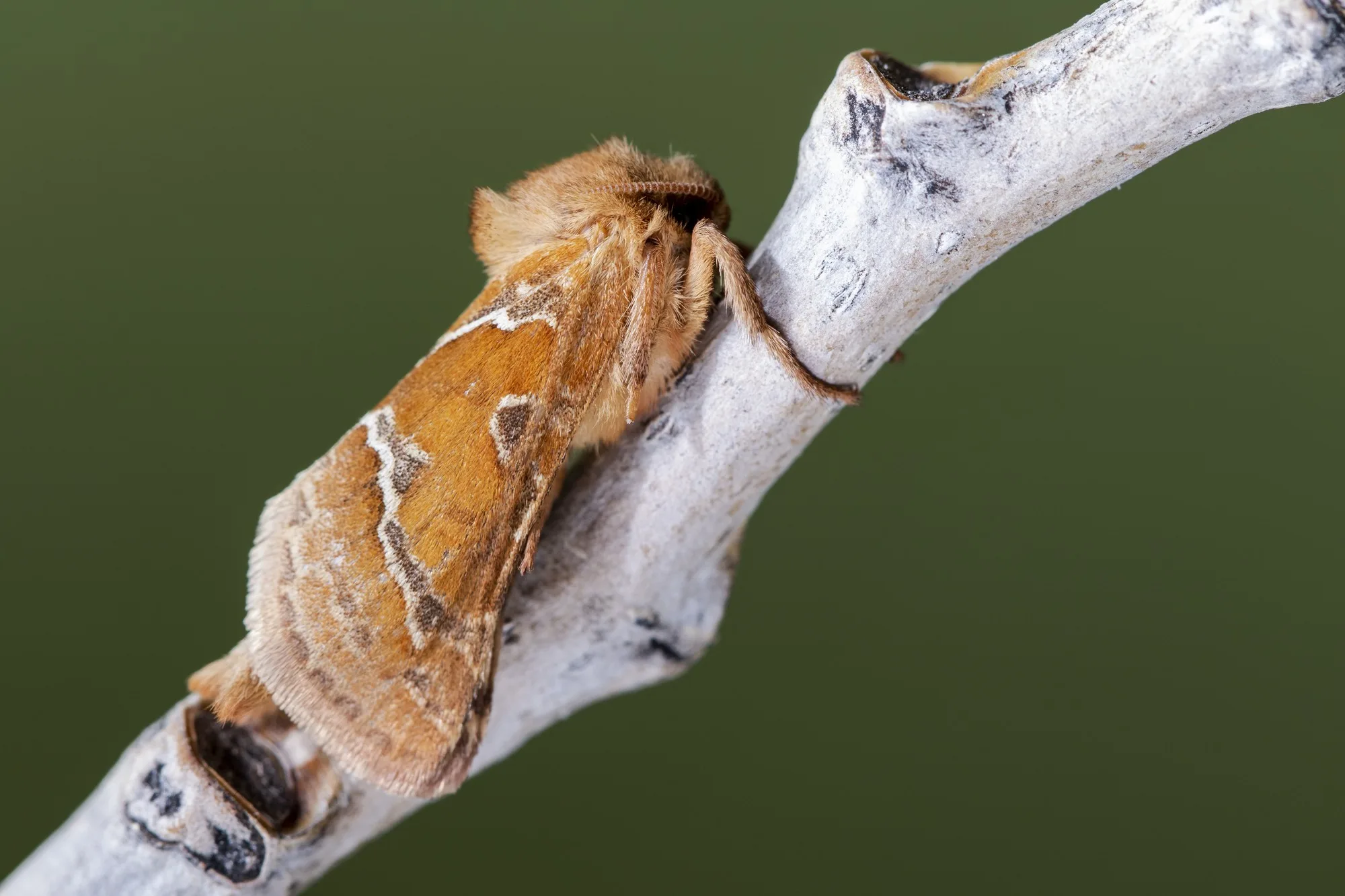
Moths in the family Lasiocampidae have long, thick scales that make them look furry. Most are brown, tan, or gray and 1 to 2½ inches across. Both sexes have feathery antennae, and short finger-like mouthparts stick forward from the head. At rest they fold their wings back over the body, and the abdomen usually pokes out past the wingtips. Adults do not feed.
The eastern tent caterpillar moth is brown with two pale stripes on each forewing. The American lappet moth, gray and rust with wavy wing edges, looks like a small dead leaf.
Flannel moths
Flannel moths (family Megalopygidae) are among the fluffiest moths of all: hair covers the body, the legs, and the wings. They are small, about 1 to 1½ inches across, and mostly whitish, yellowish, or brownish with few markings. Males have feathery antennae; females have thin ones.
The southern flannel moth is golden yellow fading to beige, with a thick orange coat on the thorax and black, hairy legs. It is found from New Jersey to Florida and west to Arkansas and Texas. The adult moth does not sting, but its caterpillar, the puss caterpillar, can.
Sphinx moths (hawk moths)
Sphinx moths (family Sphingidae) are hefty, furry moths with a long body that tapers to a point and long, narrow forewings with pointed tips. Wingspans run from about 1¼ to 4¾ inches. Most fly at night or at dusk and hover at long-throated flowers to drink nectar.
The hummingbird clearwing and snowberry clearwing fly by day. Their fuzzy, bee-like bodies and see-through wings often get them mistaken for bumblebees or tiny hummingbirds.
Puss moth (Britain and Europe)
In Britain and Europe, the puss moth (Cerura vinula), a prominent moth, is a classic fluffy white moth. Dense white hair covers its body and legs, and its wings look furry too, with neat black spots and sharply wavy lines on the outer half. The wingspan is 45–70 mm (about 1¾–2¾ inches). It flies at night from May to July, comes to lights, and lives wherever poplars or willows grow. Smaller lookalikes are called kittens.
Fuzzy moth comparison table
| Group | Wingspan | Fuzz and body | Other clues |
|---|---|---|---|
| Giant silk moths | 1¼–10 in | Stout, hairy body | Feathery antennae in males; some have eyespots; adults don’t feed |
| Tiger moths | ½–3 in | Varies by species | Bold white, yellow, orange, or black pattern; wings roof-like at rest |
| Tussock moths | ½–2¾ in | Usually quite hairy; tufts at the female’s abdomen tip | Comb-like antennae; browns, grays, whites; females often flightless |
| Tent caterpillar and lappet moths | 1–2½ in | Furry-looking, thick scales | Feathery antennae in both sexes; abdomen pokes past the wingtips |
| Flannel moths | 1–1½ in | Hair on body, legs, and wings | Feathery antennae in males; pale or golden with few markings |
| Sphinx moths | 1¼–4¾ in | Heavy, furry, tapering body | Long, narrow, pointed forewings; hovers at flowers |
| Puss moth (Europe) | 45–70 mm | Dense white hair on body and legs | Black spots and wavy lines; near poplars and willows |
How to narrow down a fuzzy moth
- Note where and when. Write down your region and the month. Several moths above live only in certain parts of North America or Europe.
- Estimate the size. Compare the moth with a coin or your fingertip. A 1-inch flannel moth and a 5-inch silk moth can both look fuzzy in a close-up.
- Look at where the fuzz is. Hairy legs point toward flannel moths or the puss moth. A thick tuft at the tip of the abdomen points toward tussock moths. A long, furry body that tapers to a point suggests a sphinx moth.
- Check the antennae. Feathery or comb-like antennae point toward silk moths, tussock moths, lappets, and male flannel moths. See how moth antennae differ if you’re unsure what you’re looking at.
- Watch the resting posture. Wings held like a roof suggest a tiger moth. Wings folded back with the abdomen sticking out past them suggest a lappet or tent caterpillar moth.
- Read the colors and pattern last. Once you have a likely group, color becomes far more useful. Our guide to identifying moths by color picks up from here.
- Note the behavior. A fuzzy moth hovering at flowers, especially by day, is very likely a sphinx moth.
If you get stuck, a good photo from above and one from the side make the next step easier. For a full step-by-step method for identifying any moth, start with location, season, and size before anything else.
Fuzzy moths around the house
Most fuzzy moths you find on a wall, window, or porch are outdoor moths drawn in by lights. Lappet moths, browntail moths, and the puss moth are all known to come to lights at night. If yours is a big one, see what to do about a large moth on an outside wall at night.
One fuzzy moth indoors is not a sign of pantry moths or clothes moths. Those problems show up as evidence such as webbing in stored food, larvae, or damaged fabric, not as a single adult moth. Our guide to moths around the home explains what to look for.
Are fuzzy moths dangerous?
Most adult fuzzy moths are harmless. Many of them cannot even feed, let alone bite. There are two exceptions worth knowing:
- Some tussock moth females. The hair tufts on the tip of the abdomen can irritate skin, so leave them alone.
- Hairy caterpillars. The caterpillar stage is the bigger concern. The puss caterpillar of the southern flannel moth can sting painfully, and browntail caterpillar hairs can cause a rash and stay in the environment for one to three years.
If you can’t identify a hairy caterpillar, don’t touch it. If you have a strong or spreading reaction after contact, talk to a doctor.
FAQ
What is the fuzzy pink and yellow moth?
In eastern North America, a small, fuzzy pink-and-yellow moth is very likely a rosy maple moth. Its colors vary, though, so cream or white individuals also occur.
Do fuzzy moths bite or sting?
Adult fuzzy moths do not bite or sting. The main risk comes from hairy caterpillars and, in some tussock moths, the hair tufts on the female’s abdomen.
Can I identify a fuzzy moth from a photo?
Often to a group, sometimes to a species. Add your location, the date, the moth’s size, and a clear view of the antennae and wings to give yourself the best chance.
References
- Missouri Department of Conservation, Giant Silkworm and Royal Moths
- Missouri Department of Conservation, Tiger and Lichen Moths
- Missouri Department of Conservation, Tussock Moths
- Missouri Department of Conservation, Tent Caterpillar and Lappet Moths
- Missouri Department of Conservation, Flannel Moths
- Missouri Department of Conservation, Sphinx Moths (Hawk Moths)
- University of Florida IFAS Extension, Puss Caterpillar, Megalopyge opercularis
- Maine Forest Service, Browntail Moth Frequently Asked Questions
- Clemson Home & Garden Information Center, Rosy Maple Moth
- Animal Diversity Web, Dryocampa rubicunda
- The Wildlife Trusts, Puss Moth
- NC State University, Order Lepidoptera
- UC Riverside, Insect Thermoregulation
- Neil, T. R., et al. (2020). Thoracic scales of moths as a stealth coating against bat biosonar. Journal of the Royal Society Interface, 17(163).
- Mongabay, Unidentified poodle moth takes internet by storm